
Whimsical garden ideas bring charming little moments into your backyard and make the space feel personal. Flowers, winding paths, glowing lights, handmade touches, and unexpected pieces tucked into corners can give a garden its own playful character.
A sprawling yard is not required. A fence line, planter, tree base, patio corner, or small path can become a magical spot.
Fairy Door
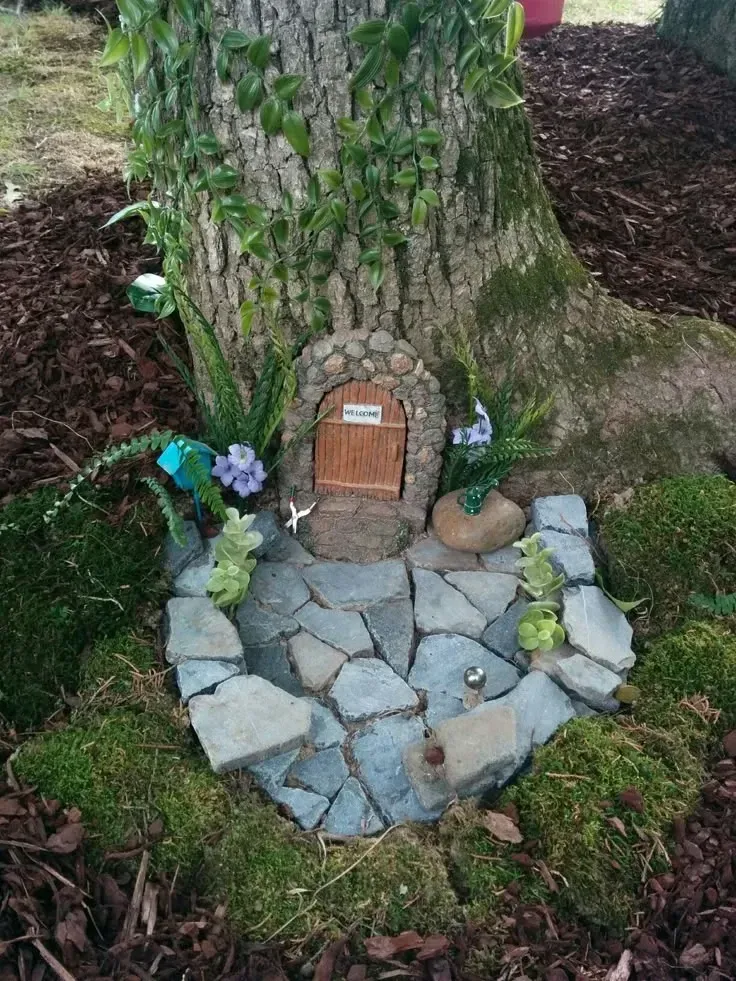
A feature tucked beneath the tree changes the corner.
A stone path leads toward the fairy door, while moss, rocks, and blue flowers surround it. These details give the door an integrated, tucked-in appearance.
For renters, this fairy-door idea does not require any built-in construction. It can be added without making a permanent change to the garden.
Painted Rock Pond
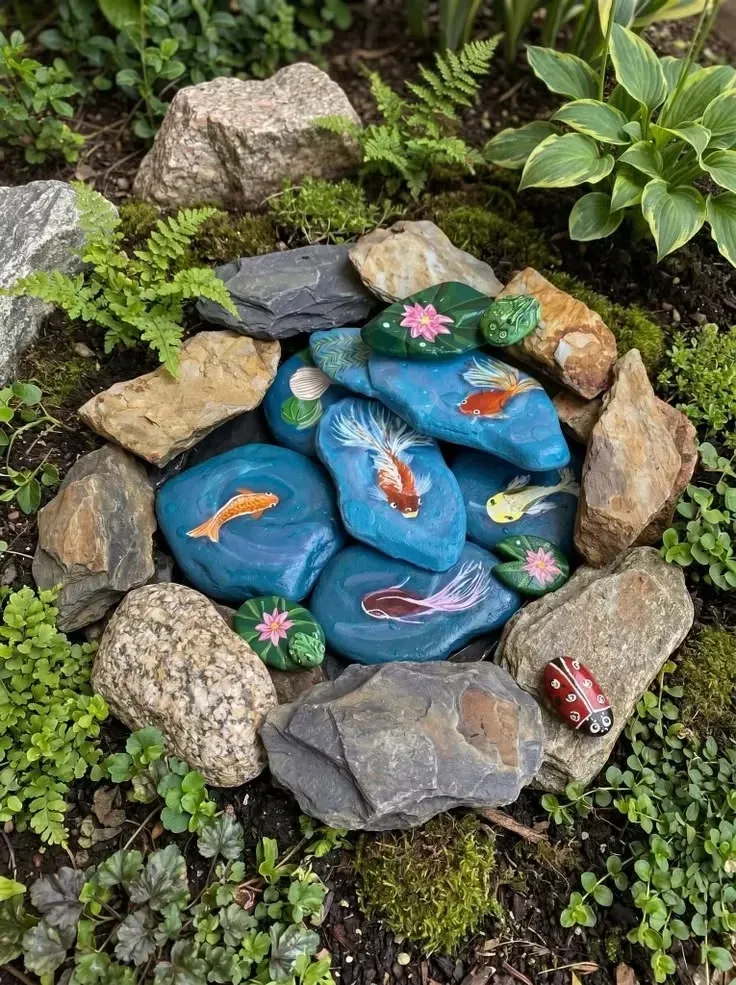
This painted rock pond resembles a water feature, but it requires no water maintenance. This tiny pond uses smooth stones, blue paint, and fish details to suggest water, with large rocks set around the pond edge.
The painted rock pond works well near a path, where its details stay visible.
Stepping Stones in Butterfly Shapes
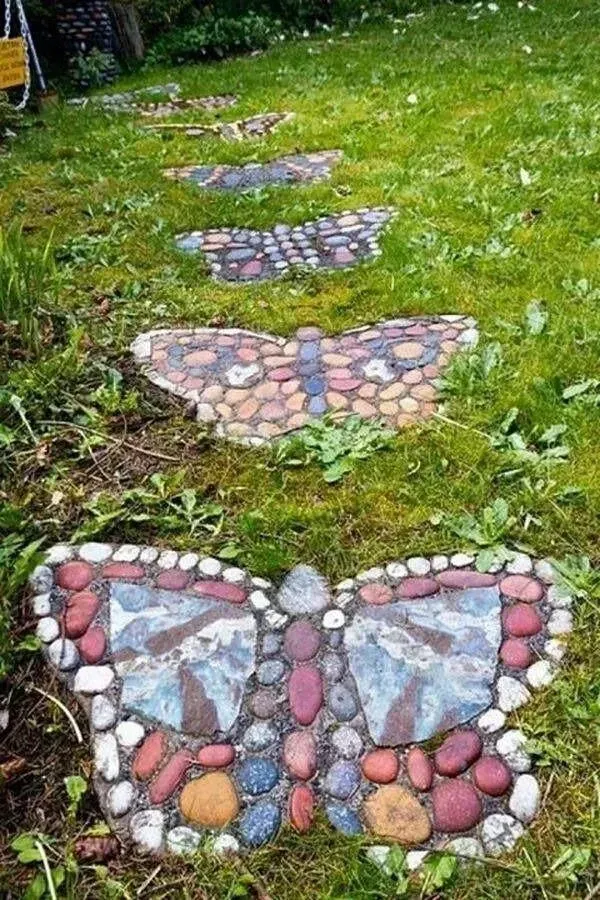
Keep the flower bed clear and use the stepping stones across the lawn instead. Their mosaic style brings color to the grass.
Handmade mosaic pieces stand out against the grass, giving the setting a distinct look.
Scatter the stepping stones in an irregular arrangement across the area.
Suncatcher
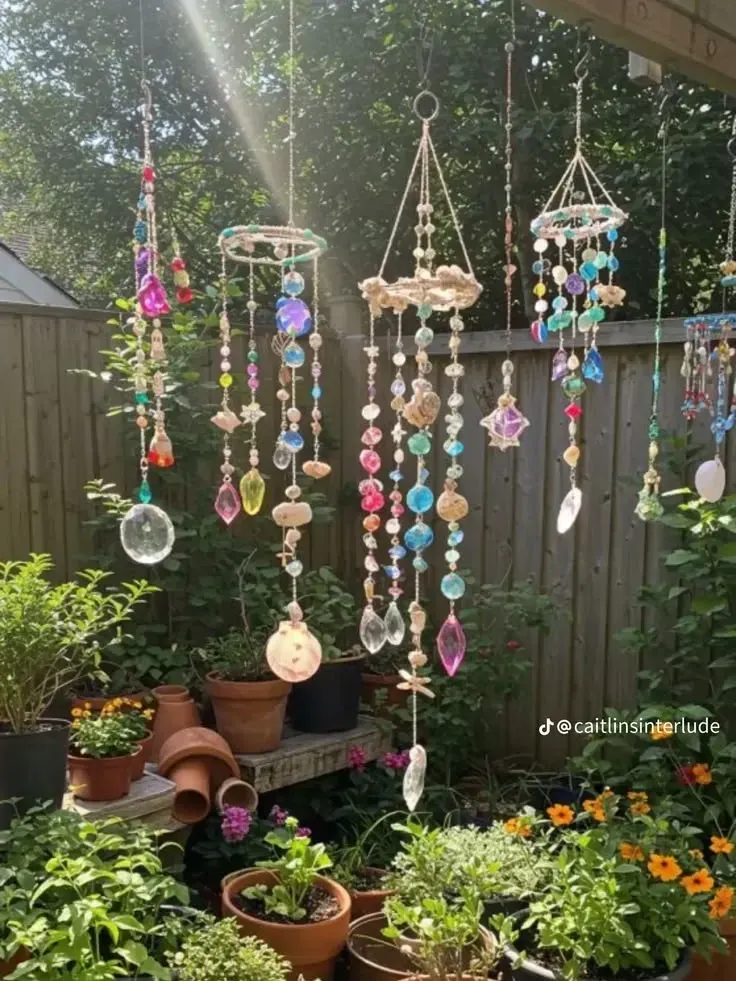
A suncatcher adds color to the garden without requiring new planting. It brings in color through a hanging detail instead.
For light capture, hang it from a patio frame, fence hook, tree branch, or pergola.
Around the garden, vary the suncatcher lengths rather than placing them in an even row. Uneven lengths are preferred here.
Tiny Village
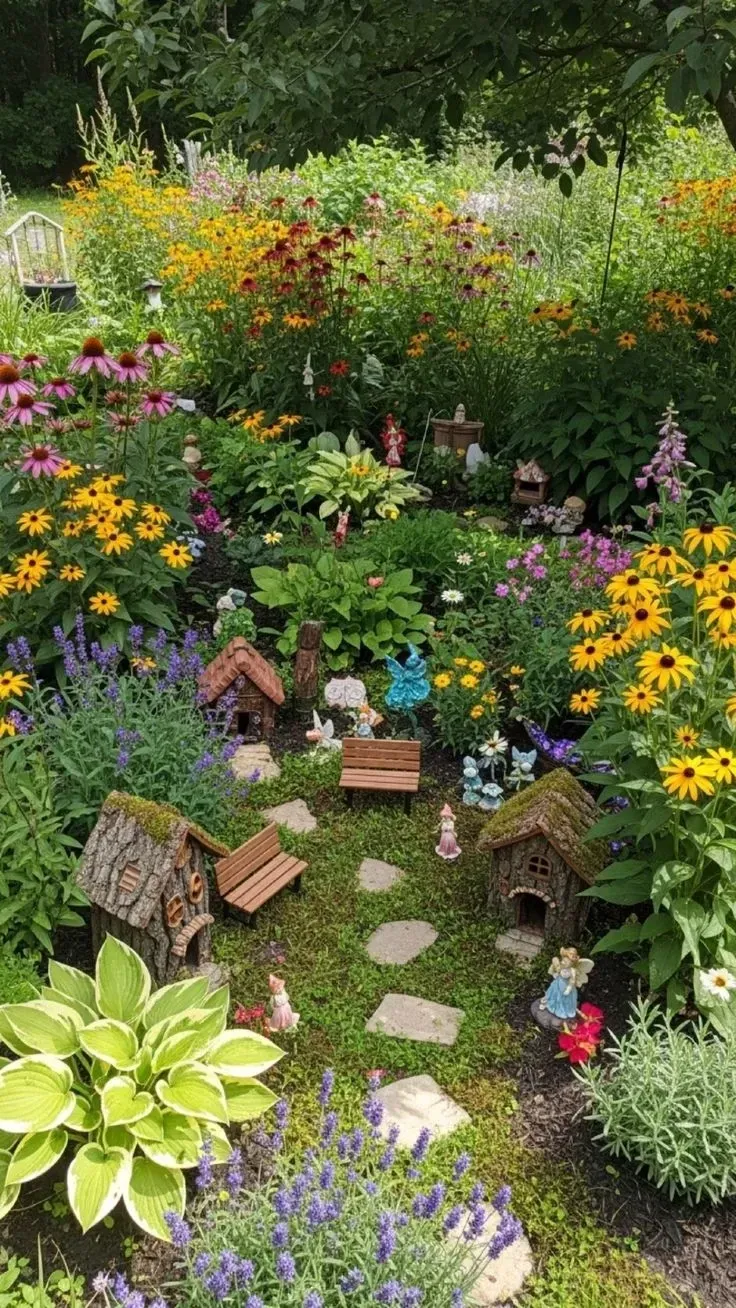
Between the flowers, a tiny village creates a small surprise in the garden. Along the garden border, miniature houses and benches sit naturally among mini paths and low plants.
A lush area works well for a tiny village, and the planting can conceal the tiny houses among the greenery.
Garden Game
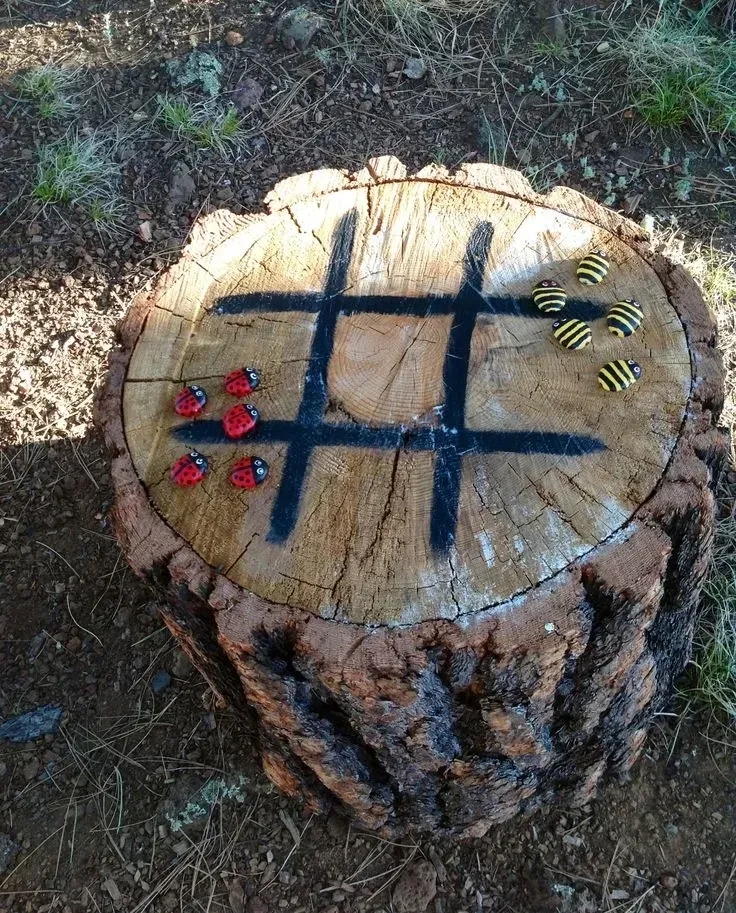
A playful tic-tac-toe stump made from wood is cute and keeps the garden from filling up with scattered plastic toys. It gives the game a defined place instead.
Paint a grid on a flat log slice and use ladybug rocks and bee rocks as the game pieces. The pieces are used with the log slice for the game.
When it is not in use, the tic-tac-toe stump functions as decor. That dual use makes it worthwhile.
Disco Balls
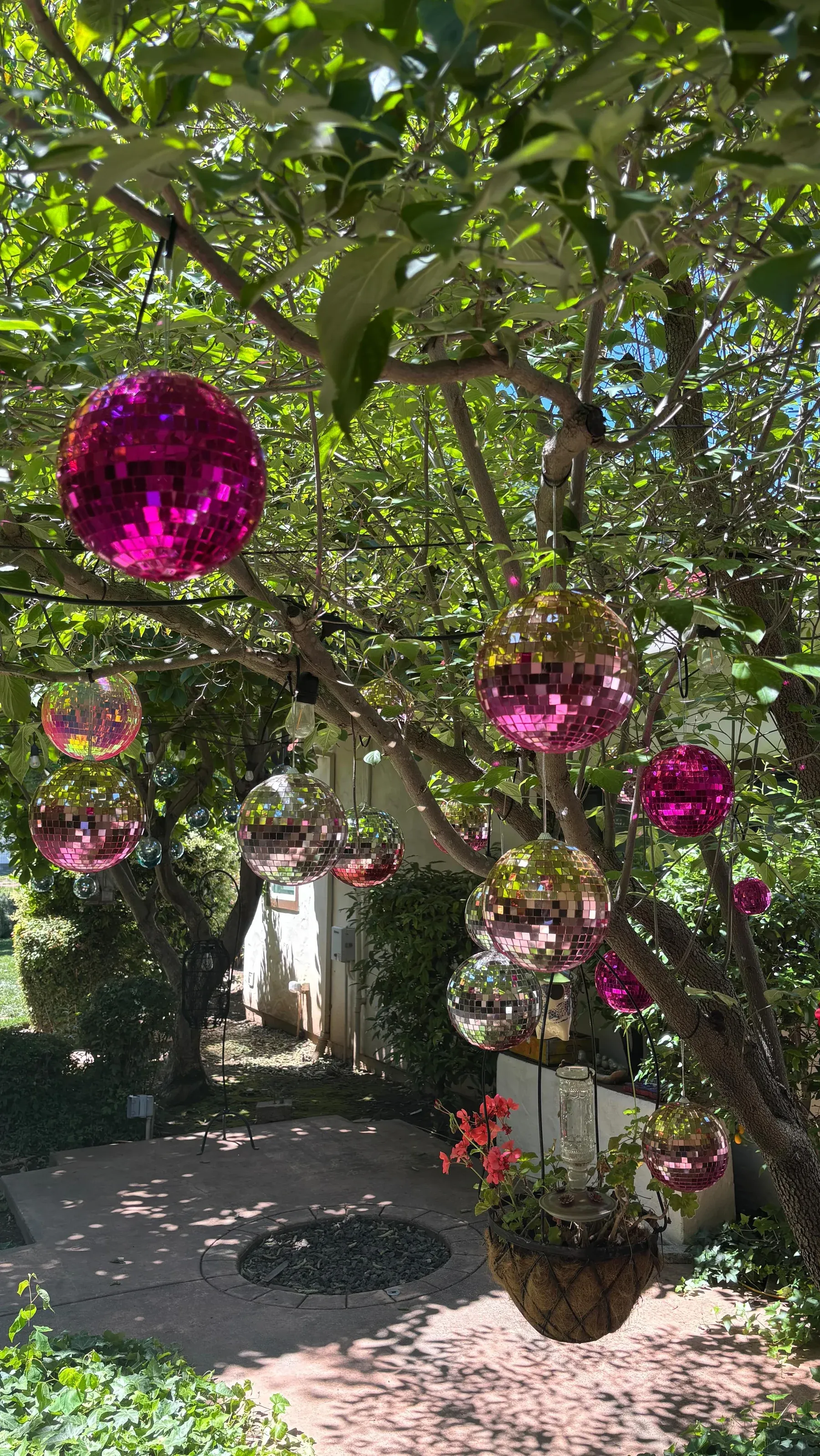
Under the tree, disco balls catch the dappled light that filters through the branches.
Flowers are not the only way to bring color to the garden. Pink disco balls add garden color and reduce the reliance on flowers.
Hang the disco balls at varied heights to create a more relaxed display.
Garden Statue
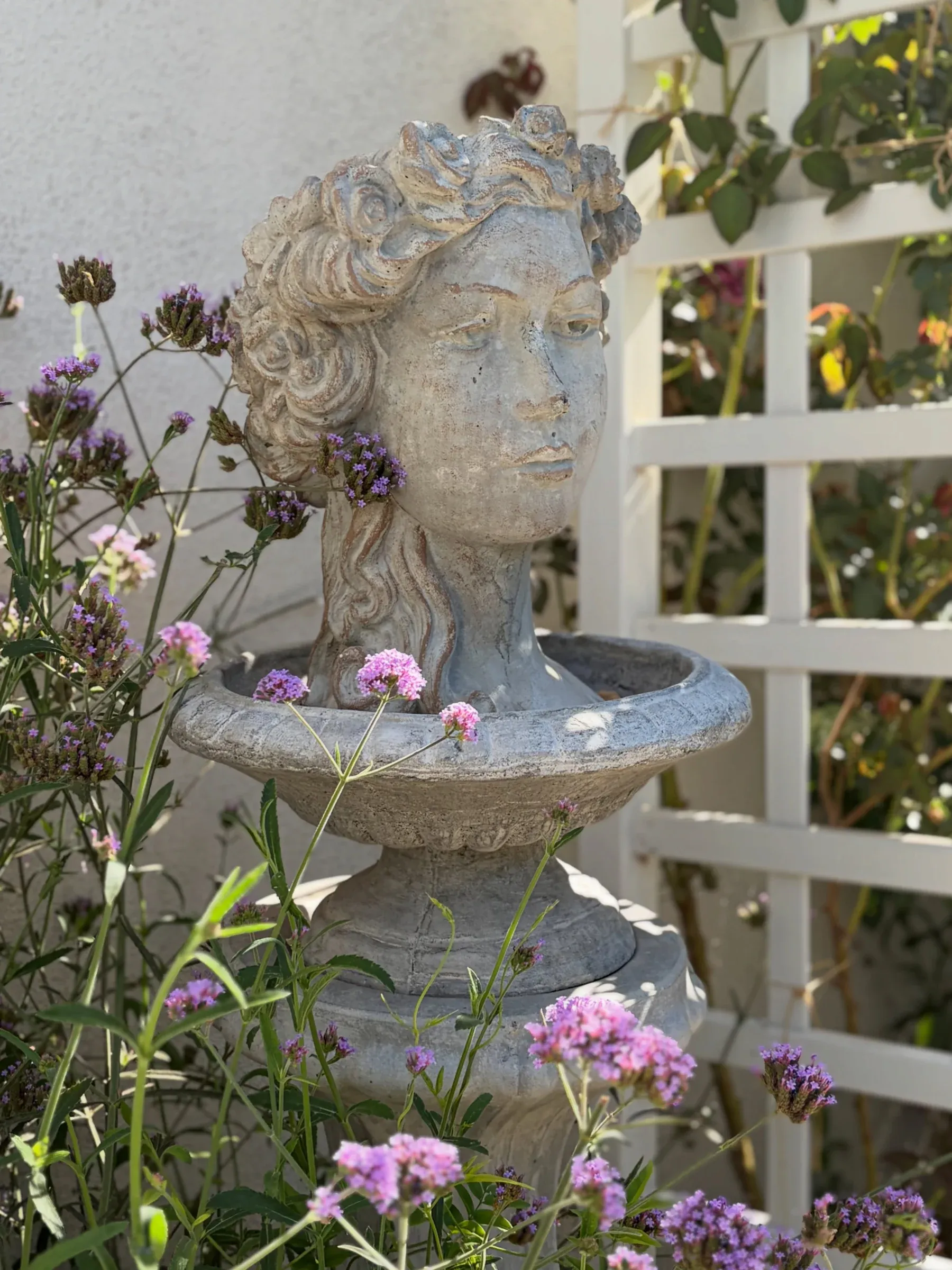
A garden statue evokes an older, romantic style in a flower corner.
Loose flowers and climbing greenery around a simple trellis reduce the staged appearance of the statue area. The planting feels less arranged and more relaxed.
The source author recommends keeping the planting soft around the statue, which preserves its visibility.
Cozy Small Patio Corner
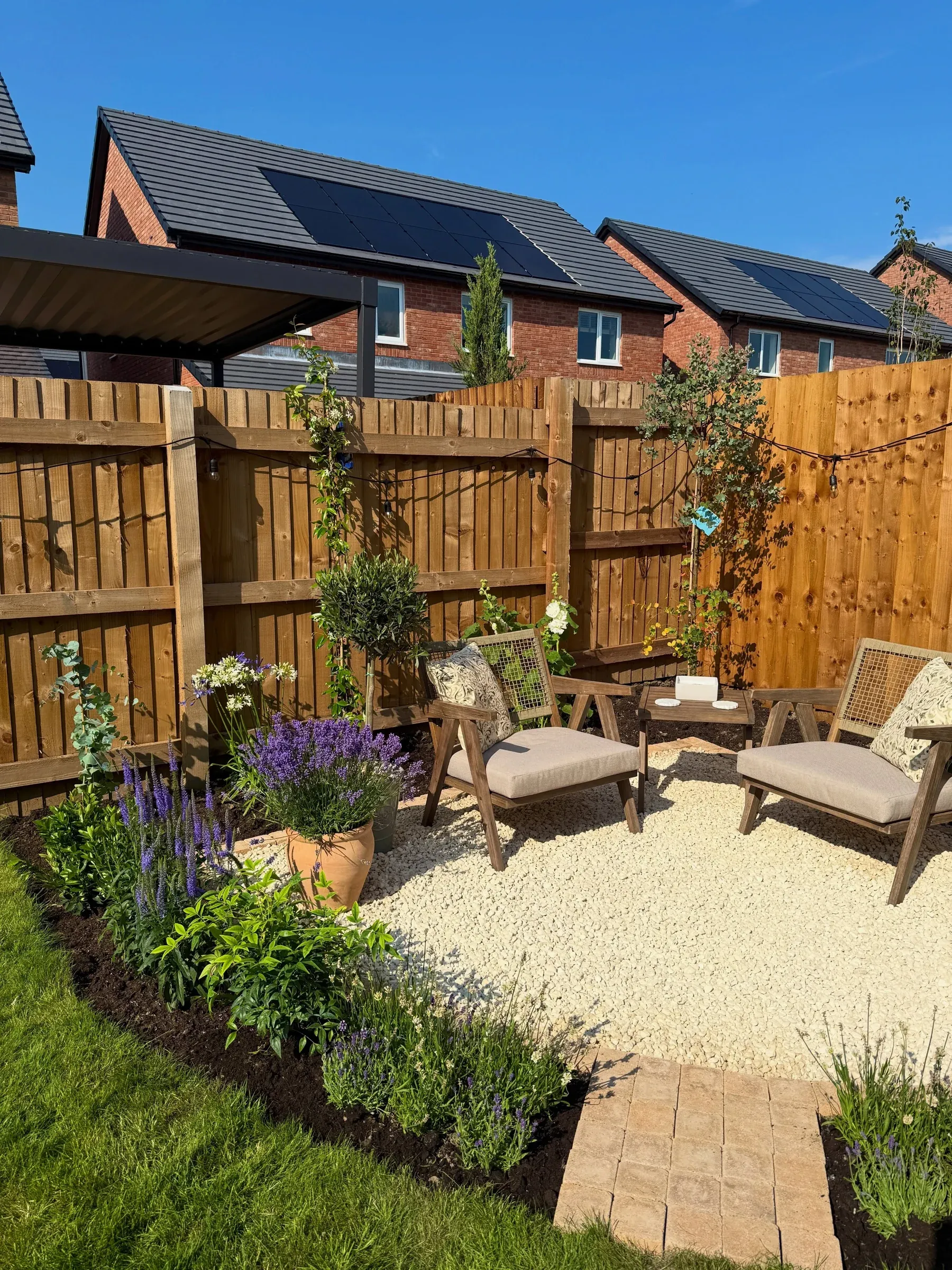
A small patio tucked away among plants can take on a more secluded appearance, with the plants providing visual styling around it. Climbing greenery, purple flowers, and potted trees bring softness around the gravel and curved path, helping soften the fence and seating area.
A new-build yard does not need a full renovation to gain charm. A plant-focused patio design can add that charm without requiring a full renovation.
Tipped Flower Pot
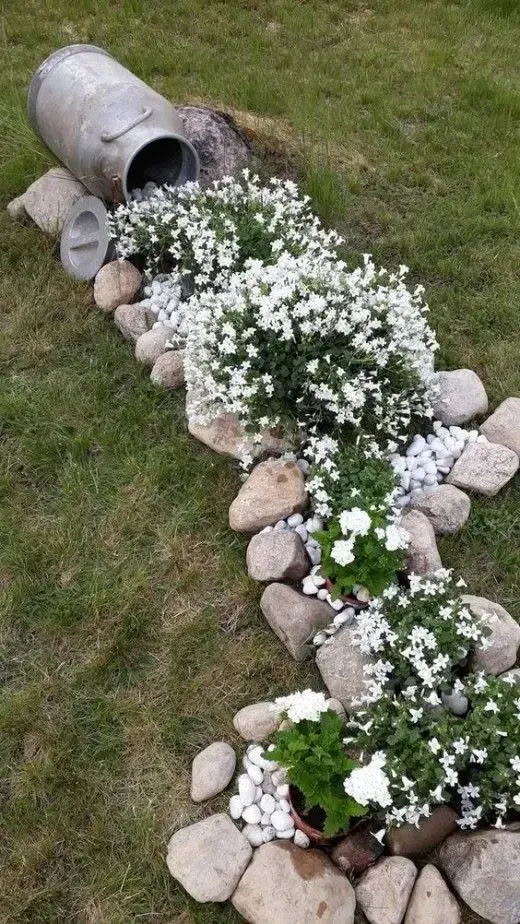
In the flower bed, a tipped flower pot reduces the formal appearance of the planting.
White flowers, stones, and a curved border can be arranged around the tipped pot. Together, they suggest blooms spilling out into the bed.
An old, chipped flower pot works well as a budget project and can be used as the tipped pot in the bed.
Sun Hanging for the Wall
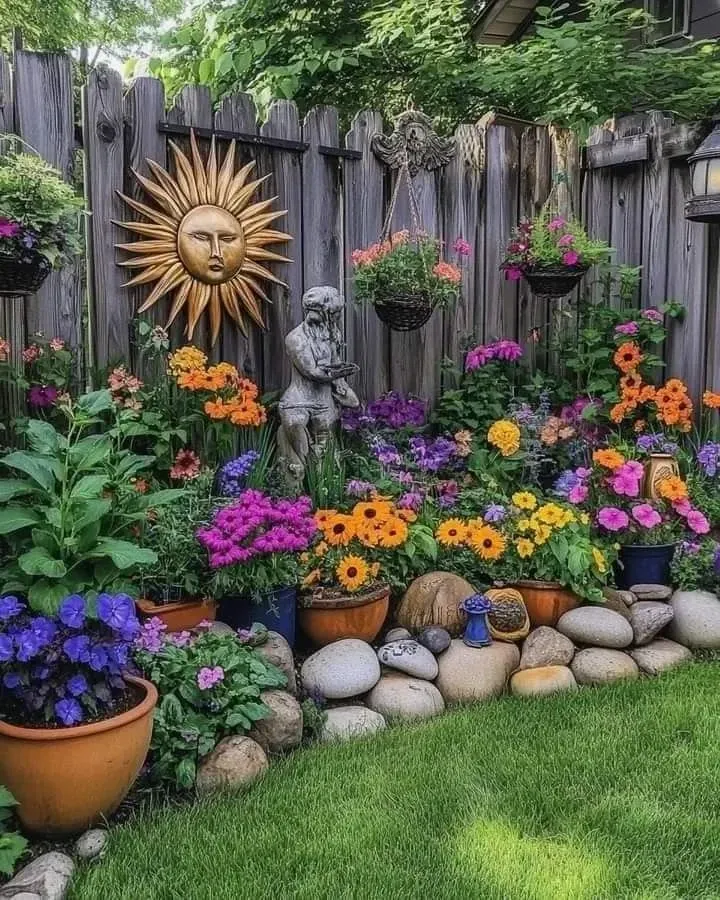
On a plain fence, a sun wall hanging makes the fence look more intentional. The hanging gives the fence a defined feature rather than leaving it plain.
A garden corner does not need much furniture to increase its brightness. Orange flowers, hanging baskets, terracotta pots, and rocks can bring brightness to the corner without much furniture.
For garden areas needing height, use a sun wall hanging to prioritize vertical interest. I recommend it when adding vertical interest matters more than adding additional ground-level plants.
Garden Nook with Rustic Style
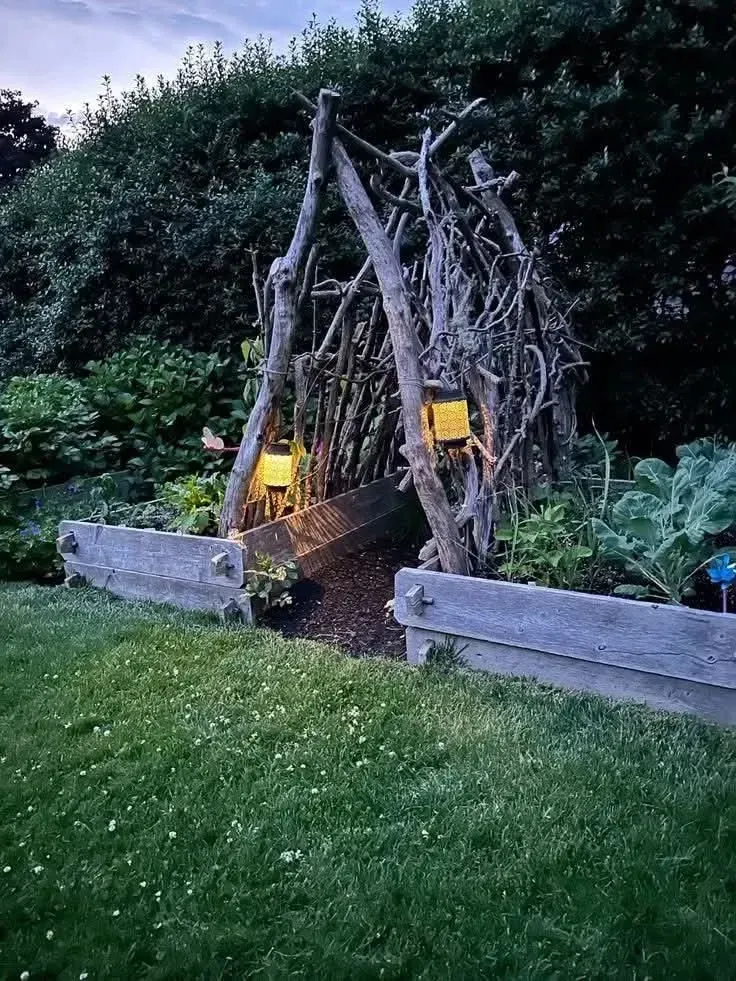
A handmade frame of branches gives the garden nook its secret appearance.
A warm lantern is part of the nook, along with climbing greenery, a planter box, and a small bench. The nook functions as a seating area, and the bench enables sitting.
Natural, rough wood is the right choice for this garden nook. Polished wood can cause a loss of charm, so avoid an overly polished wood finish.
Hand-Painted Garden Sign
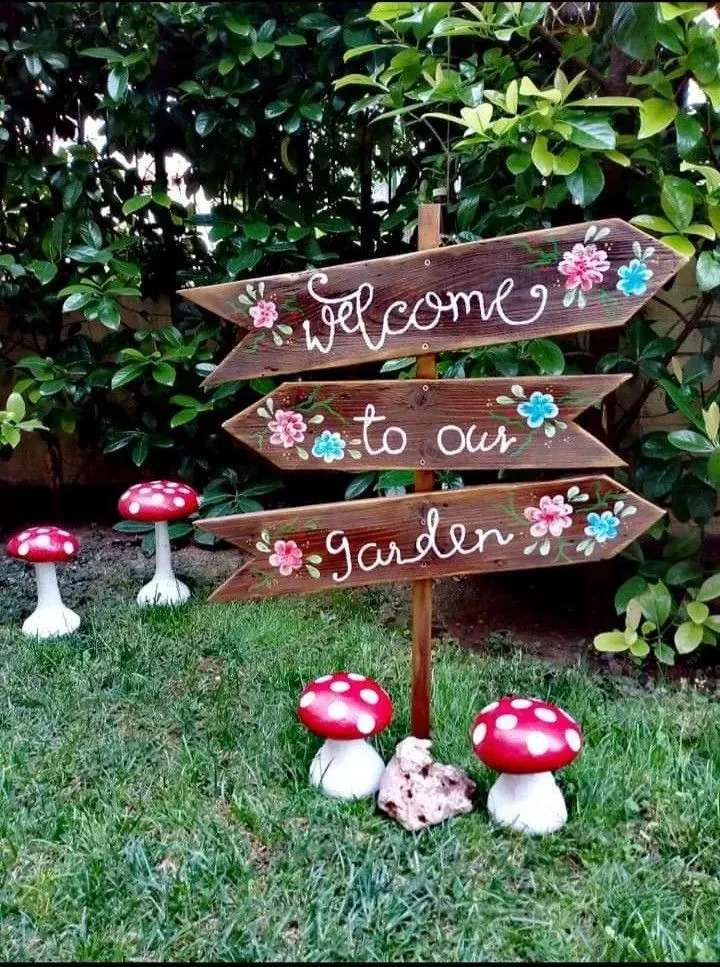
The sign is hand-painted, which gives it personal character in the garden. Its finish can feel more individual than a plain store-bought marker.
Several red mushroom decorations surround the sign and support a fairy-tale style. The look works without a large display.
Scrap wood and outdoor paint can be used as materials for the garden sign, with a small garden decoration used alongside it. The sign is suitable for a DIY project.
String Lights
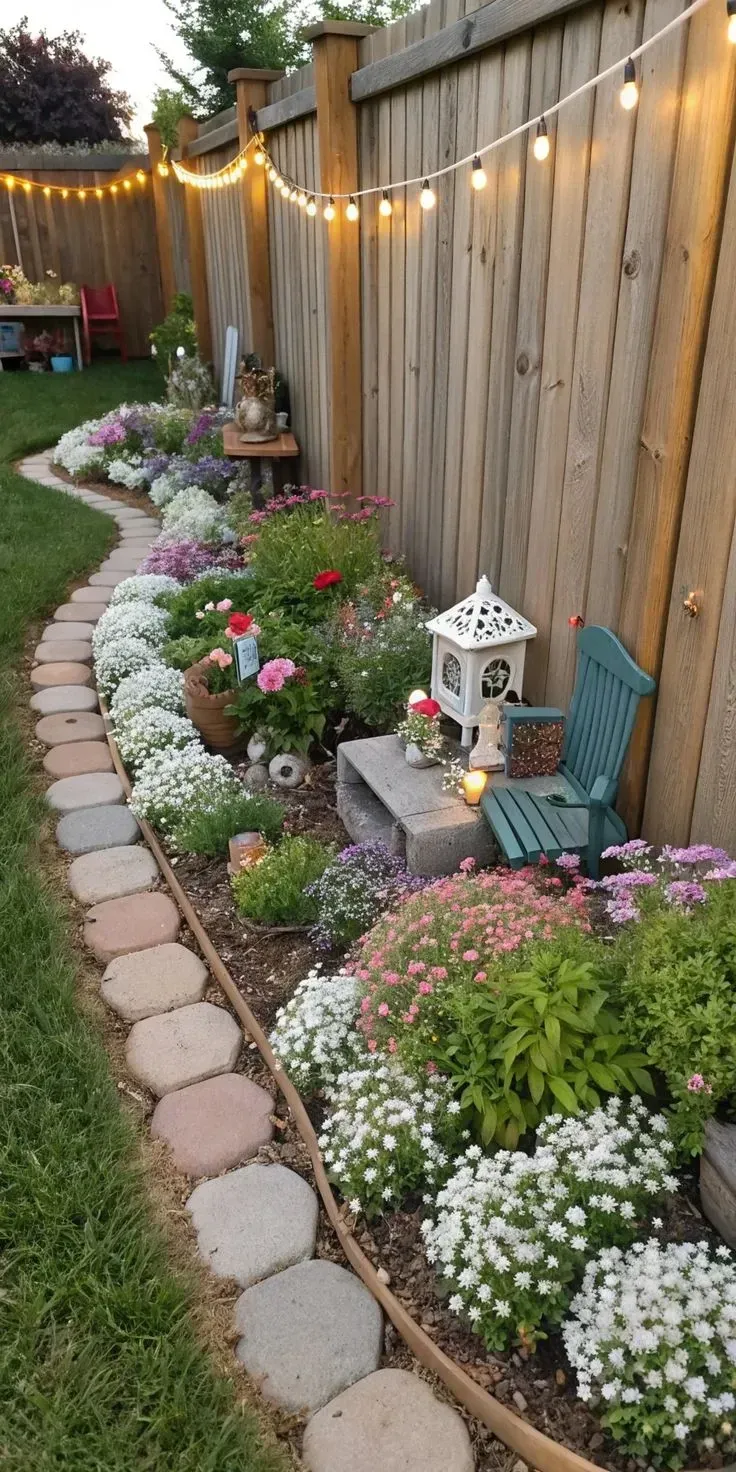
A narrow garden bed can be one of the easiest places to add string lights. Run them along the plain fence, where they suit the garden bed without needing much space.
A garden corner can support sitting when it has curved edging, white flowers, a lantern, and a blue chair. The chair gives the corner a place to sit among the other features.
Run string lights beside a side path or along a skinny grass strip. I recommend them for increasing the nighttime atmosphere.
Tiny White Garden Fence
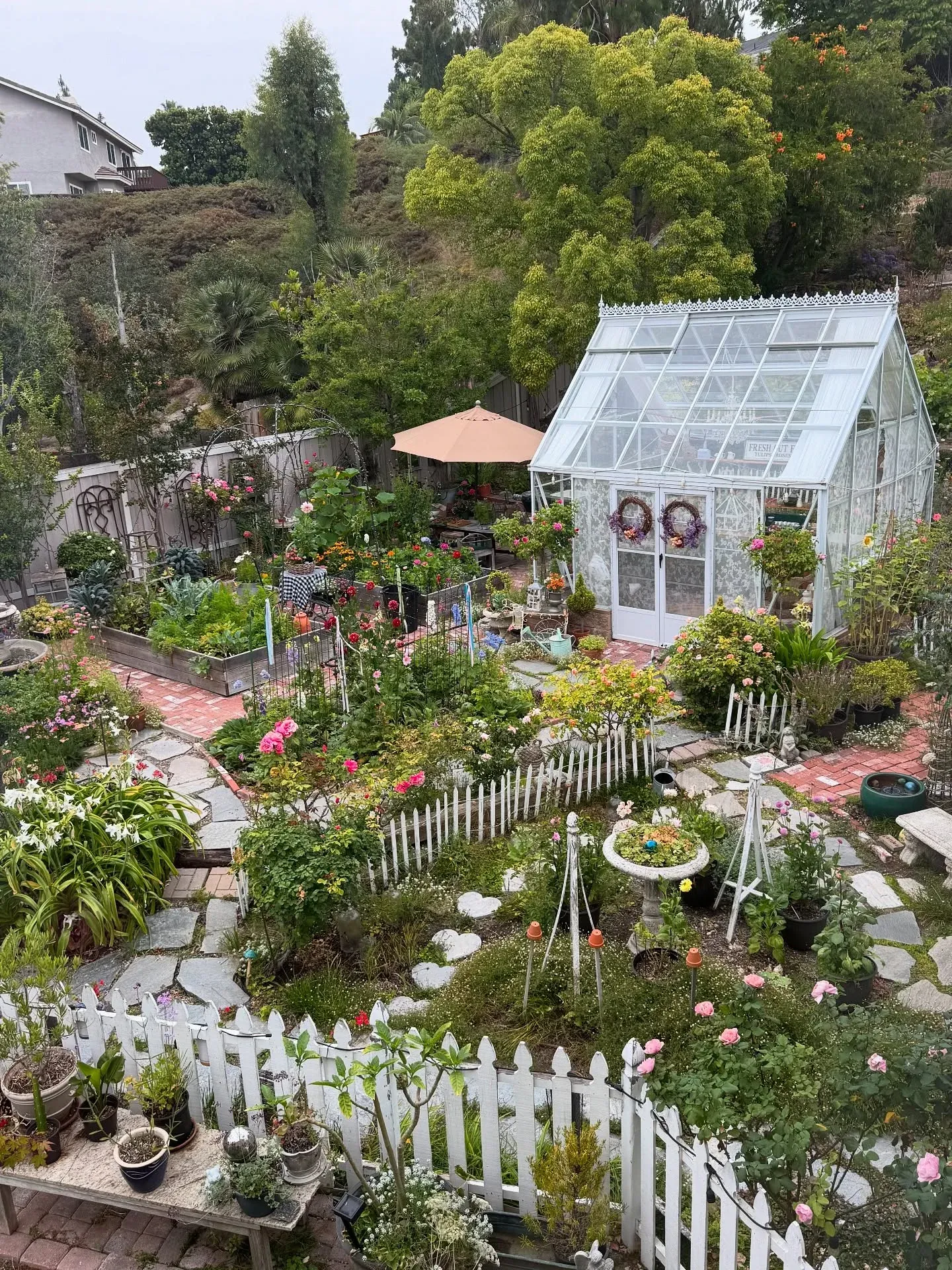
At the edge of the garden, a tiny white fence supports a storybook style.
Paths, edging, pots, a planted border, and a small greenhouse can divide the garden space into separate areas. Together, they keep the yard from looking like one single flower patch.
In a larger backyard, a zoned garden is recommended over one open lawn. Dividing the space gives each area its own place.
Mosaic Path
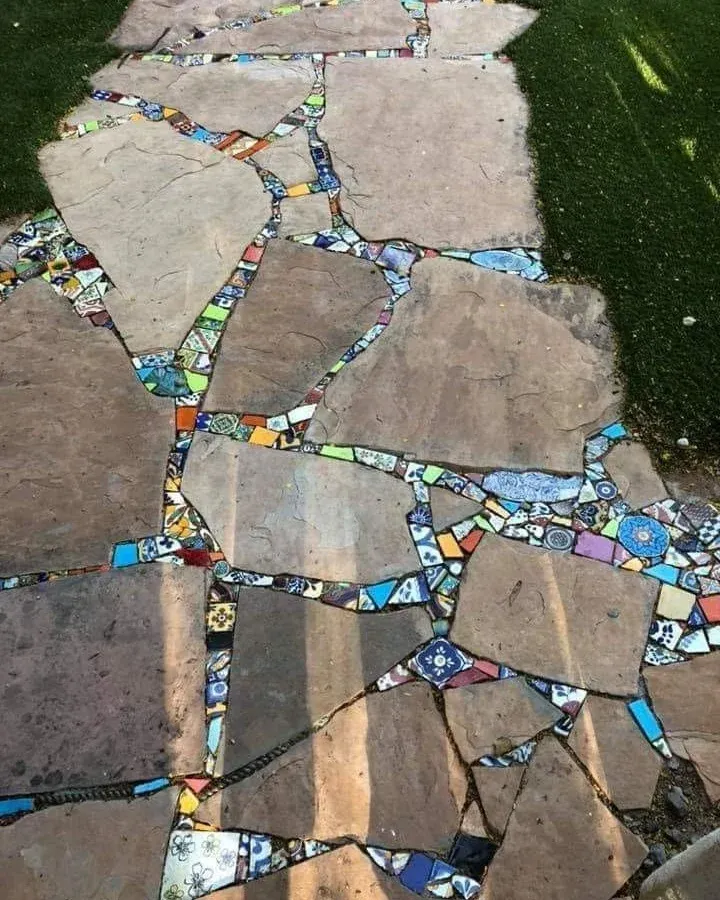
Plain pavers can feel too dull, while a mosaic path brings more visual interest to the same walking route. Color in the gaps gives the area added detail, while the main stones stay flat and comfortable for walking.
The path remains practical for walking, but the mosaic pattern gives it personality as well.
Tiered Planter
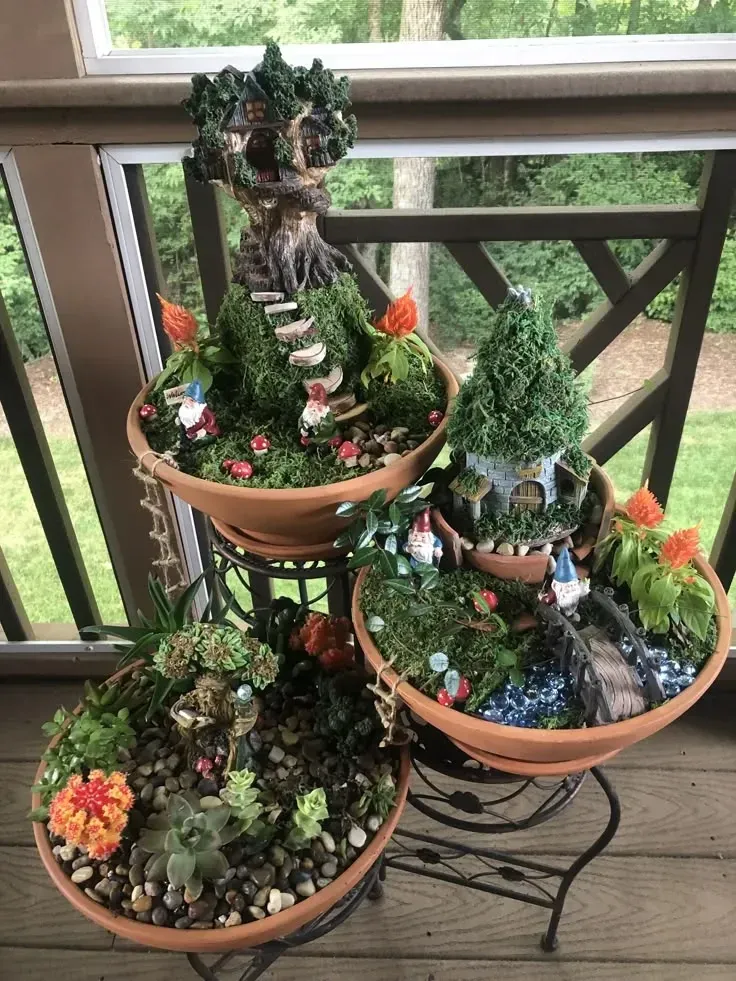
A tiered planter needs little space, so it works well in a small garden while preserving floor space. Its levels give the garden more room for planting without using much ground.
At different levels, place tiny trees, small figures, moss, miniature houses, and small flowers so the scene has details to view from every angle.
When there is no full flower bed available, use a tiered planter on the balcony or deck.
Wildflower Path
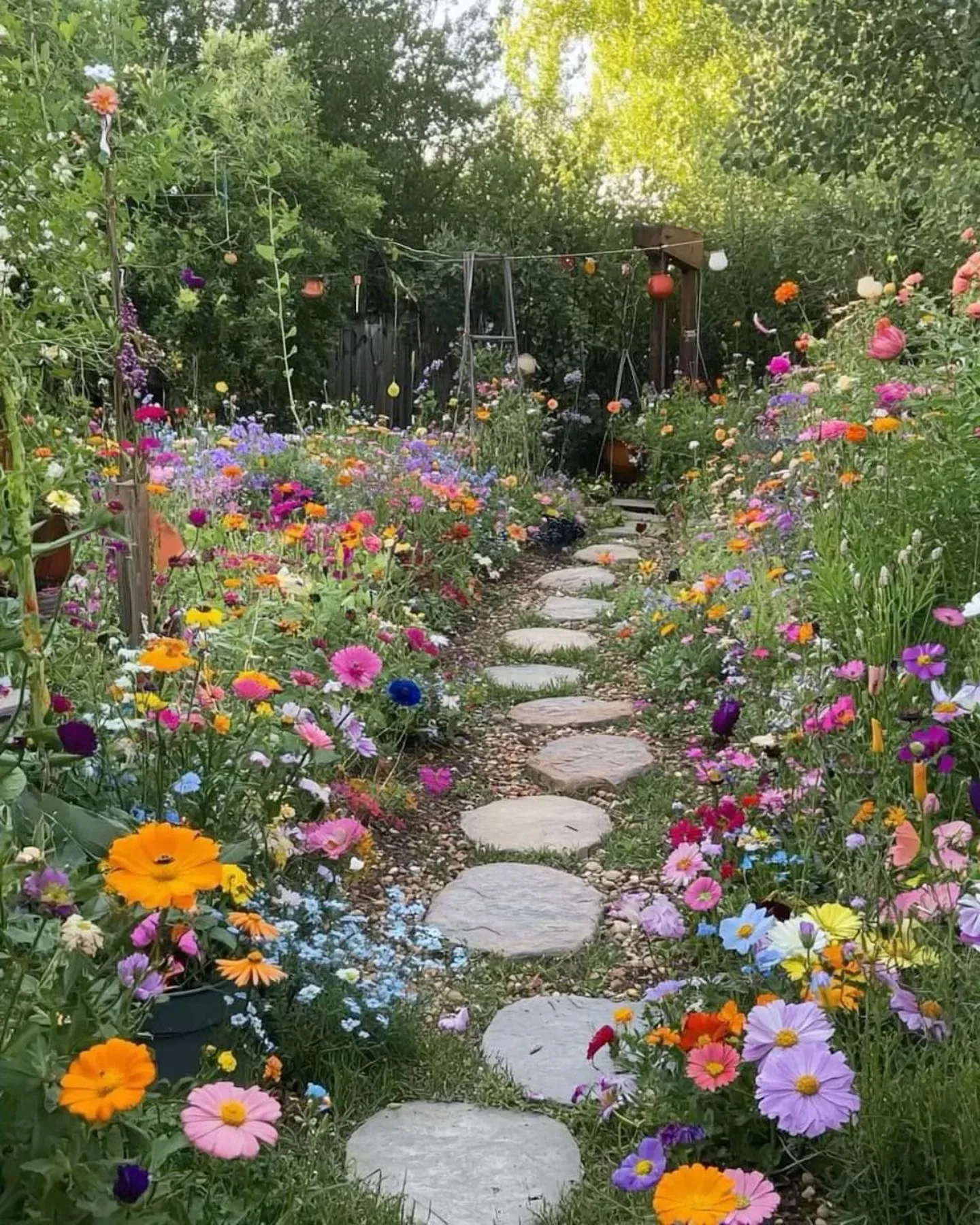
Flowers along the path edges brush against a stepping-stone path. That makes the path look sweeter.
Mix tall stems with low filler flowers so the different heights create a full path while preserving walkability. The flowers can fill out the sides without taking over the walking space.
A cottage garden setting suits a wildflower path better than a neat border. The looser path fits naturally with the cottage garden style.
Woodland Playhouse
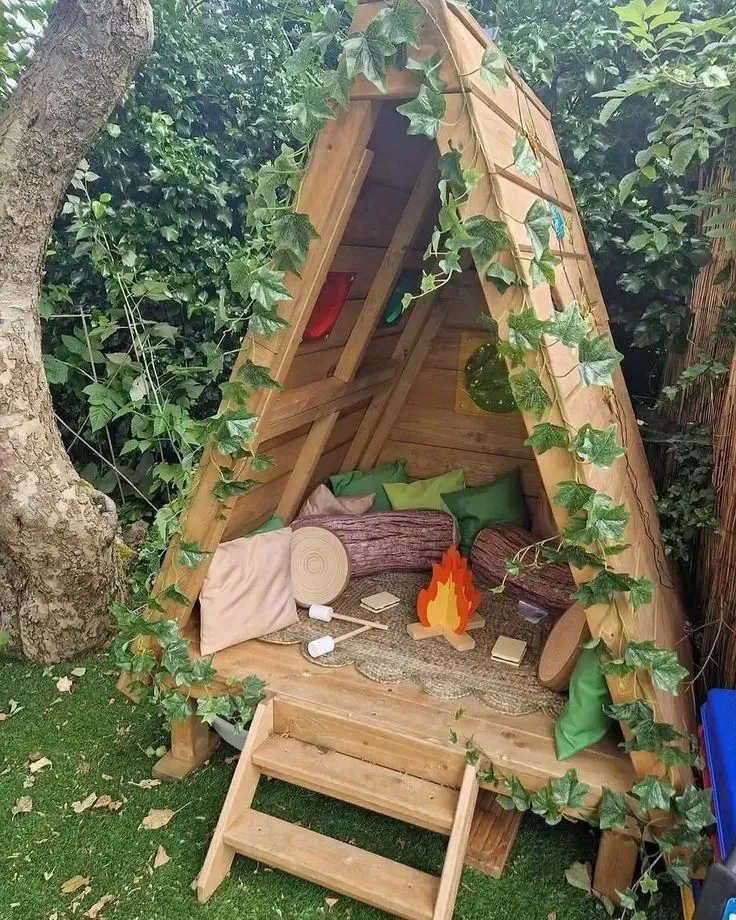
In the garden, a non-plastic woodland playhouse can blend with its surroundings and become part of the garden. Ivy winds around the wooden steps, while log details and soft cushions contribute to the cozy handmade style.
Use natural materials in the children’s area so the yard keeps its natural appearance.
Flowers Between Steps
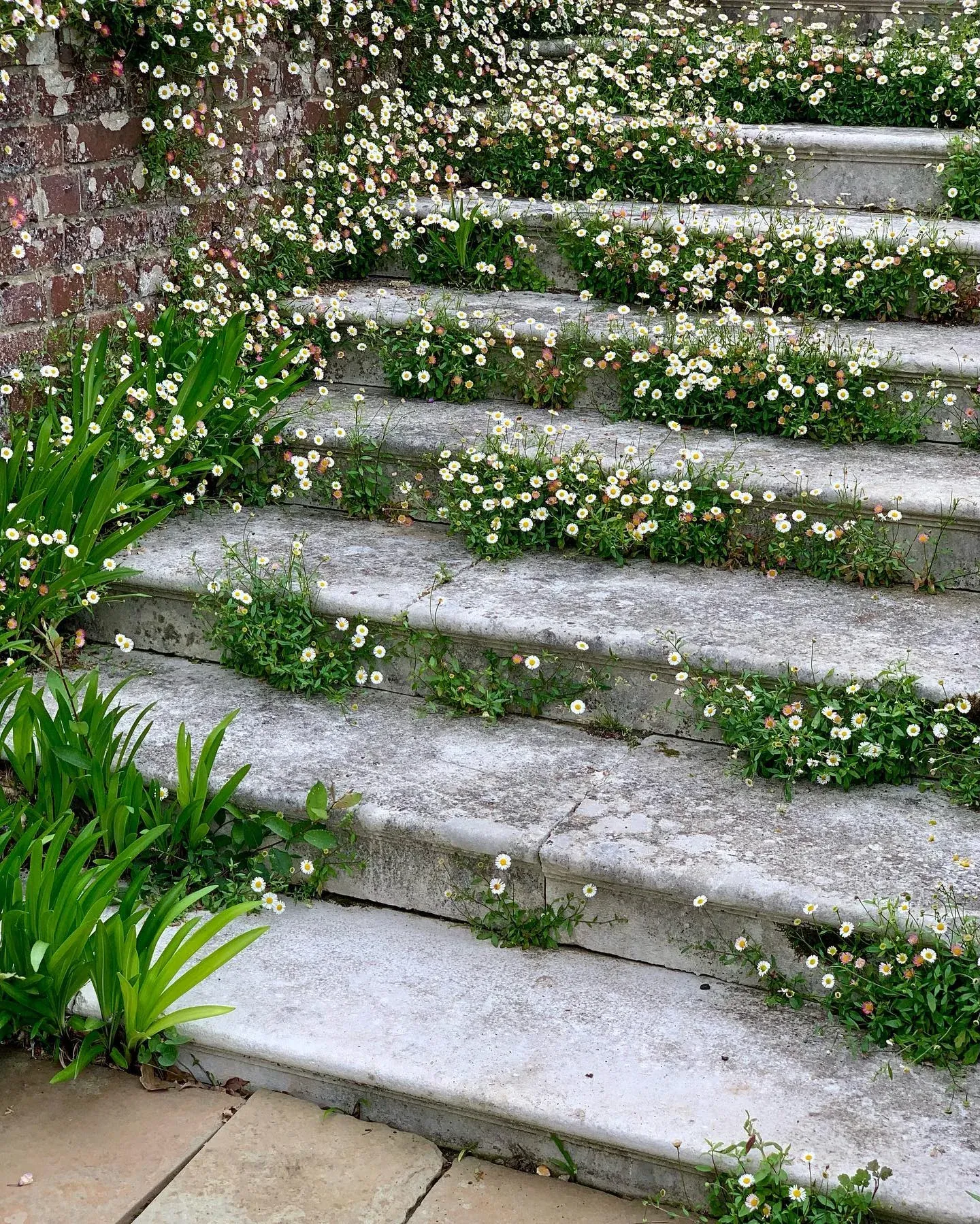
White flowers growing between stone steps soften the appearance of the path. They fill the space between the steps without changing the path itself.
Plant low-growing plants in the step cracks and along the step sides. Creeping thyme, alyssum, and daisies can create a similar appearance, although those examples are not exclusive.
Small planting pockets can remain between the steps, rather than filling every gap with gravel or mortar. This keeps those spaces open for planting.