
Deep pantry shelves can hold plenty, but they also have a talent for swallowing everything behind the front row.
The fix is to stop using each shelf as one enormous surface. Bins, drawers, risers, and containers can bring hidden items forward where you can actually see them.
These ideas focus on making the entire shelf usable, not simply making the front look tidy.
Before buying a collection of tiny matching containers, measure your shelves. Small containers may look appealing, but they can leave a surprising amount of unused space when they do not reach the full depth.
Start with bins that function like drawers. When a whole bin slides out, you can check the back without uncovering three forgotten, half open bags of pasta.
Place heavier items on the lower shelves and keep frequently used snacks or breakfast foods close to eye level. It is a small adjustment, but it can make a compact pantry much easier to use each day.
Working with a limited budget? Choose the shelf causing the most trouble and begin there instead of tackling the entire pantry. A few clear bins, a lazy Susan for bottles, and a riser for cans can create more improvement than a completely matching storage system.
Hold off on labeling every container until you understand how the space naturally works. Try the arrangement for a week, then label the categories that consistently stay in the same place.
Give each bin a clear purpose, such as baking, pasta, snacks, breakfast, cans, back stock, or lunchbox supplies. The category is more useful than making every container look exactly the same.
In a busy household, keep the easiest grab and go foods toward the front. Store extra supplies behind them so the pantry remains practical while everyone is reaching in, not only when the organizing is freshly finished.
Leave a little open space whenever possible. A shelf packed right to the edge may look appealing in a photo, but it becomes frustrating when new groceries arrive and there is no room to place them.
Try not to pile too many loose items on top of one another. Deep shelves already make items harder to spot, and unstable piles make it even less clear what is available.
For deep, awkward corners, choose a lazy Susan or turntable instead of a rectangular bin. Rotating storage can make bottles, spreads, sauces, and baking supplies easier to reach without removing half the shelf.
Keep back stock in its own area, separate from food that is currently open or in use. This prevents open packets from disappearing behind unopened extras and helps keep the pantry from becoming cluttered again.
Now, let’s get into how to organize a small pantry with deep shelves.
Matching Bins for Deep Shelves
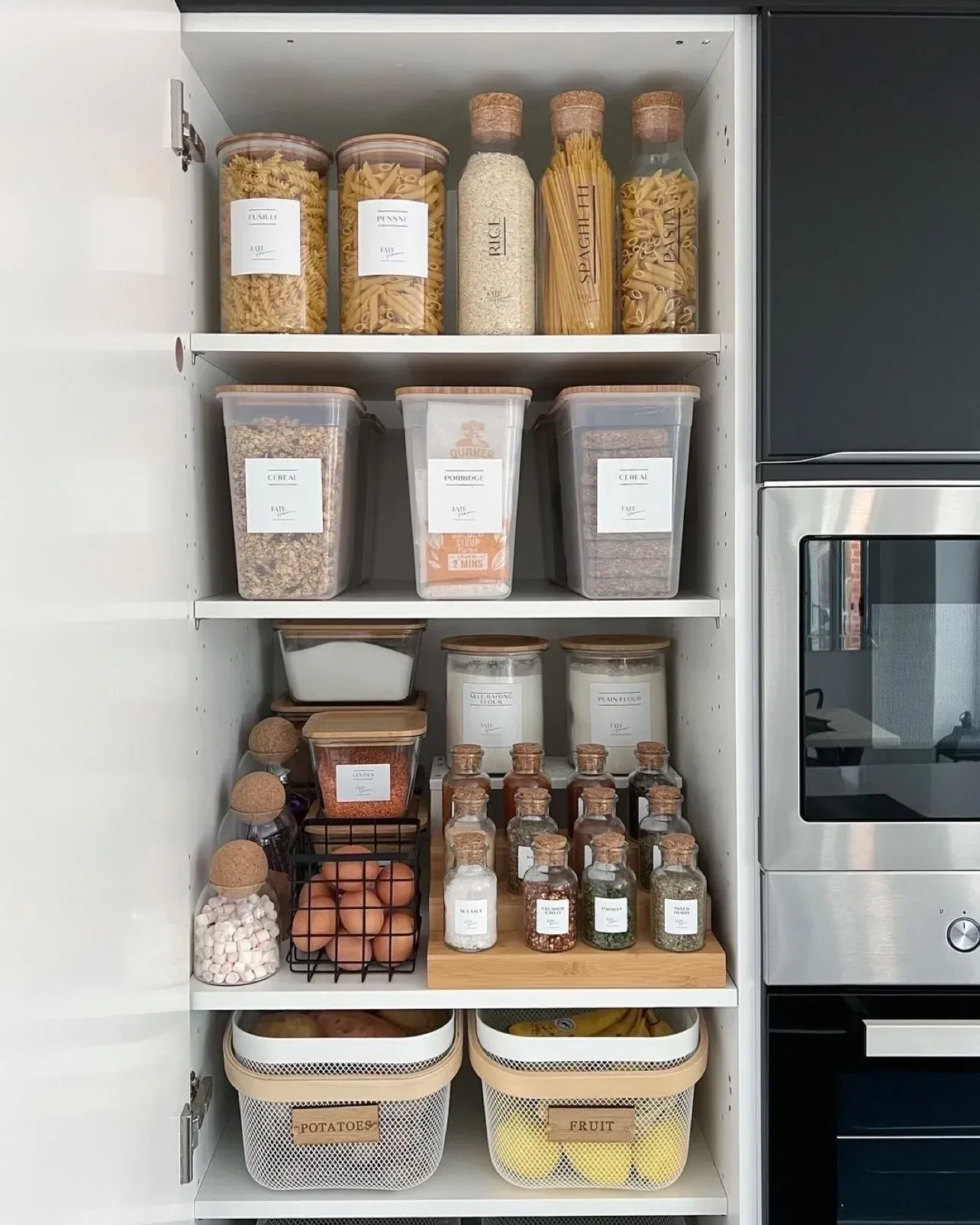
Deep shelves need containers that pull forward, so the back is easier to reach. These containers bring stored items within view instead of leaving them buried behind other things.
Matching bins organize categories and reduce digging around in the rear. They also make it easier to access each category.
Put labels at the front. This makes grocery unpacking easier.
Drawers That Pull Out
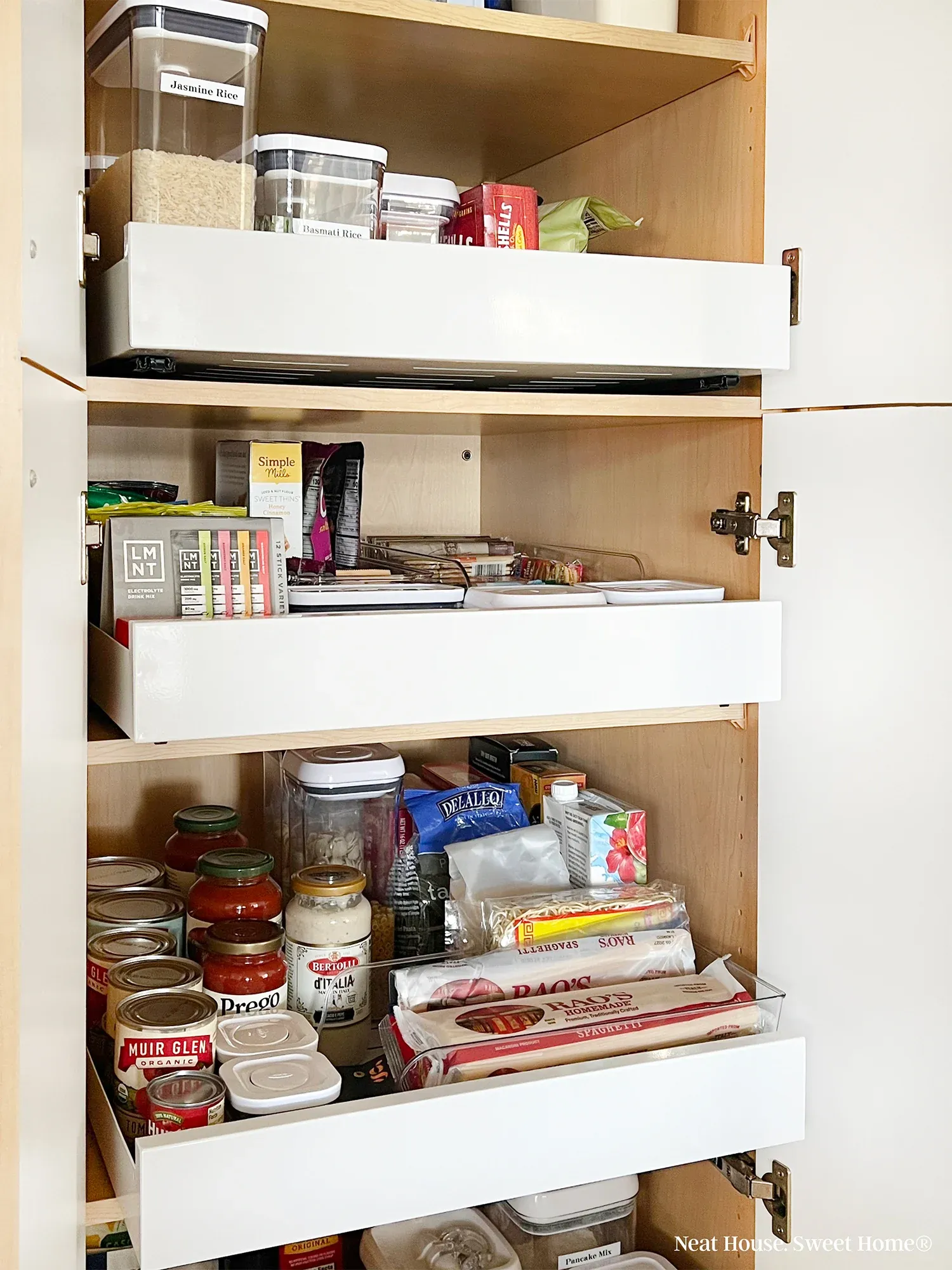
Deep shelves can probably be handled best with pull-out drawers.
With pull-out drawers, the whole shelf moves forward. That improves visibility at the rear.
Packets and jars are especially well suited to pull-out drawers. They help address the problem of lost items in deep storage.
Dry Goods in Clear Containers
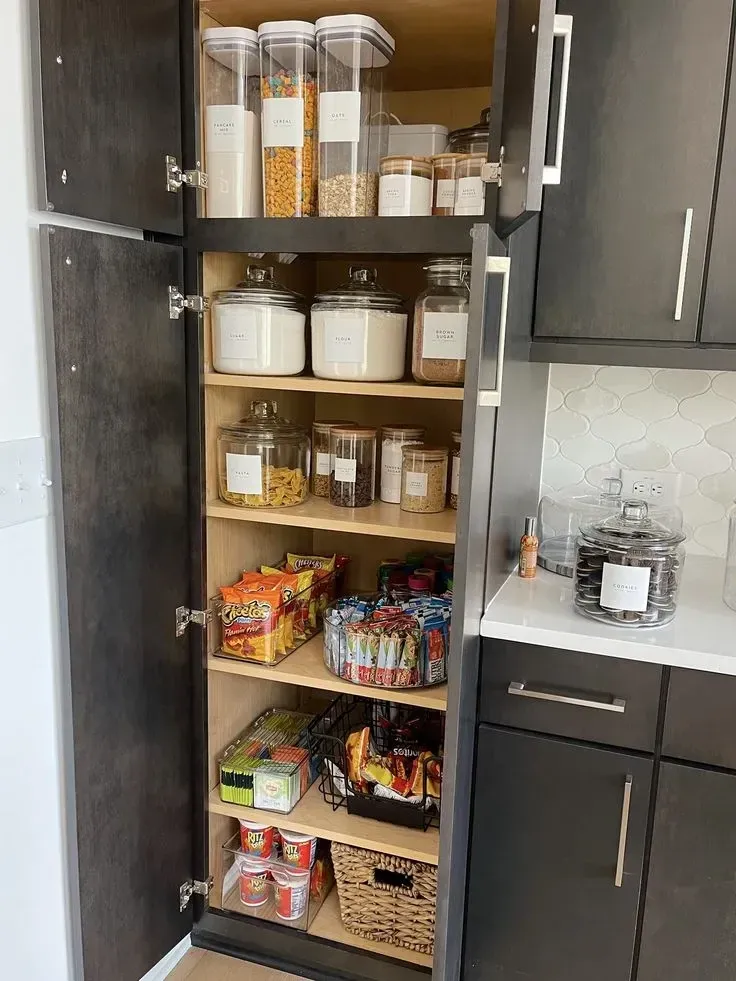
Clear containers improve visibility on deep shelves and show when stock is low. You can see what is stored without looking through an opaque container.
Keep tall containers toward the back and small jars toward the front. This arrangement places the taller items behind the shorter ones.
Use clear containers for foods you often purchase, including rice, pasta, oats, and cereal.
Labels for Main Items
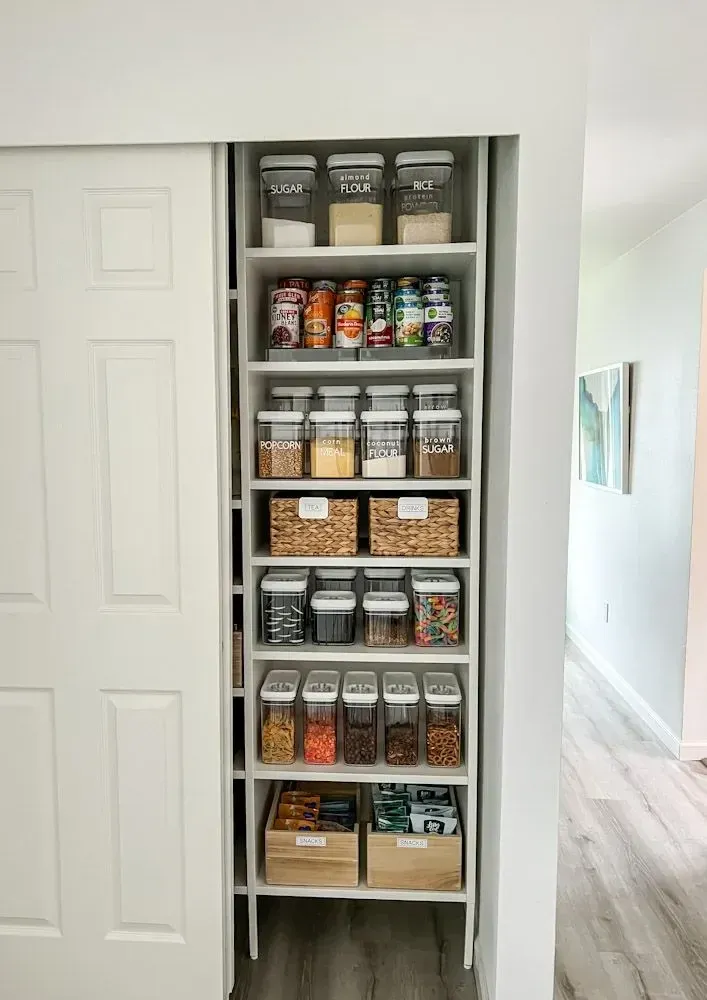
Labels have greater importance in a deep pantry. They identify the main items even when those items sit farther back.
In the bins, unclear labels can cause items to be misplaced. Organization can also change gradually.
Labels make it easier for other people to return items. They can see where each item belongs.
Baskets Mixed with Jars
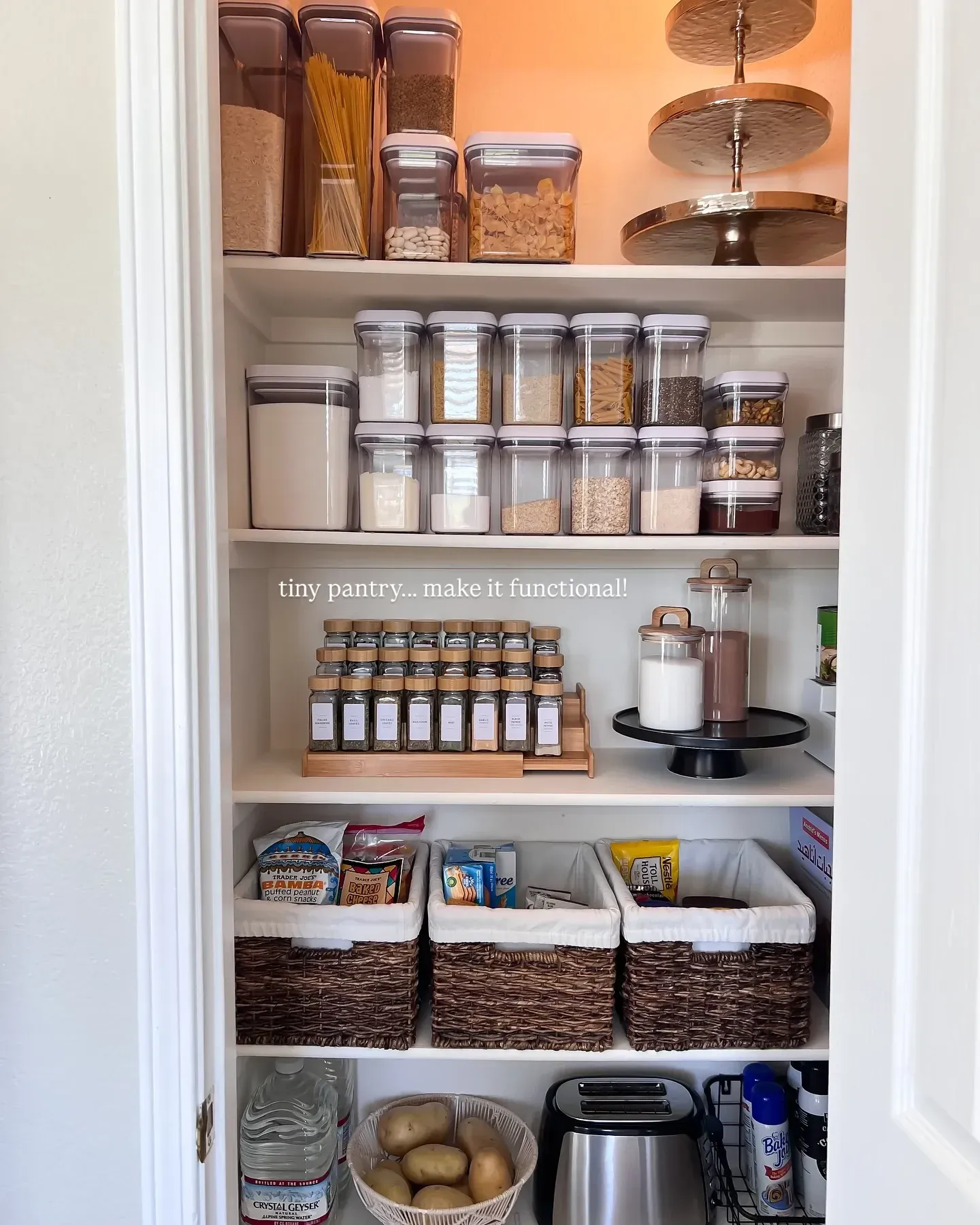
Jars display dry goods, while baskets hold packets. Using both gives the pantry a place for each type of item.
Shelves can have clear purposes, and the pantry can stay maintained. Each shelf then has an understood role.
Weekly foods can go into jars. Baskets are used for snacks.
Potato and Onion Baskets
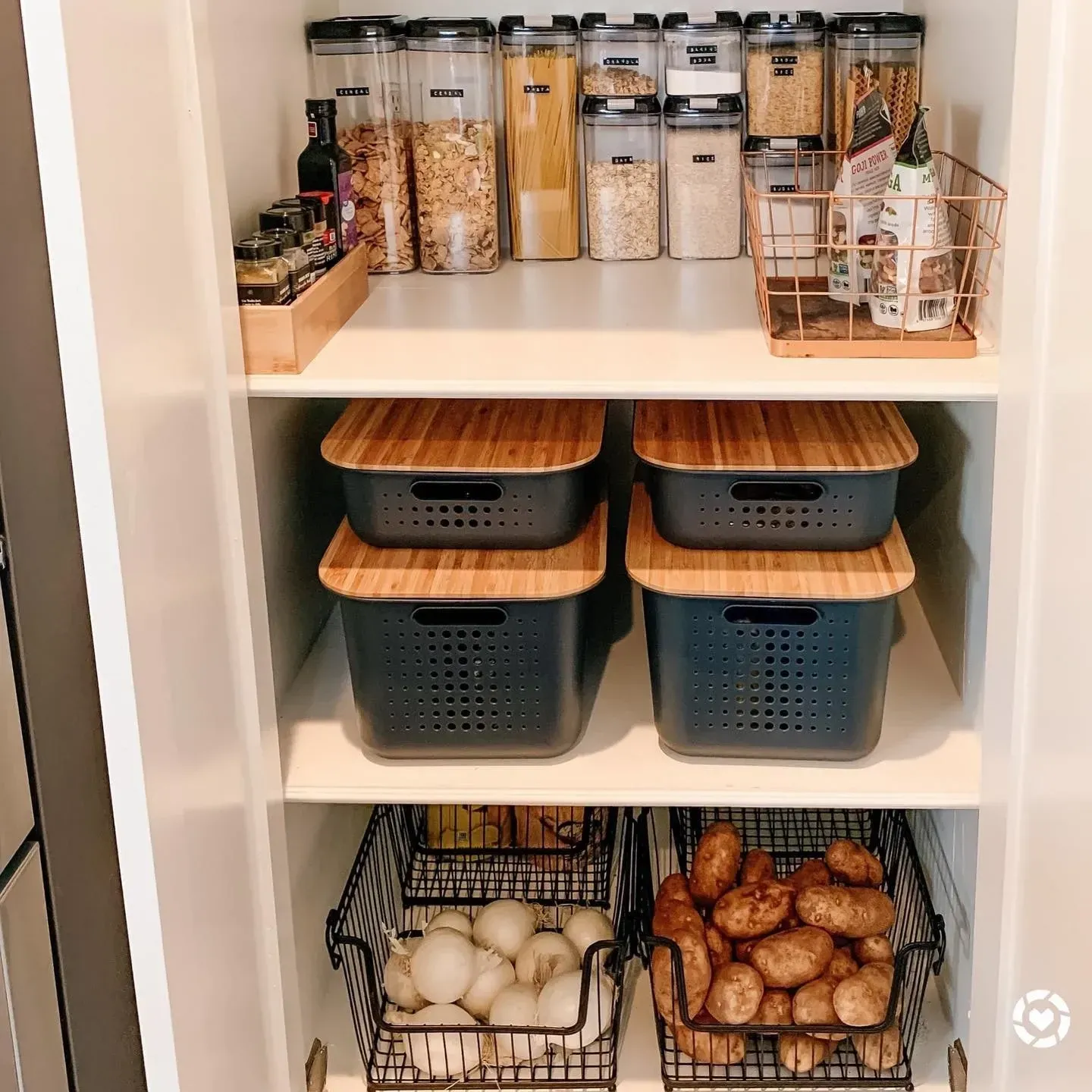
Deep lower shelves are suited for heavy foods such as potatoes and onions. Their lower position supports these heavier items.
Open or wire baskets make produce easier to access. Their design also allows air circulation.
Keep potatoes and onions low because they are heavy. Low placement reduces awkward lifting.
Large Bins on High Shelves
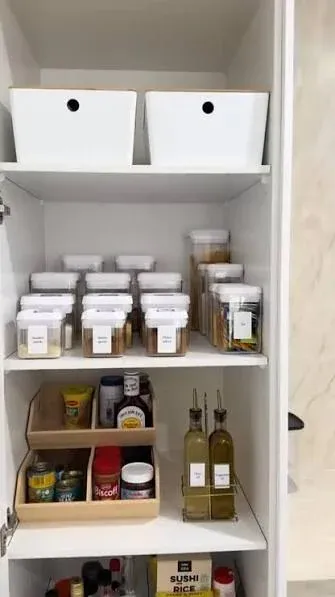
High shelves are a good spot for items you use infrequently.
Small jars belong on the lower shelves below the bins, where they are easy to reach, while bulky items stay contained.
Tiny loose items are difficult to find when stored high. Avoid placing them on the high shelves.
Zoned Pantry
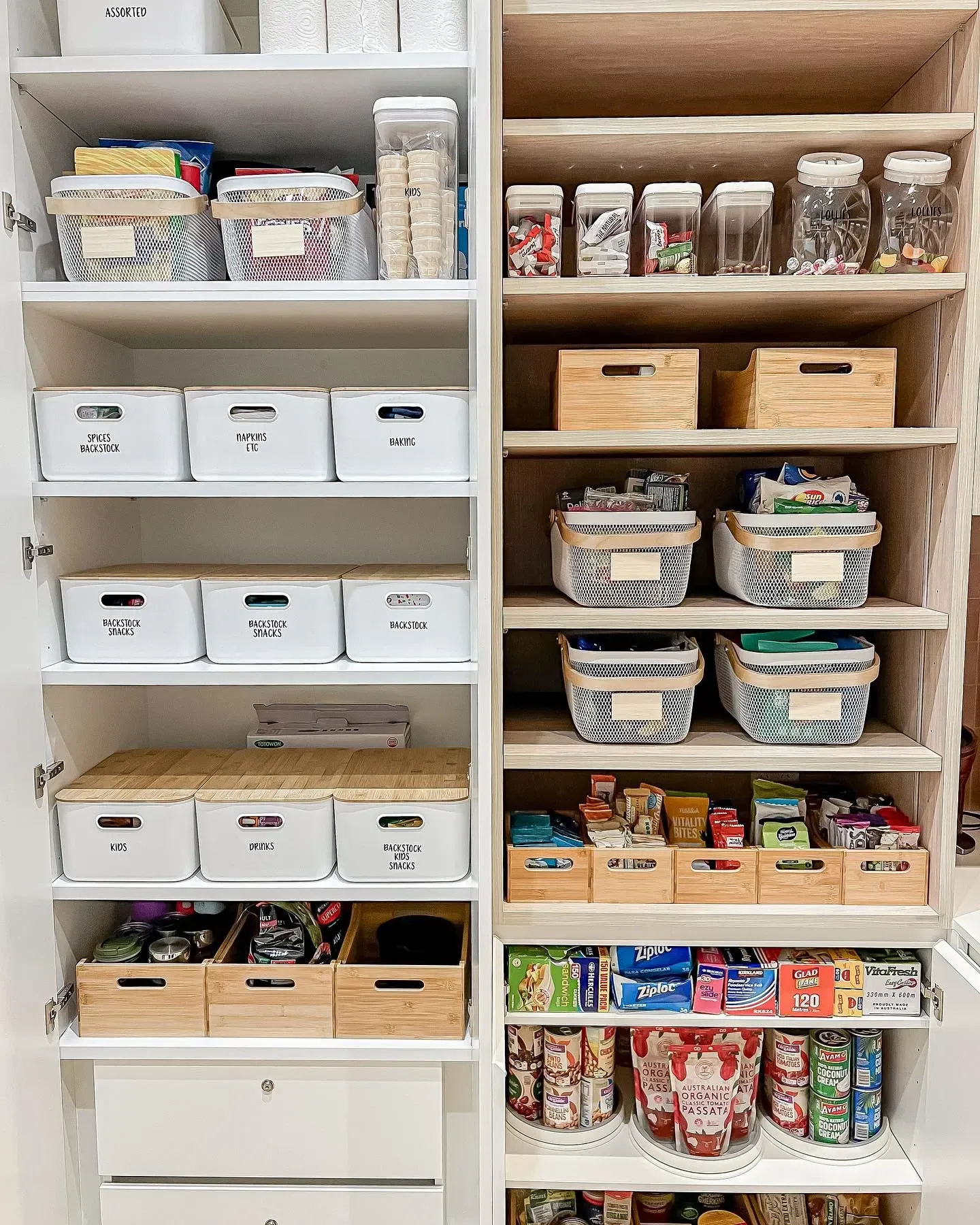
Pantry zones support manageable organization by giving different areas a clear purpose.
The pantry keeps bins and drawers on one side, while jars, snacks, and cans occupy the other. Separating these categories makes organization easier.
Zoned storage gives deep shelves a clearer structure. Dividing the shelves into zones makes them feel less overwhelming.
Storage Turntables
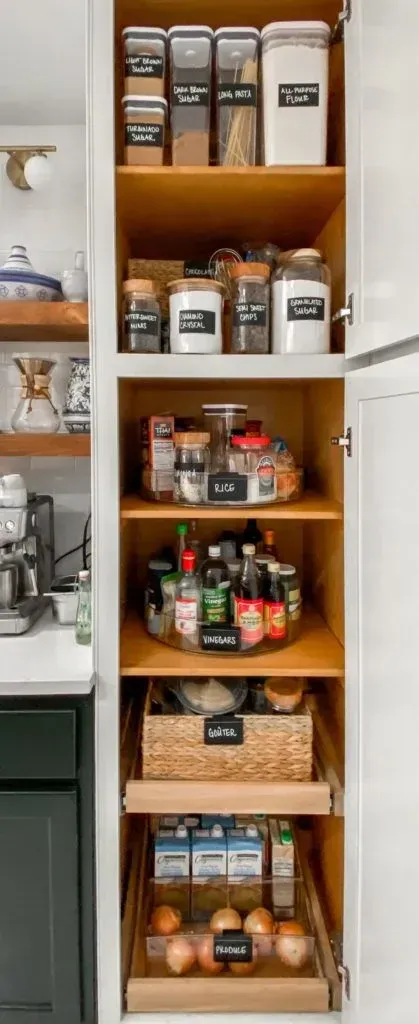
For a narrow pantry with high capacity, organize the shelves by type.
Turntable shelf storage improves access when items are not behind larger packets. Cans and jars are easy to reach on the turntable.
Place duplicates behind the front item. Keeping items at the front supports visibility of the available stock.
Door Storage
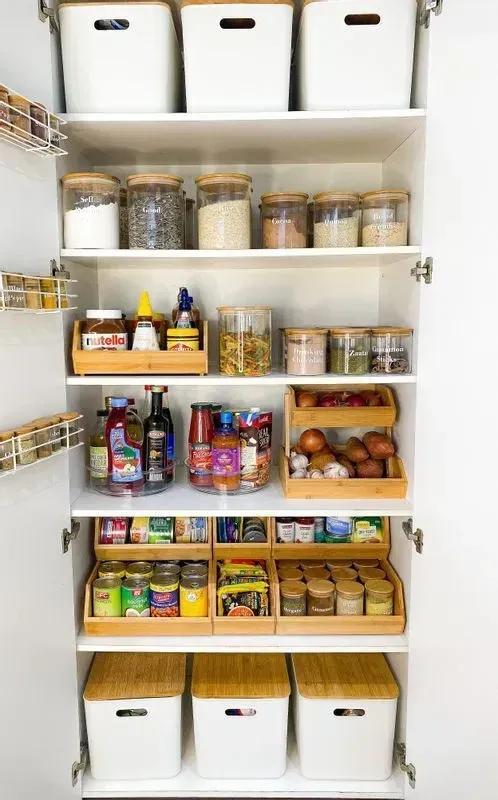
Door storage helps when the deep shelves are full.
In the door, bottles, packets, and smaller items each have a designated spot. This door storage keeps them from being buried.
Use the door storage for lighter items and the main shelves for heavier jars.