
Small laundry rooms can still feel smart, organized, and easy to use. These stacked washer and dryer ideas show how to make every bit of space count.
Stacking the machines frees up valuable floor space, while the right layout keeps baskets, detergent, wet clothes, towels, and folding space within reach.
From vertical storage and slim counters to hanging rails, pull-out shelves, baskets, and doors, these rooms pair practical function with a polished look.
Nook for a counter beside machines
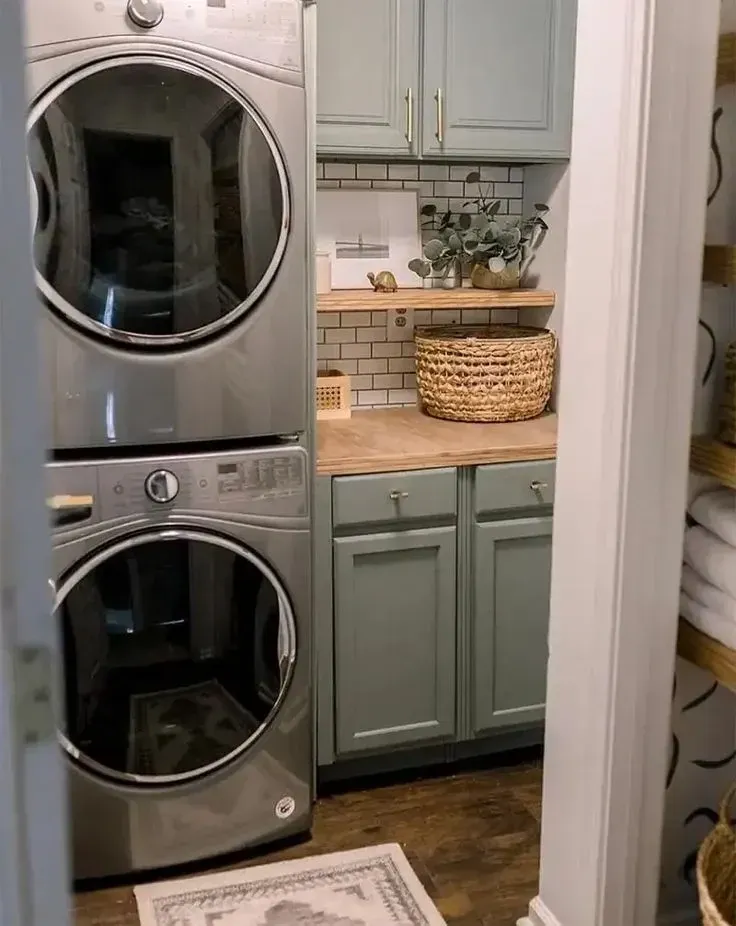
Beside the stacked machines, a small counter nook gives you a place to set items down. It also prevents clutter from collecting on top of the dryer.
A basket can keep products hidden below or near the work surface, while plants or a small tray can sit on the counter. Keep the plants or tray only if the work surface remains uncrowded.
Beside the machines, a counter nook provides a landing spot for items when a long bench does not fit.
Combined Laundry Bathroom
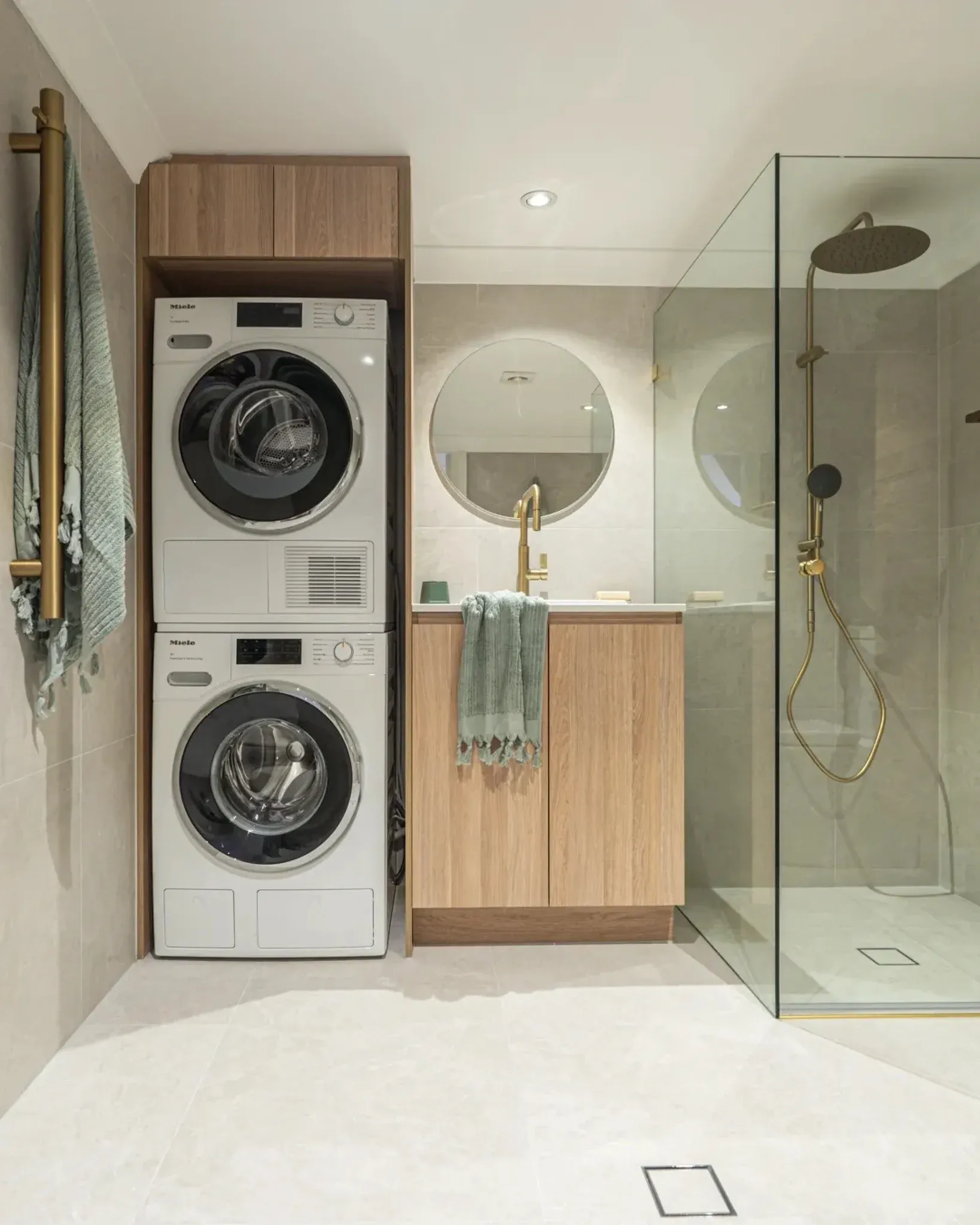
A bathroom can suit a stacked washer and dryer when the layout allows it. This bathroom laundry arrangement is conditional, so assign clear zones before combining the two areas.
Leaving the vanity and shower area open helps reduce crowding. The machines stay together in one column so the rest of the space remains clear.
A combined laundry-bathroom can be useful for apartments with shared rooms, where laundry placement has to work within a shared space.
Planning Stacked Laundry
Without a landing spot, clothes tend to end up on top of the machines or dumped on the floor. Plan the laundry basket location first so the clothes have somewhere to go.
A tiny pull-out shelf can make the room easier to use, especially when it provides a folding surface and a place for detergent. Include a hanging rail and a drying area as well.
Baskets can hold cloths, while open shelves keep towels within reach. Use closed cabinets for bulk supplies and open storage for items used often.
Use doors when the laundry is in a hallway, bathroom, or closet and sits in a visible area. A closable laundry area can support a calmer small home.
Tiny layout with a sink

Stacking the washer and dryer creates room for a sink, even when the laundry area is very tight.
Use the sink before washing to soak stained clothes, rinse cleaning cloths, and prewash muddy items.
In a narrow layout, light-colored cabinets paired with a wooden counter can reduce the boxed-in feeling.
Color for a Stacked Washer-Dryer
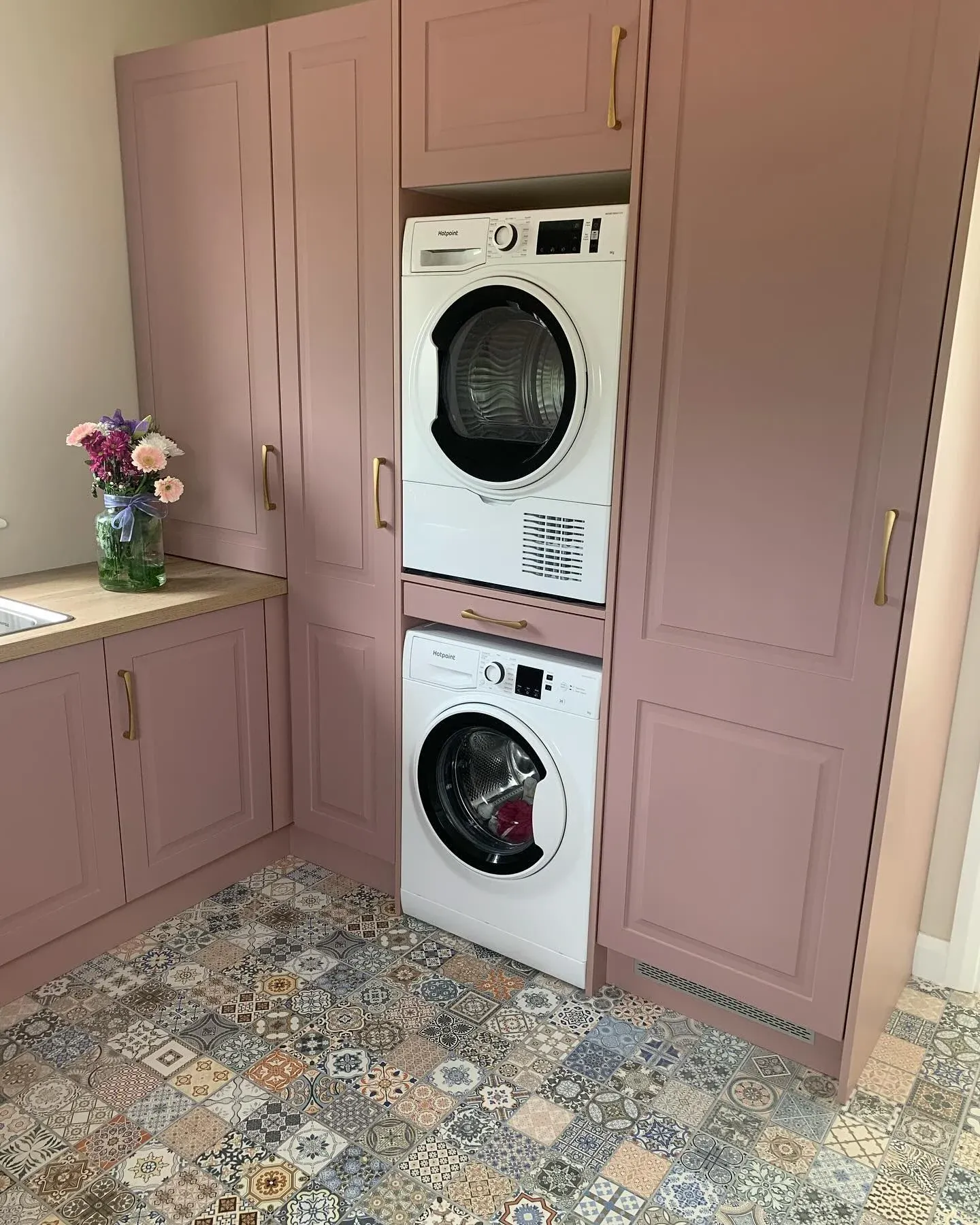
Color can give a stacked washer-dryer setup a more intentional appearance.
Bulk laundry supplies and cleaning products have a concealed place in the pink cabinets, which sit on both sides.
A patterned floor adds personality when the small laundry room has limited space for decor.
Folding station in mini size
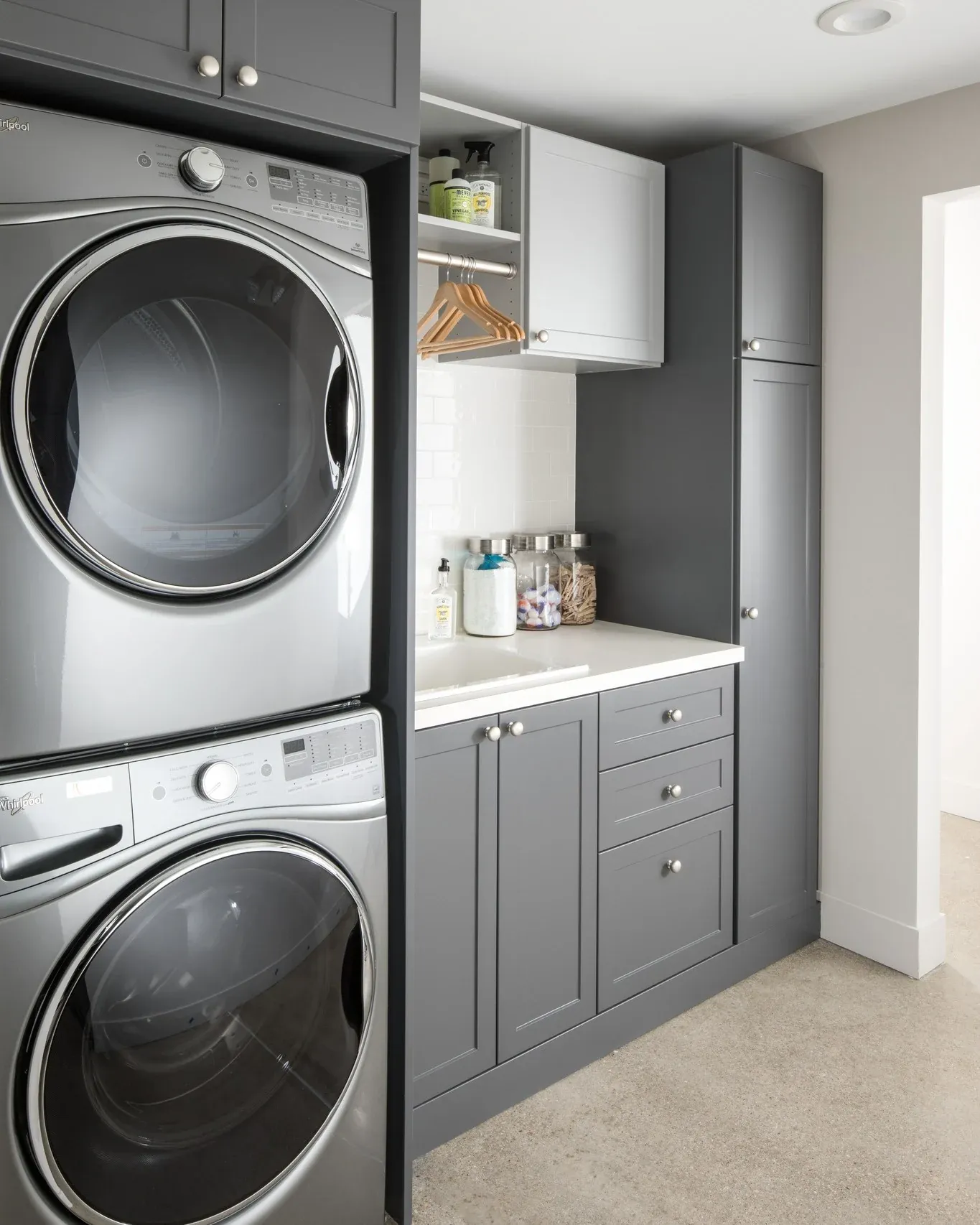
Beside the stacked machines, a small laundry station leaves room for storage that extends beyond it.
This laundry station includes drawers for stain remover, dryer sheets, pegs, and cloths. A counter handles folding and gives you a spot for a basket, while the short hanging rail keeps hangers nearby.
A tall cabinet at the side takes care of bulky supplies. With both open and closed storage, the mix supports tidiness in a small laundry room.
Towel and Basket Storage
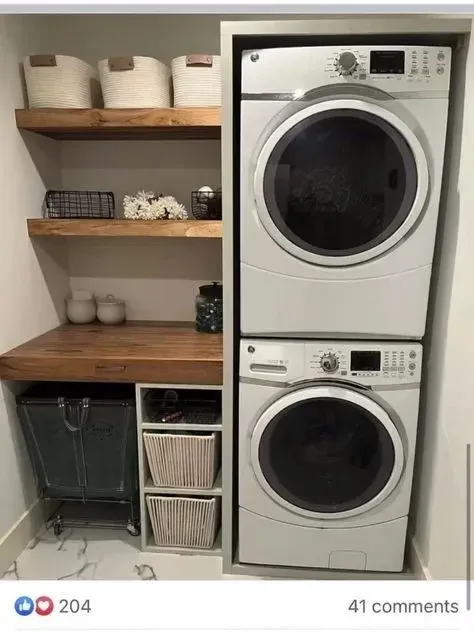
Open shelves provide the practical feature here. Since the washer and dryer occupy most of the wall, they leave limited wall space for anything else.
The counter stays less scattered with baskets nearby. Put cleaning cloths, dryer sheets, stain products, and spare towels inside them. The baskets contain the small laundry items in one place.
Placed underneath, wire baskets let you see what they contain without requiring full removal. Their open design keeps the contents visible.
Narrow Laundry Cupboard

A vertical layout helps a skinny cupboard hold a surprising amount. Plan the cupboard vertically to make use of its height.
A lower cabinet and open shelves provide storage, while the sink and stacked machines handle the laundry. With all four features together, the space feels as though it is not being wasted.
On the open shelves, I keep attractive items where they can be seen. Less attractive products go behind the lower doors.
Labeled Laundry Baskets
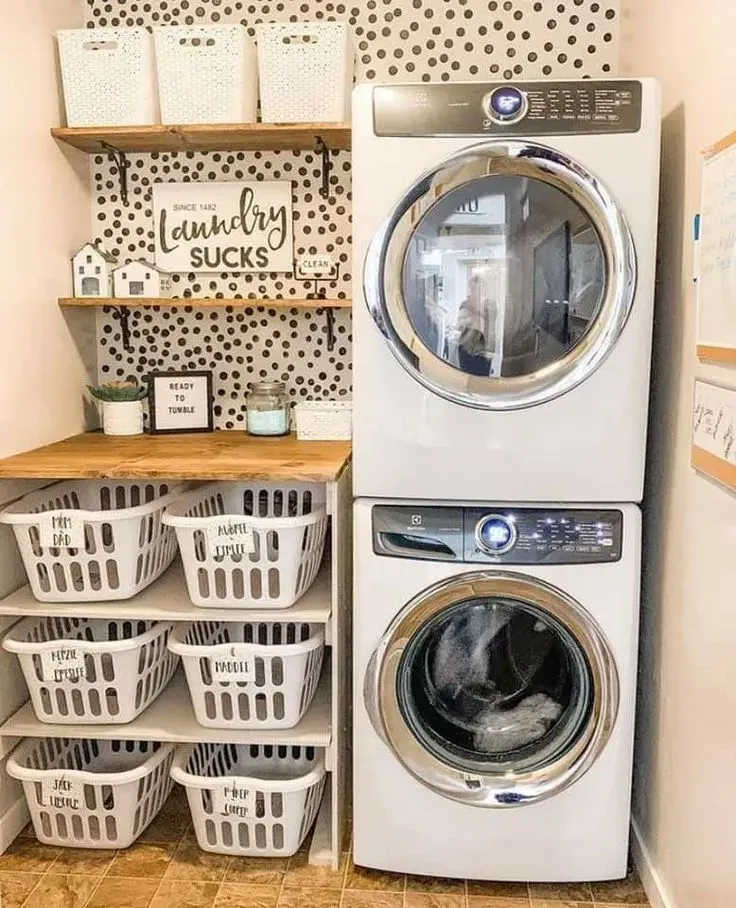
For multiple users, labeled baskets are useful because they support shared laundry use. Each person can have a clear place for laundry.
Labeled baskets can sort lights, darks, towels, kids clothes, and cleaning rags, or provide a separate category for each person. This organization helps reduce floor piles.
The labels should be clear but not fancy. Label each storage spot so items are more likely to return to the correct place.
Wood Cabinets for Warmth
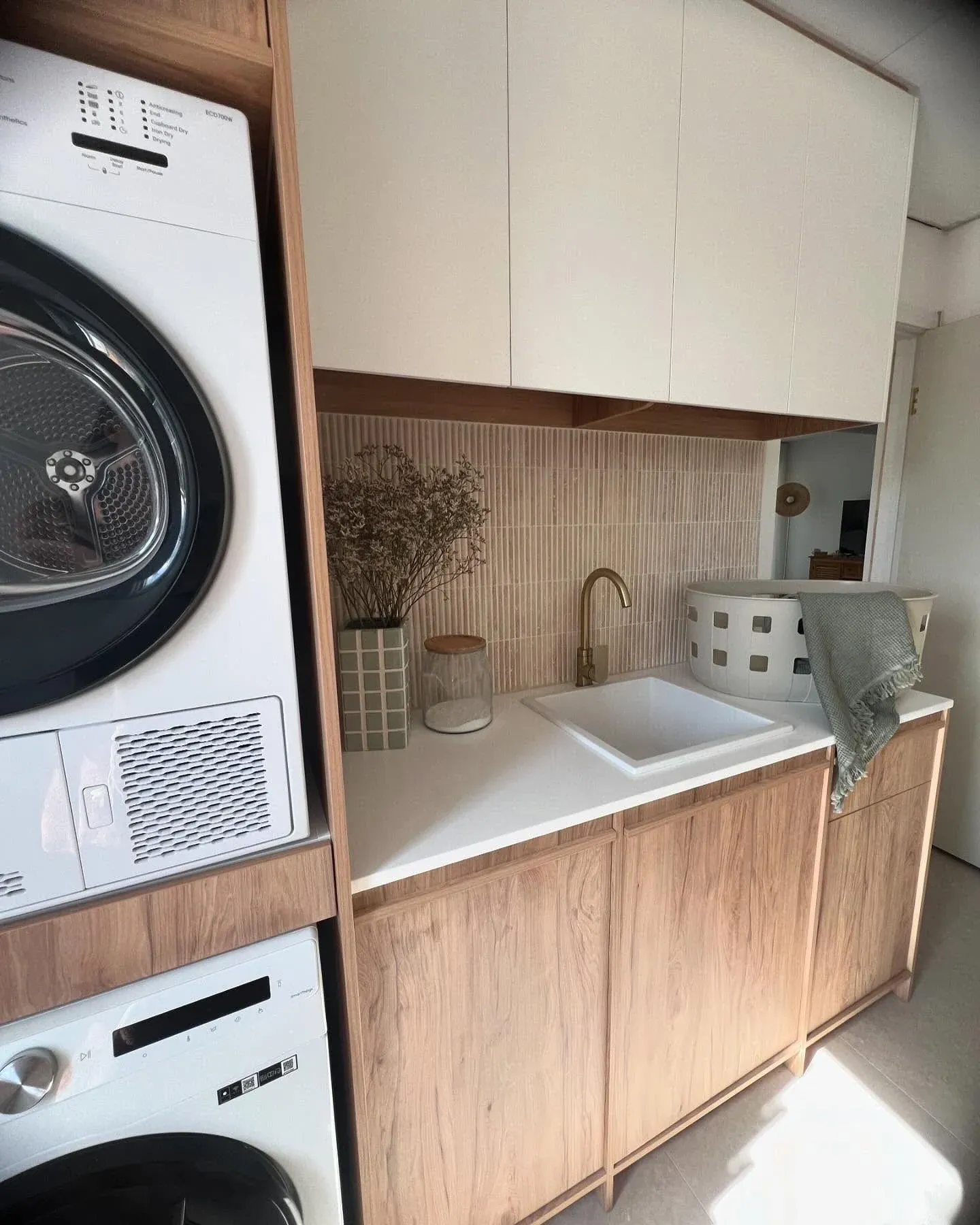
In a small laundry area, warm wood cabinets can reduce a cold, clinical feeling. The wood brings warmth to the space.
A sink beside the washer and dryer gives the laundry another work area. Keep the counter clear so it can support folding, soaking, and setting down wet clothes.
A simple vase can soften the area, while wood and tile also have a softening role. The author would keep the decor minimal.
Machine Area Cabinets
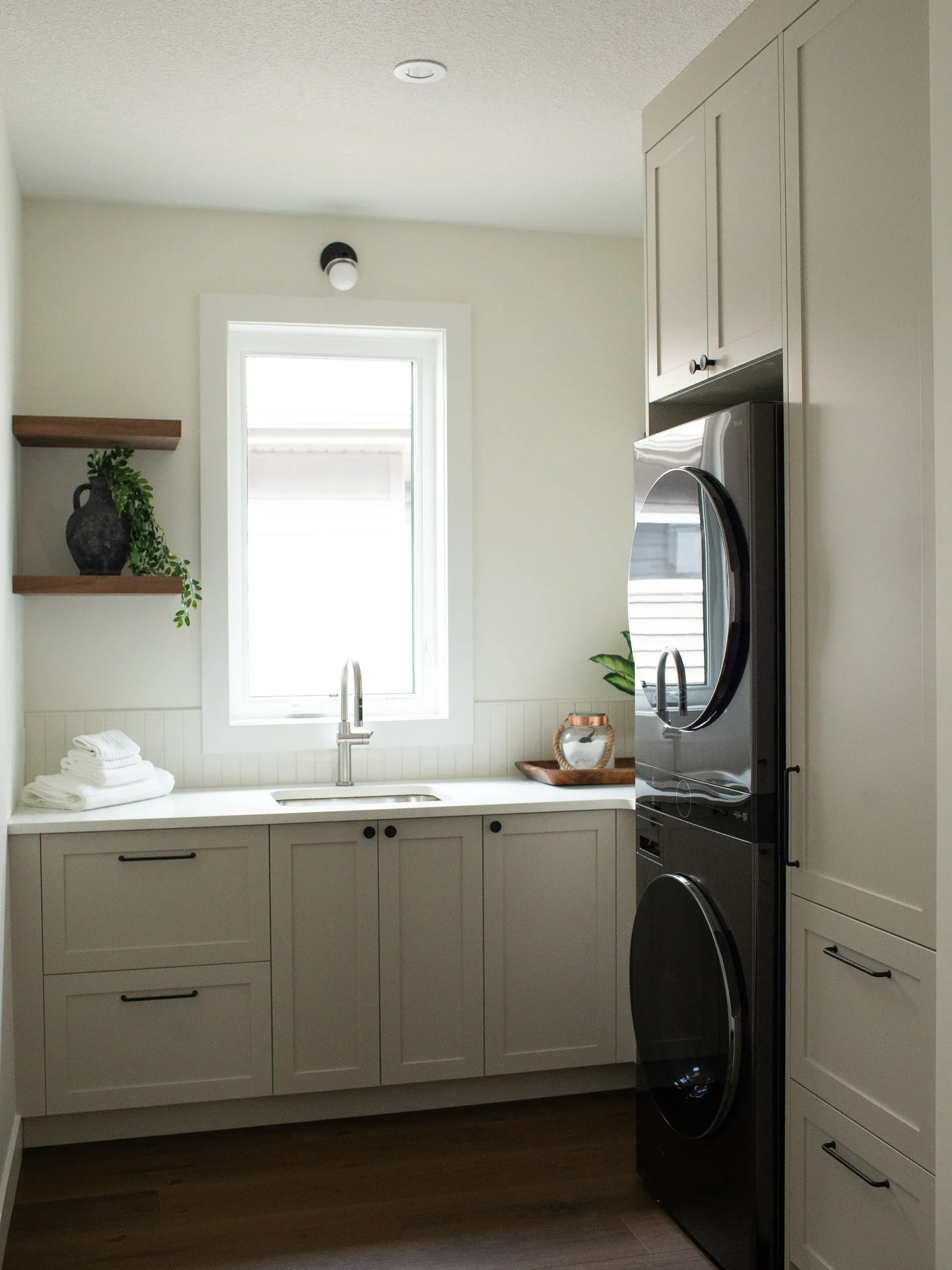
Built-in cabinets around the machines help integrate a stacked washer and dryer into the room. The stacked pair feels less like a couple of corner appliances.
Tall cabinets can conceal unwanted items while storing paper towels, bulk detergent, and cleaning sprays. That gives these supplies a place to stay without leaving them out.
In a small laundry, an open counter and an open sink can support everyday work. Keeping the counter clear leaves room for sorting and treating stains.
Pull-Out Shelf for Basket Support
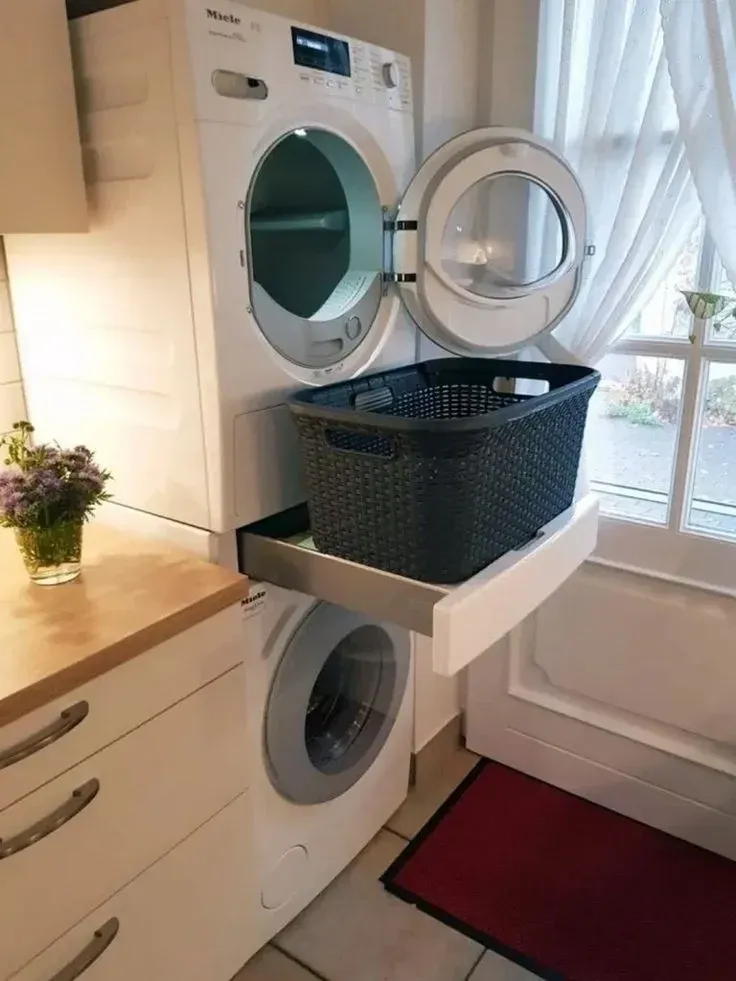
A pull-out shelf creates a temporary surface. It can serve as a place to set something down when needed.
Folded clothes, towels, and a laundry basket can all rest on the pull-out shelf. Since it provides support on its own, the shelf does not require a full counter beside the machines.
Laundry in a closet or very narrow room can be inconvenient every day, but a small built-in shelf can reduce that inconvenience. The author views this as a useful change.
Dryer Top Baskets

The space above stacked machines often goes unused, so add baskets there for above-machine storage.
Use the top basket for infrequent items, with a lower counter for detergent and towels. A rail can hold hanging pieces, and the author would use this arrangement.
Baskets are only useful when you can reach them without a stool. Make sure the storage stays reachable, since inaccessible storage reduces usefulness.
Drawers Beside the Machines

Drawers help manage counter clutter and support tidiness.
The drawers store cloths, pegs, dryer sheets, stain removers, cleaning products, mesh bags, and spare sponges.
An open shelf over the machines gives towels a designated place, helping keep the room tidy.
Clothes Rail for Fresh Laundry
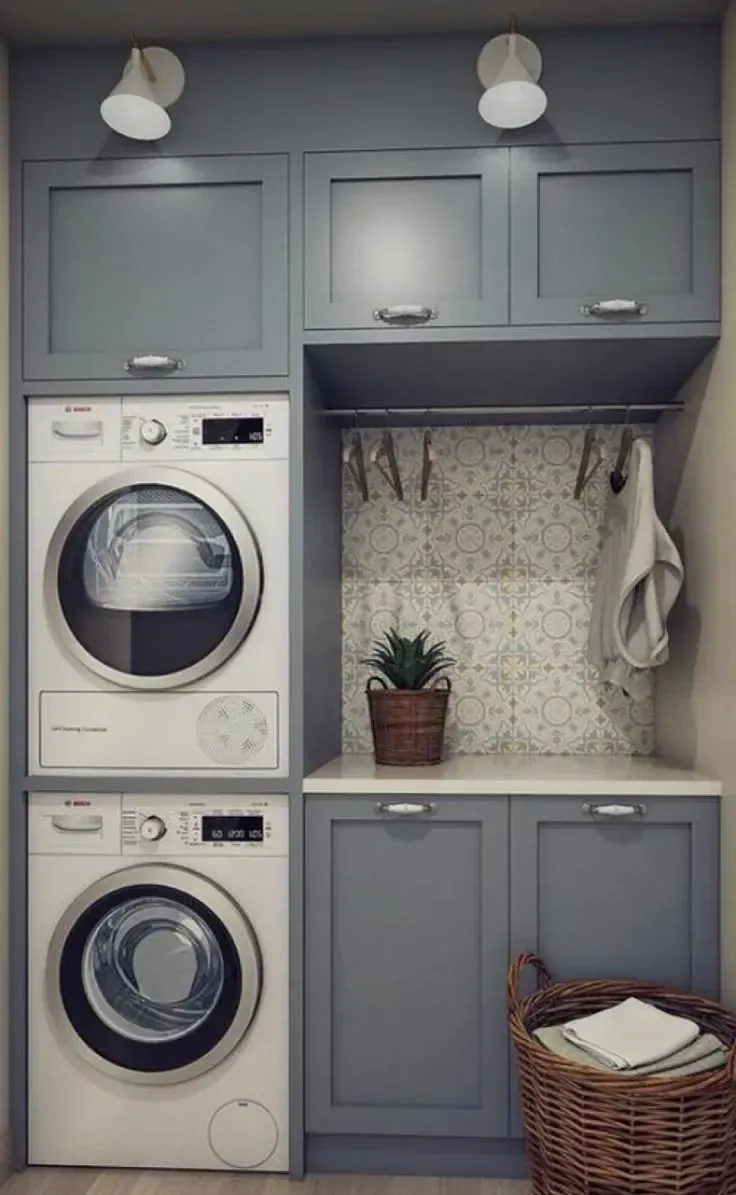
A hanging rail becomes an important part of the day-to-day laundry setup, and it has practical value once it is installed.
For post-wash hanging, use a rail for shirts, uniforms, linens, and delicate pieces. It keeps them off doors and chairs while they wait to be put away.
The wallpaper is one of the first details you notice. Dark cabinets and wallpaper affect the room styling, but the hanging rail is what the source considers the largest daily difference.
A stacked setup still leaves several laundry planning topics to work through, including shelves, baskets, and a folding zone.
Proper Folding Counter
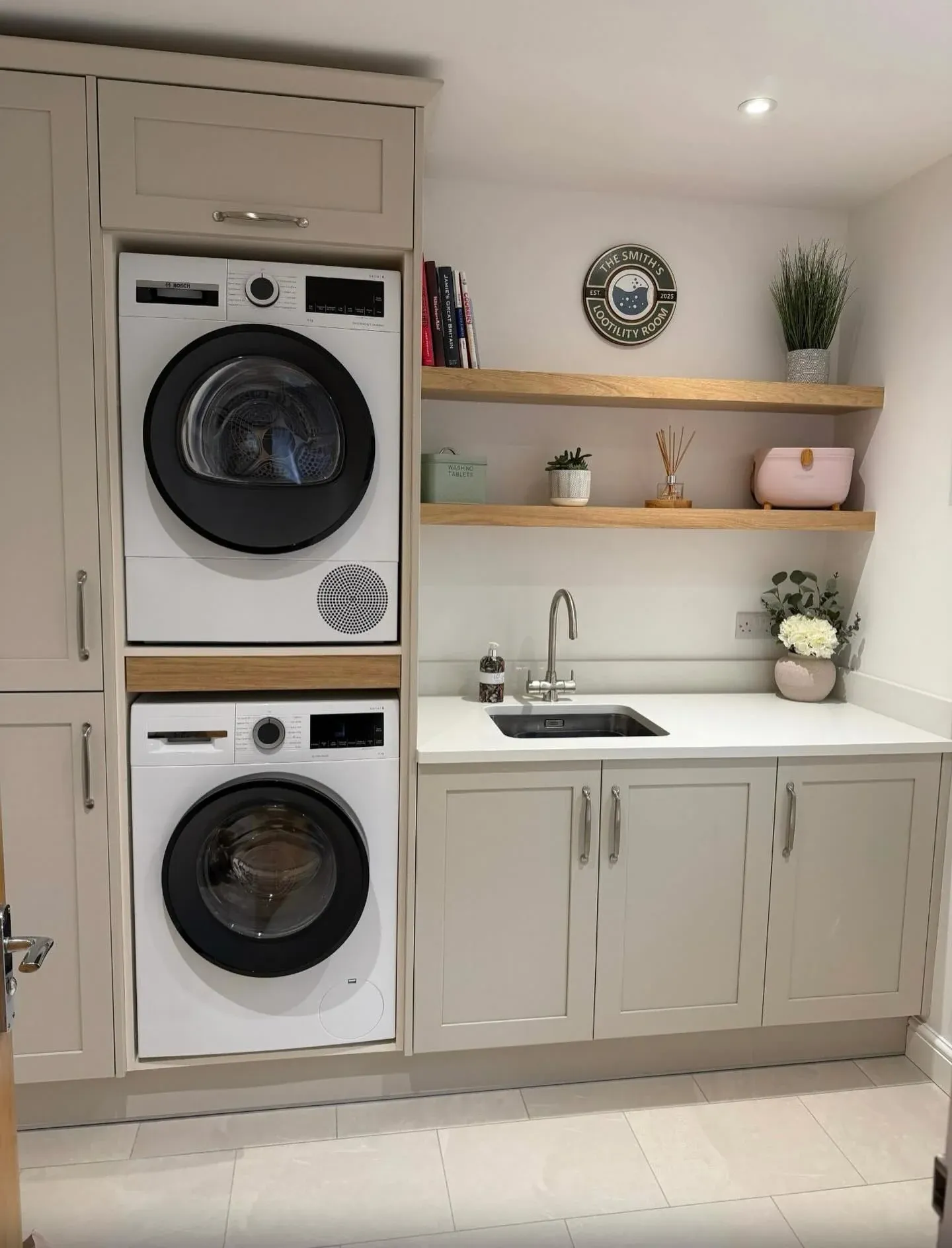
A folding and sorting zone can take up the wall opposite the machines when the machines sit along one side. This arrangement leaves the opposite wall available for both tasks.
A long counter gives you room to fold towels, lay out delicates, or set down a basket, and it remains available while the washer is running.
A shelf above the counter can hold decor and daily-use products. Lower cabinets provide concealed storage and reduce visible mess.
Wall Drying Rails
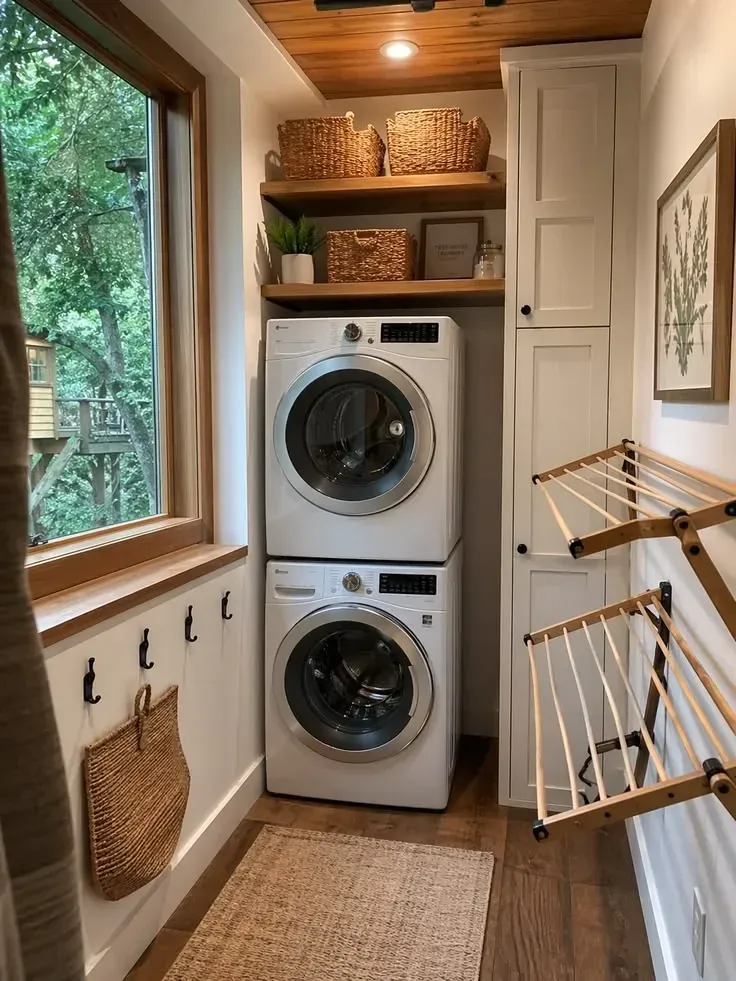
When floor space is limited, wall rails provide a place for drying and can replace a floor drying rack. They keep the drying function off the floor.
Mount wall rails above the counter or beside the machines for hanging shirts and delicates. Place them so they do not block the walkway.
I would prioritize drying rails over extra decor when laundry is the problem to solve. The rails address the laundry problem directly.
Concealed Laundry
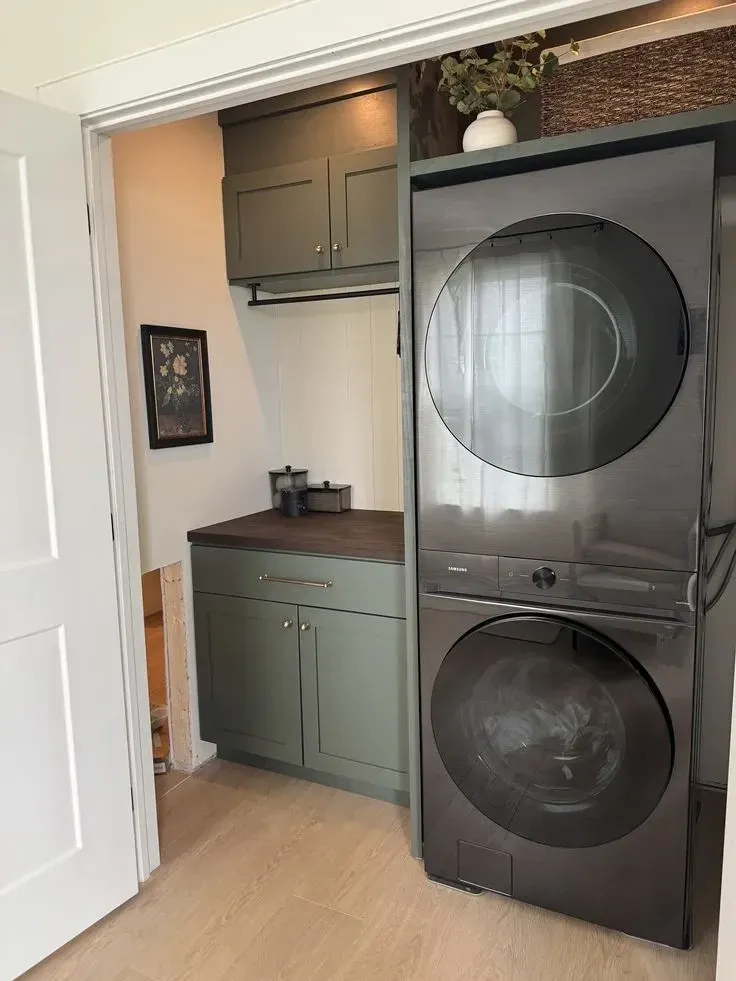
Doors conceal the laundry area and make it feel calmer, especially when the laundry opens into another room.
Inside the laundry area, cabinets, hooks, a counter, and stacked machines can all remain available. Closing the laundry reduces its visual dominance without removing those laundry components.
Concealed laundry is suitable for a hallway or any place where the laundry is always visible. Doors help conceal the visible laundry when it would otherwise stay in view.
Laundry Mudroom
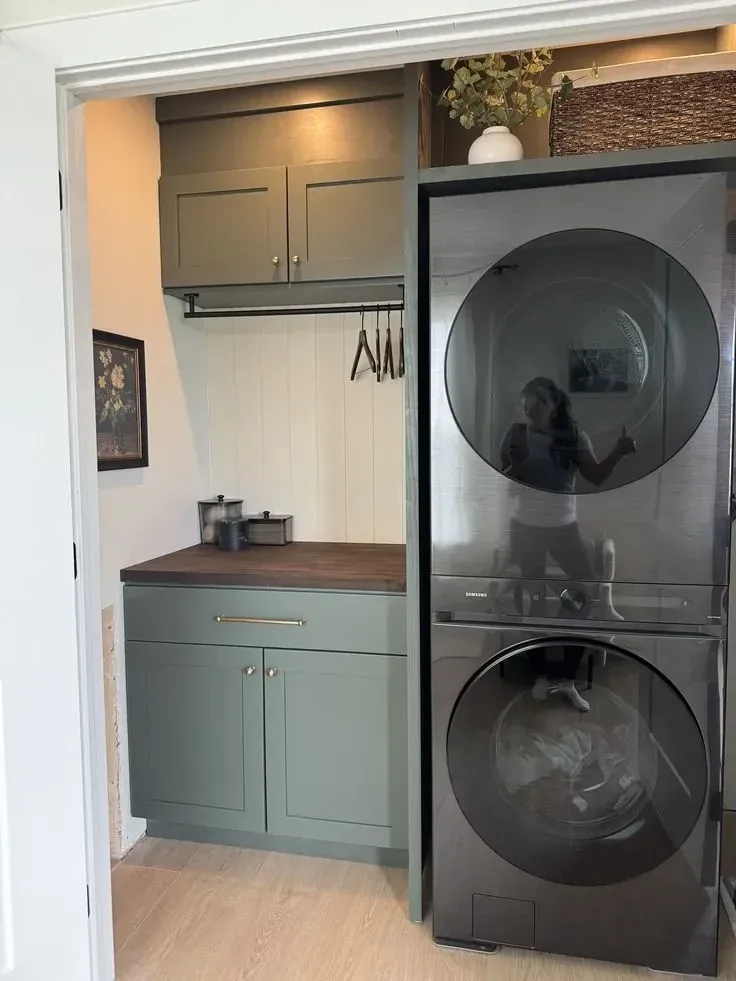
Near the entry, a laundry setup can also act as a mudroom. Combining the laundry and mudroom gives the setup a second function.
Hooks can hold coats, bags, hangers, and pieces that need drying. Keep the bench and counter clear, since both provide a landing zone.
I find a combined laundry-mudroom layout suitable for small homes. One multi-purpose room may need to handle laundry, storage, and a drop zone.
Hanging Rail Beside the Washer-Dryer
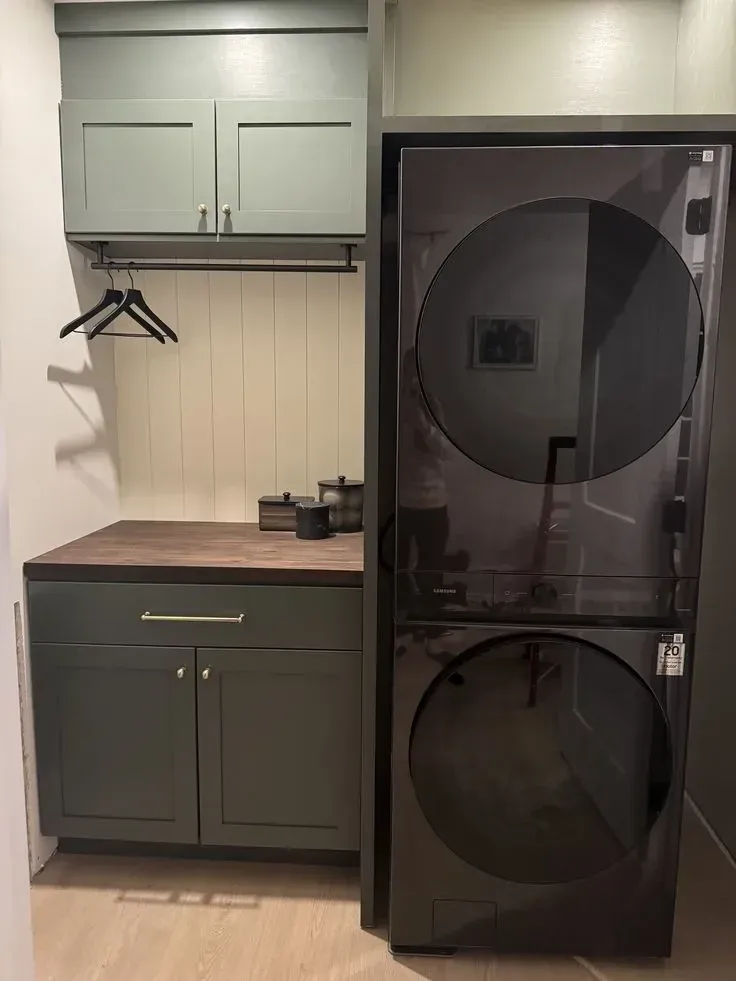
With the washer and dryer arranged side by side, the nearby hanging rail supports immediate clothing handling.
The rail helps avoid basket delays by keeping hangers ready for shirts, linen pieces, and school uniforms.
The lower cabinet stores detergent, while the upper cabinet keeps backstock and less-used items.
Sliding Doors for Hidden Laundry
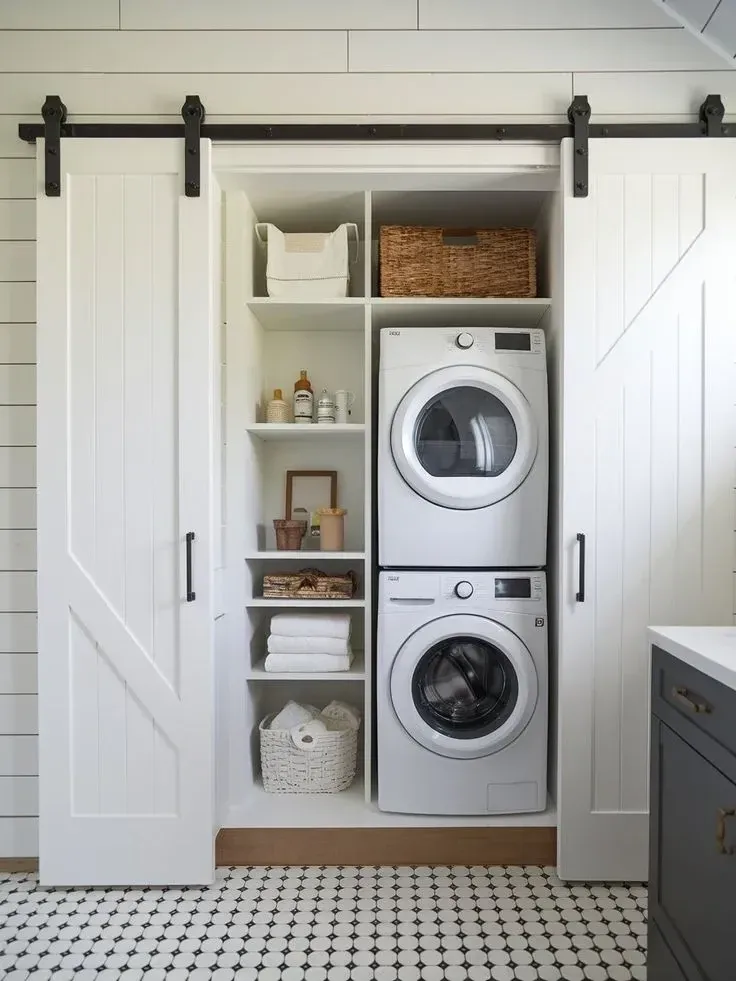
Laundry can sit behind sliding doors, with the setup working in a hallway, bathroom, or mudroom.
The stacked machines take up one tall zone. Nearby shelves keep the laundry supplies together, including towels, baskets, detergent, and spare supplies.
With the doors open, the laundry area supports active use. Close them, and the laundry area becomes concealed.