

A useful entryway drop zone gives bags, shoes, jackets, keys, school things, and umbrellas a clear place to land instead of letting them take over the doorway. Benches, hooks, baskets, cubbies, cabinets, and small command centers can all shape the setup, whether the space is a narrow hallway, a family entry, or a full mudroom wall.
Small Entry Bench Nook
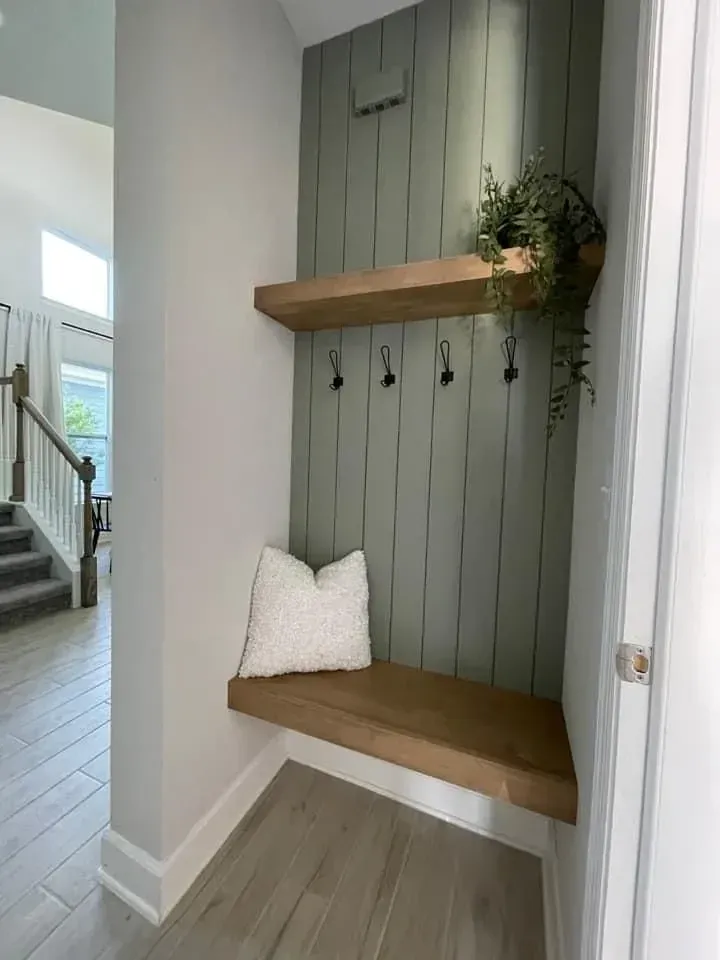
At the entry, the small bench nook gives the space a clear purpose.
Above the bench, a shelf provides extra storage. The bench offers seating, while hooks store bags and keep them off the floor.
Once all the hooks are occupied, the small nook can become cluttered. Keep its contents limited.
Calendar Wall Drop Zone
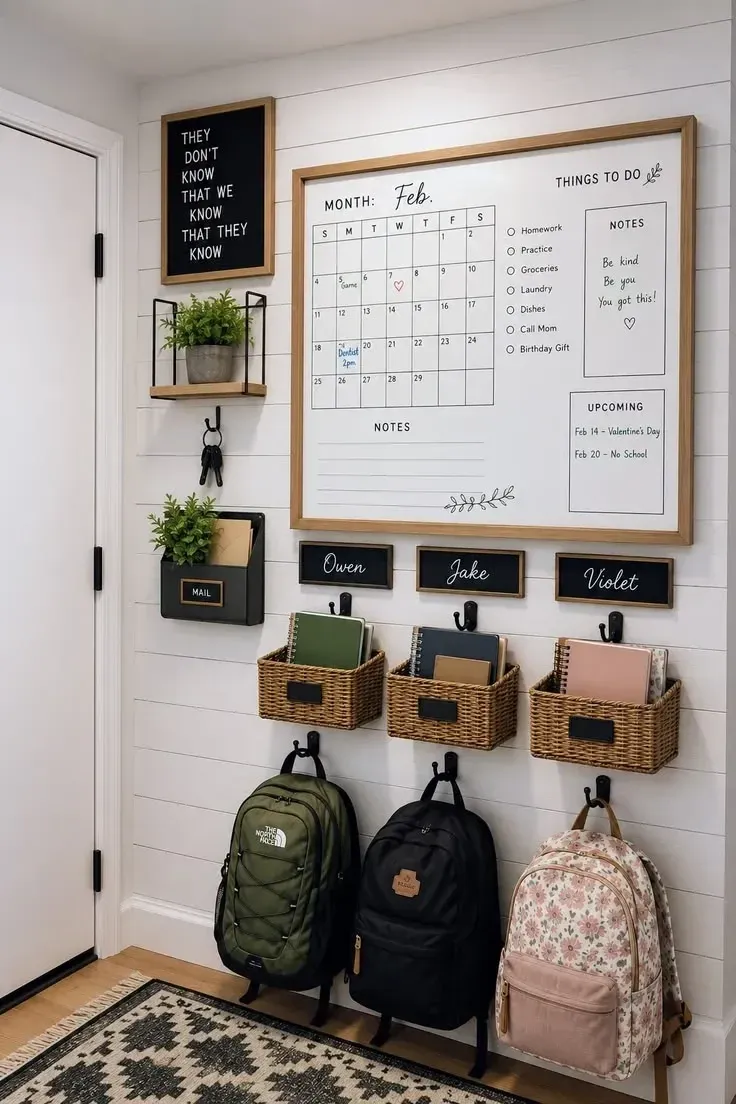
The calendar wall fits neatly into a morning-start area, where it can help organize the first part of the day.
In the kitchen, backpacks, papers, and reminders can all stay together in one place, so these stored items do not have to be spread around the room.
Limited wall pockets keep the setup neat and give papers a defined spot. Keep the pockets limited, since excess papers can make storage messy.
Bright Built-In

The built-in has a clean look that still feels warm rather than cold.
White cabinets provide concealed storage, while baskets and flowers soften the look.
A quiet palette helps storage blend into a small entry and reduces its visual dominance.
Built-In Mudroom Wall
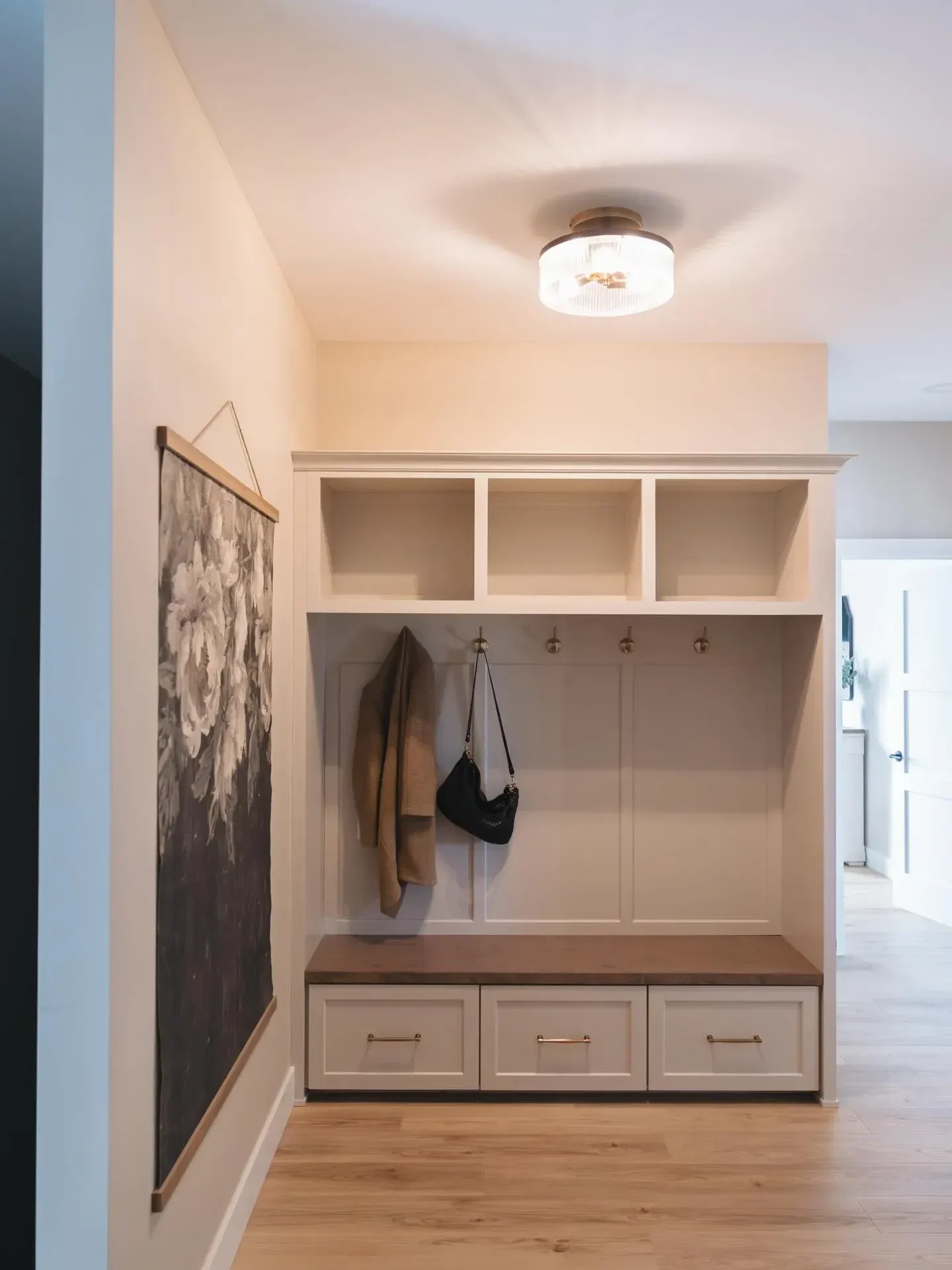
When space is available, a built-in mudroom wall is an option.
Open shelves may be less suitable for awkward items. Drawers provide closed storage and hide those items.
Make closed storage the starting point, then arrange hooks and cubbies around it.
Backpack Station
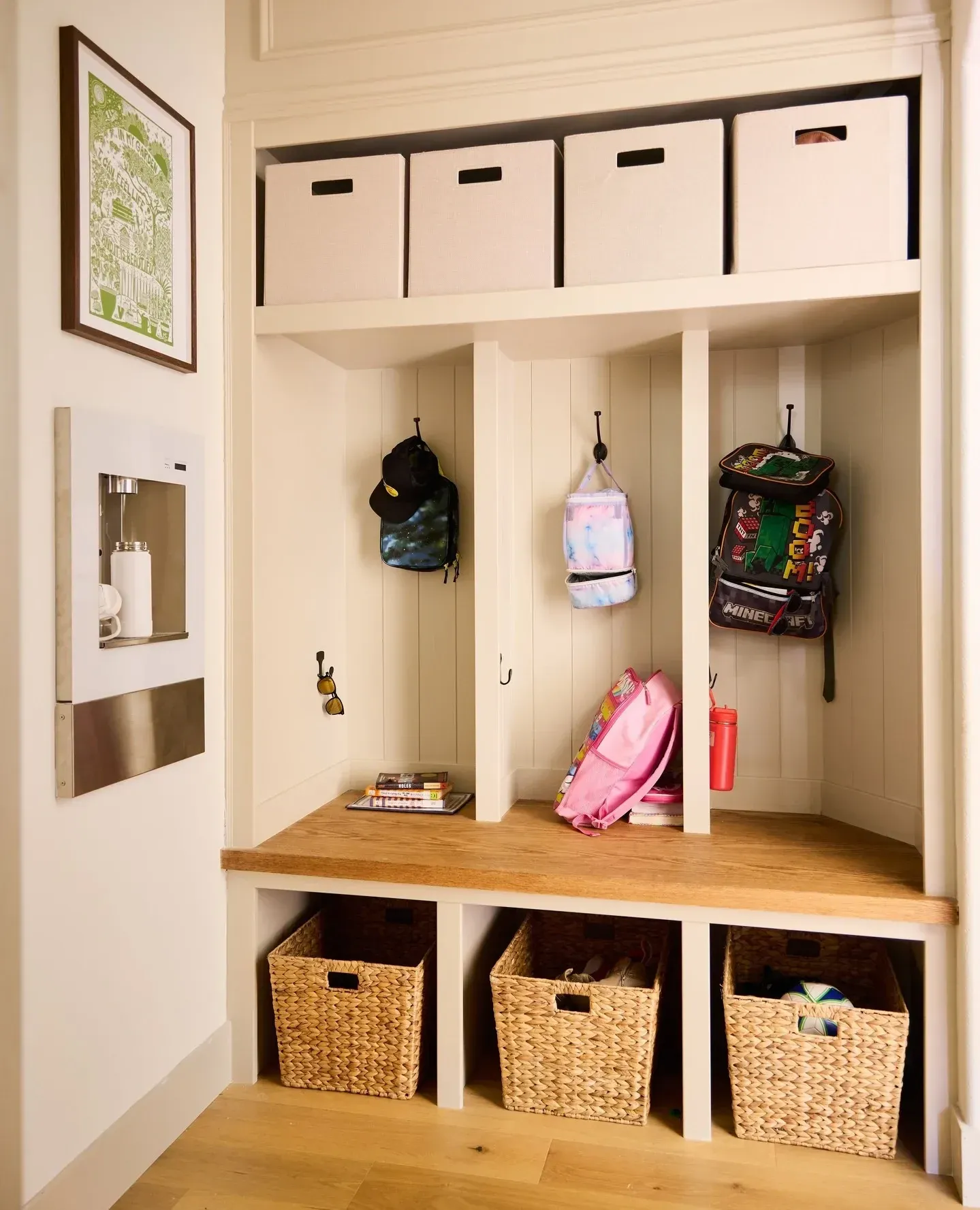
Backpacks need a designated home; without one, they are likely to be left on the floor.
The backpack station includes one hook for each bag, with baskets above and below the hooks for additional storage.
For a school entry, I recommend a routine that sends the bag up, the extras into baskets, and the shoes down.
Narrow Hallway Drop Zone
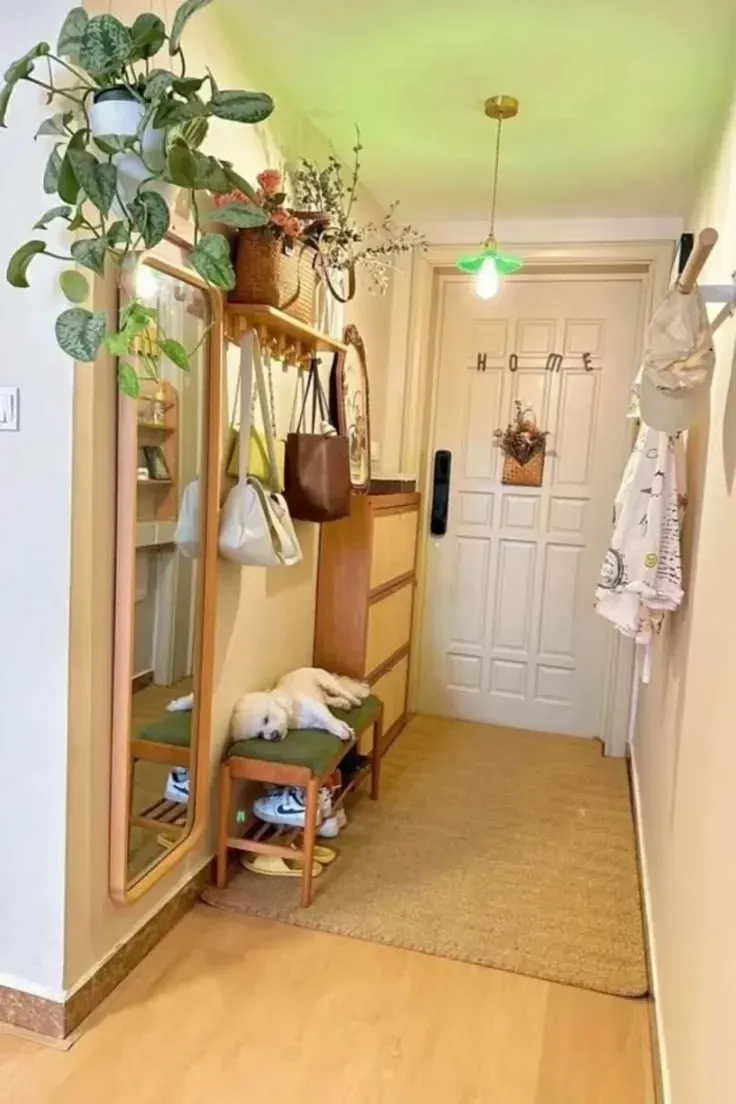
In this narrow hallway, a drop zone is still present and gives the entry a place for everyday items.
Along the wall, storage gives hallway bags and shoes a place to stay while leaving the walkway open.
A freestanding piece can provide drop-zone storage in a rental, especially when there is no built-in construction.
Tall Cabinets for Concealed Storage

A polished drop zone can make this practical area feel more finished. Tall cabinets help keep that look in place.
Hooks and a bench are easy to use every day, while tall cabinets hide unwanted visible items. The bench and hooks keep daily-access pieces close at hand, and the cabinets provide concealed storage.
At the front entry, I prefer a concealed drop zone when the rest of the house is visible from it. The drop zone then appears tidy instead of putting its contents on view.
Individual Storage Cubby

Individual cubby storage works well for a busy family.
Each person gets a hook for bags and a basket for shoes. Individual storage reduces competition for the shared space.
Woven baskets make the wall feel warmer. The wall becomes more than purely practical.
Entry Storage for Children
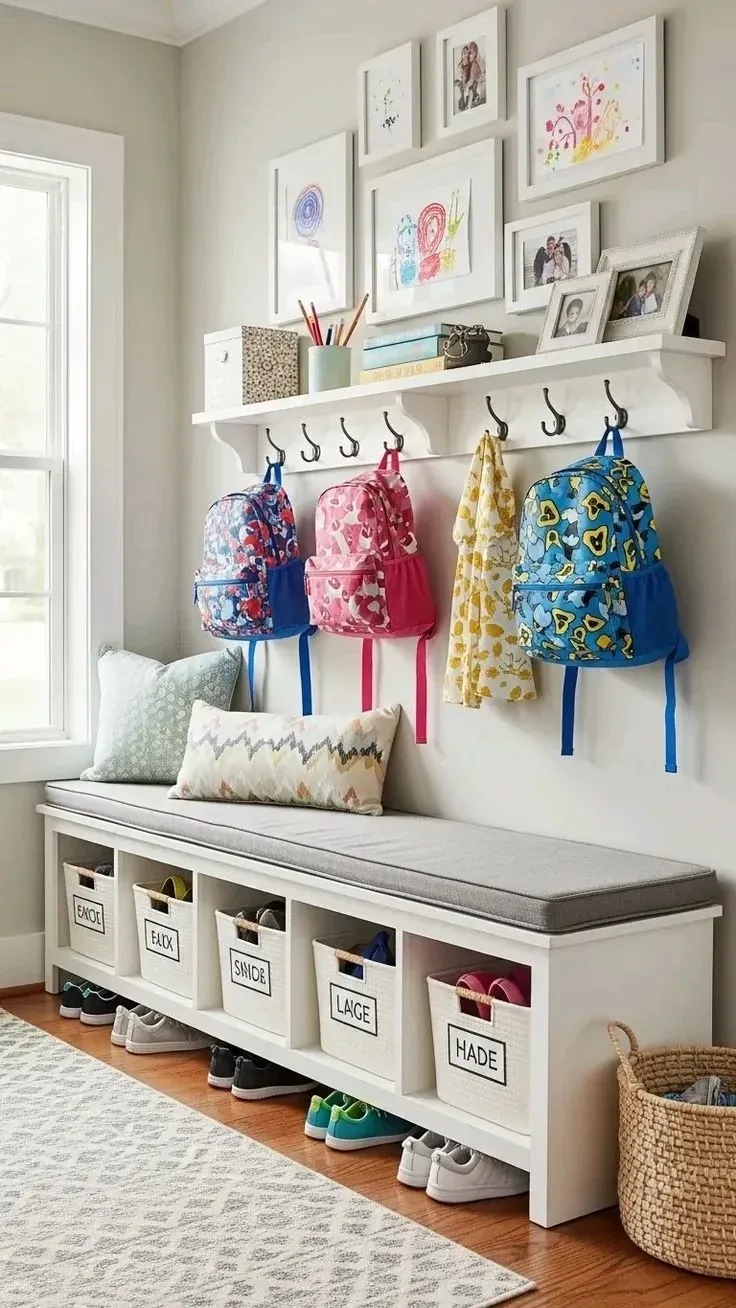
This entry storage can work for children.
Baskets offer easy reach, while the hooks are placed low. A bench defines the area’s purpose.
Artwork above the storage keeps it from feeling institutional.
Entryway Shoe Cabinet

In an apartment, the shoe-cabinet version feels realistic. It can fit the needs of the space without requiring a separate mudroom.
The shoe cabinet hides clutter and provides concealed shoe storage. A small rack holds daily shoes, while hooks provide a place for bags.
Door clutter only needs one clear place in this drop-zone system. No mudroom is required, as long as the system gives everything a clear place.
Bench Area Calendar
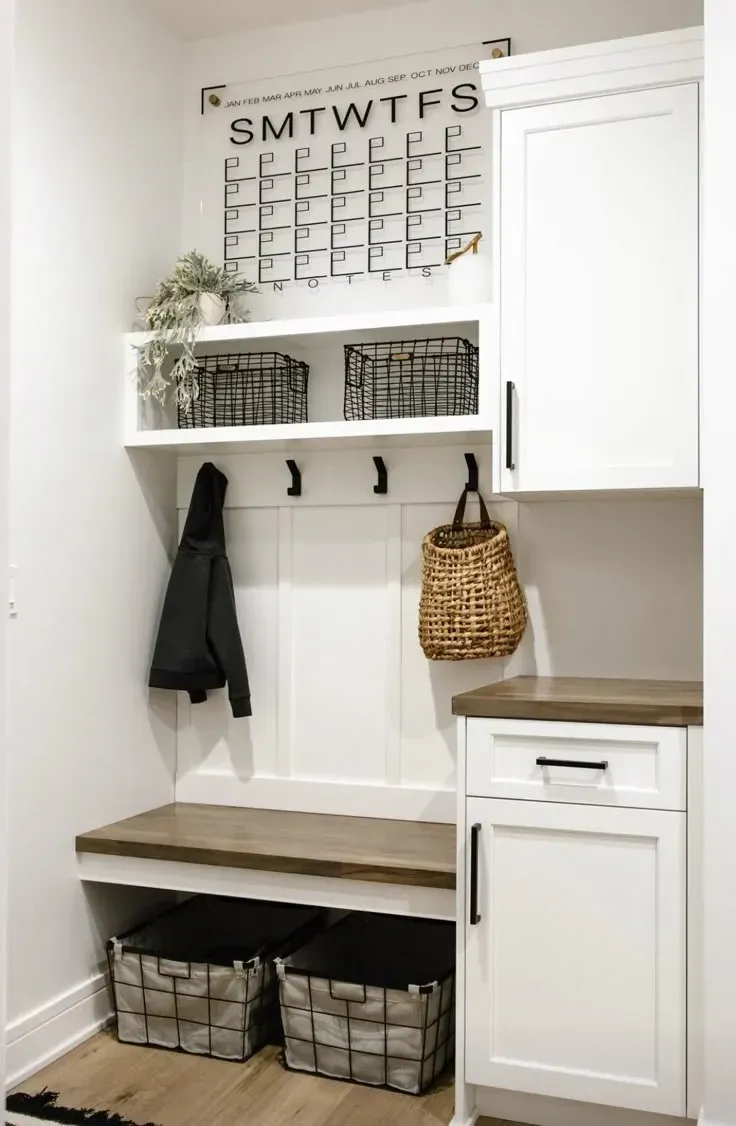
Above the bench, a calendar displays the schedule and helps turn the area into a family command center alongside the storage.
The bench handles shoes, while baskets paired with it hold bags. A calendar keeps the week visible.
At the entry, storage can stay practical without becoming complicated. Good organization supports a simple setup.
Under-Bench Drawers
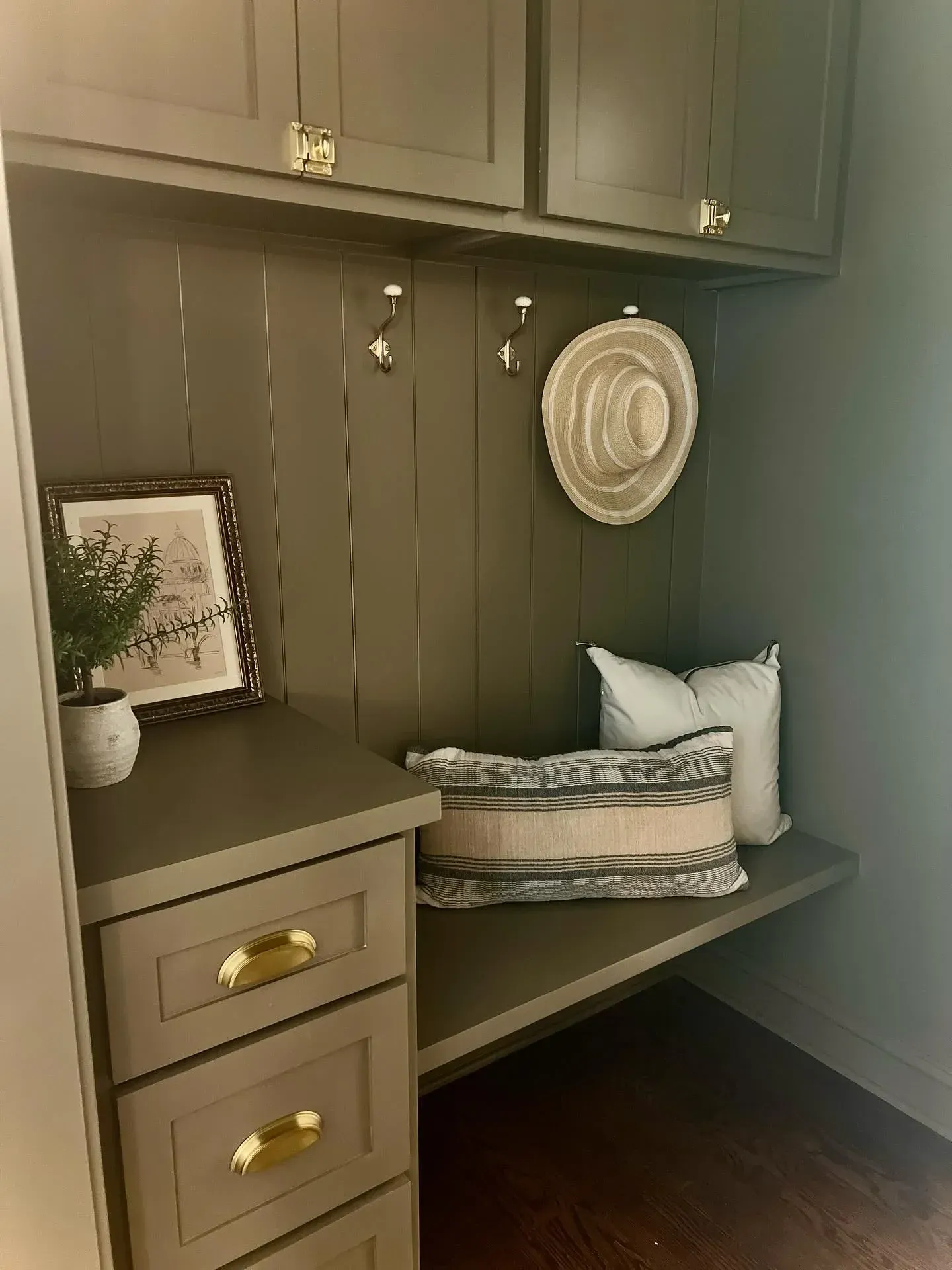
In the hallway, the cabinetry brings in a green finish. It has more appeal than a basic hallway storage setup.
Extra shoes can stay in the drawers under the bench, along with gloves and pet leads. The contents remain close to the daily-use area but concealed.
Dark paint is more forgiving in a daily-use area. It can help the space handle regular use while the drawers keep extra shoes, gloves, and pet leads out of sight.
Minimal Bench Area

A simple bench area remains functional.
The shelves create a place for styling, while hooks handle practical storage. The bench contributes to the area’s function.
If the goal is to stop bags reaching the floor, a large built-in is not required. It is unnecessary for that limited storage goal.
Entry Command Center

A command center suits an entry that collects papers and shoes, especially when the entry is paper-heavy.
Below the cork board, cubbies store bags and shoes. The cork board holds school notes.
Daily items naturally land near the kitchen entrance or side door, making either location a natural spot for the command center.
Umbrella Space

By the entry, the wall provides storage for coats and those awkward items that are hard to place elsewhere. It gives them a clear spot as soon as you come in.
A storage system is easier to keep organized when bags hang from hooks, shoes have cubbies, and umbrellas go in a basket.
Start with a small umbrella basket near the entry. It solves the problem of where to put umbrellas when they come inside.