
Bathroom closets have a way of becoming the place where everything lands. Towels, toilet paper, skincare backups, medicine, cleaning supplies, and travel items can quickly turn a few shelves into a crowded mess. The best organization ideas make every item easier to find and grab, not just nicer to look at.
A Separate Zone for Bottles
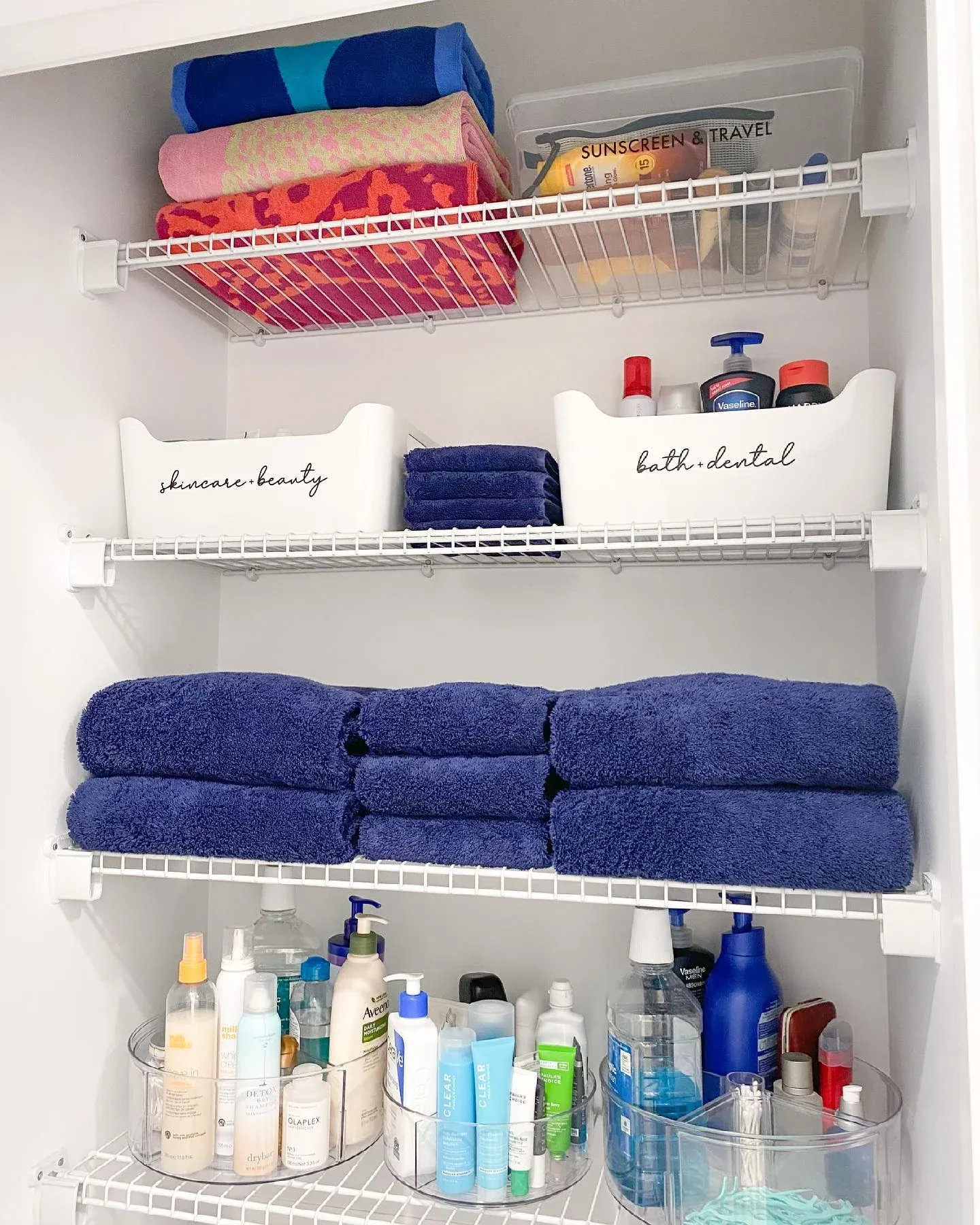
Towels and bottles need different kinds of storage, so keep bottles in a separate area. This gives the bottles their own zone instead of placing them with folded linens.
A turntable holds small products and makes items at the back easier to see. It can also help prevent duplicate purchases.
Quick access is the main goal for a bathroom closet, and functional organization matters more than making every shelf look neat in a photo. The closet’s appearance is secondary.
Towel Folding by Size
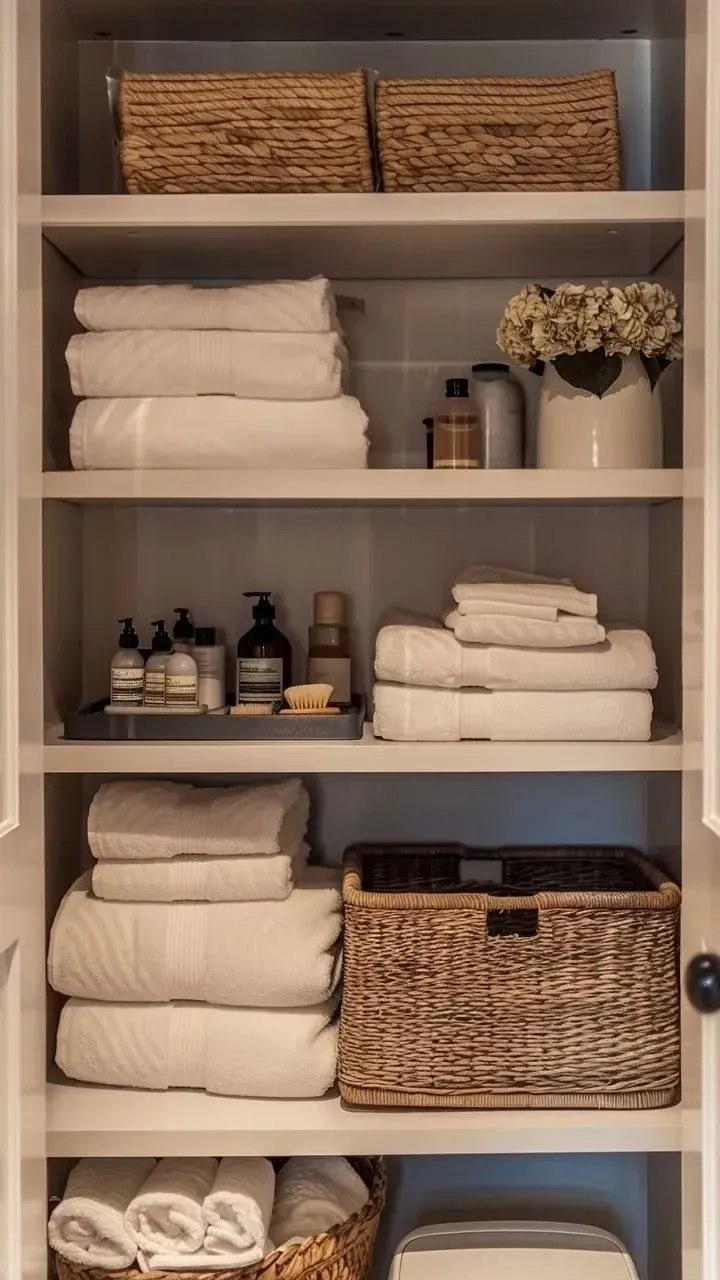
In a closet, size-based towel storage groups towels by size. This improves closet organization.
Even organized shelves are not enough to prevent mess when towel sizes are mixed. Keep clean bath towels, hand towels, and washcloths in separate stacks.
Use baskets for items that fold poorly. They suit the pieces that do not fold neatly.
Contain Tiny Products
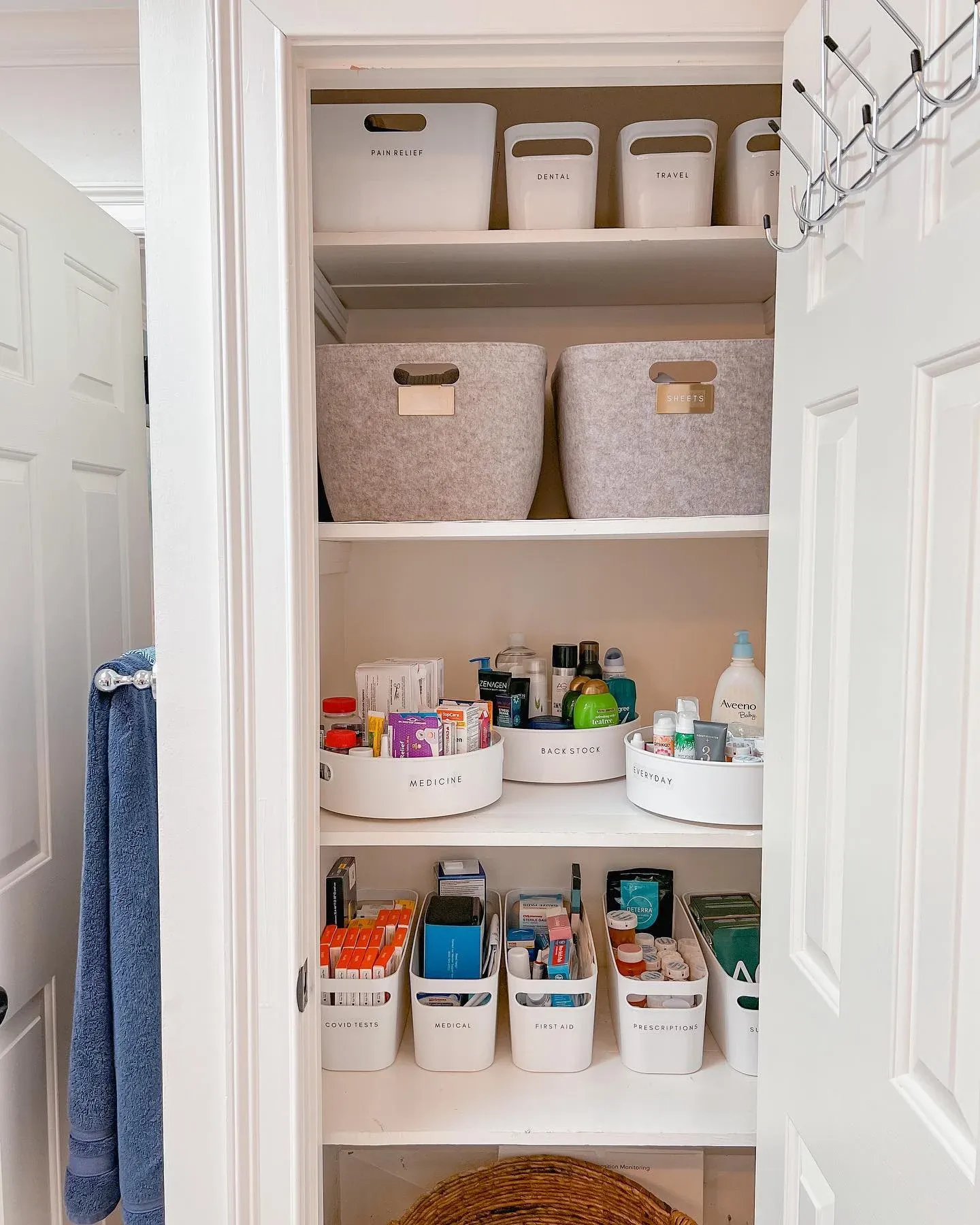
Small bathroom items often cause closet mess because so many little pieces collect together. Keeping them contained helps limit the resulting visual mess.
White bins group small items in one place, while an open shelf can hold frequent-use items. Use the shelf for towels and bottles so they remain within easy reach.
Tiny items tend to fall over when they are left loose. White bins can hold travel bottles, toothpaste, razors, and sunscreen instead.
Calm Color Palette

Soft neutral storage bins support a tidy appearance in a closet filled with many items.
When a bathroom closet is often left open, use similar colors for the baskets and towels. Coordinating those colors helps reduce visual busyness.
Leave a little open space on each shelf instead of filling every spot. That breathing room supports a cleaner appearance.
Woven Baskets and Folded Towels
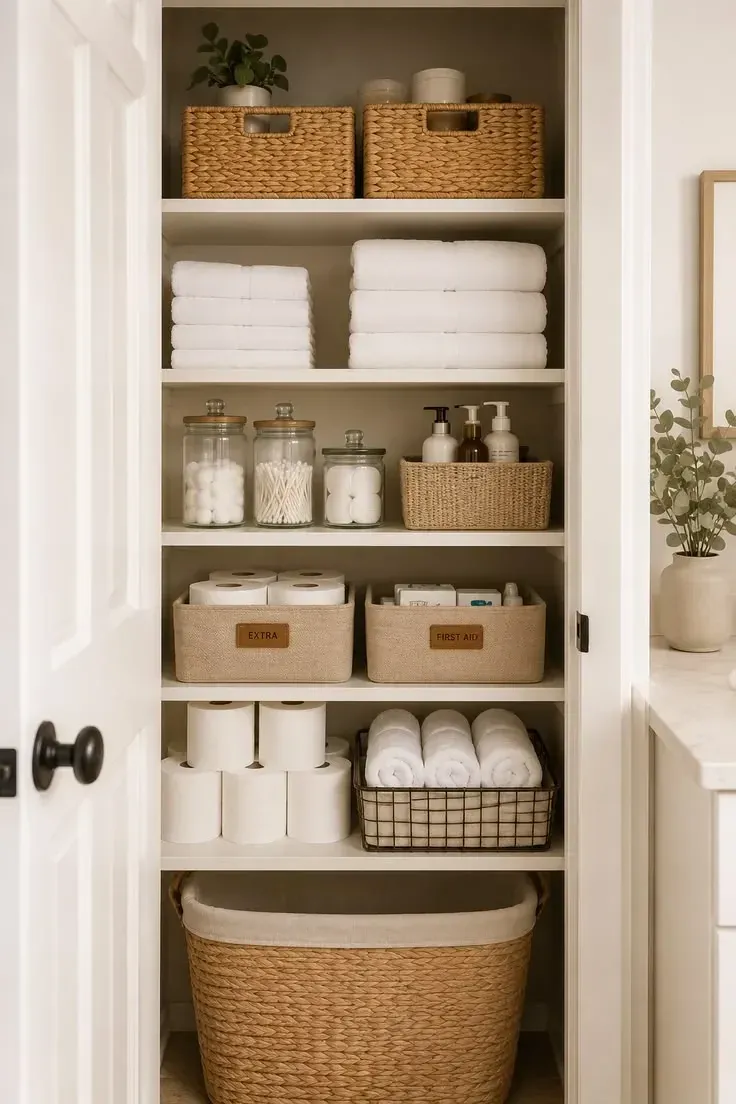
Woven baskets and folded towels make a closet feel warmer, and closet storage is not limited to plastic bins and labels.
Woven baskets can hide less-attractive items, while folded towels add softness and still give the shelf useful storage.
Start with a mixed balance on the shelves rather than copying one arrangement exactly. The shelves should not all have identical styling, even when they use similar storage pieces.
Products that are unsuitable for the closet can go in under-sink storage instead. This spot is better for products meant to stay near the vanity area.
Clear Bins for Backup Storage

Clear bins keep stored products visible, which helps prevent duplicate purchases when you forget what you already bought.
Use clear bins for spare bathroom products, first-aid extras, lotion, and soap. Seeing the stored products makes duplicate purchases less likely because the contents are easy to check.
Label clear bins so their contents are easy to understand at a glance. Unlabeled clear bins can still look messy, especially when mixed categories reduce visual clarity.
For a powder room with no closet, consider wall and door storage. These storage spots are better suited to closet-free powder rooms.
Bathroom Closet Checklist
- Towels and washcloths
- Toilet paper and tissues
- Skincare and haircare backups
- Medicine and first aid supplies
- Cleaning supplies
- Travel products and extras
- Labels can help when multiple people use the closet. Add them to bins or shelves so everyone can find and return items to the right place.
Labels for Busy Shelves

Labels make matching baskets easier to keep up, especially when the shelves are busy. They also help maintain easier upkeep from one basket to the next.
Give backups a set place in the closet, including towels, toilet paper, and toiletries. Assigned places make closet organization easier after laundry day.
Shared access matters when multiple people use the same closet. Labels help everyone find what they need without having to ask where it belongs.
Bathroom Closet Organization
Mixed shelving makes it useful to keep everyday items apart from other categories. Sort the closet contents by how often they are used, including cleaning supplies, towels, travel products, toilet paper, and skincare backups.
Keep the items you reach for every day easy to access, and avoid storing them in bins that require taking everything apart. The goal is organization that works over time, not just a closet that looks organized temporarily.
Bathroom Closet Placement
Helpful bins work best when each bin serves a clear purpose. Put daily items at eye level, use lower shelves for heavier extras, and reserve the highest shelf for products that are rarely used.
A bathroom closet gives you one defined space to work with, but it is only part of bathroom closet organization. These ideas focus on how to arrange that closet so its contents stay easier to manage.
Baskets for the Top Shelf

Top shelves are a practical place for rarely used items, especially when those items are kept in baskets. Store them there rather than taking up the more accessible shelves.
Folded towels stay visible at a glance when they are arranged neatly, while baskets on the highest shelf can hold backup linens and extra products. The baskets help organize the closet contents without leaving those less-used items loose.
Lower bins work well for small bathroom extras and help prevent loose items from spreading across the closet.
Bulky Floor Items
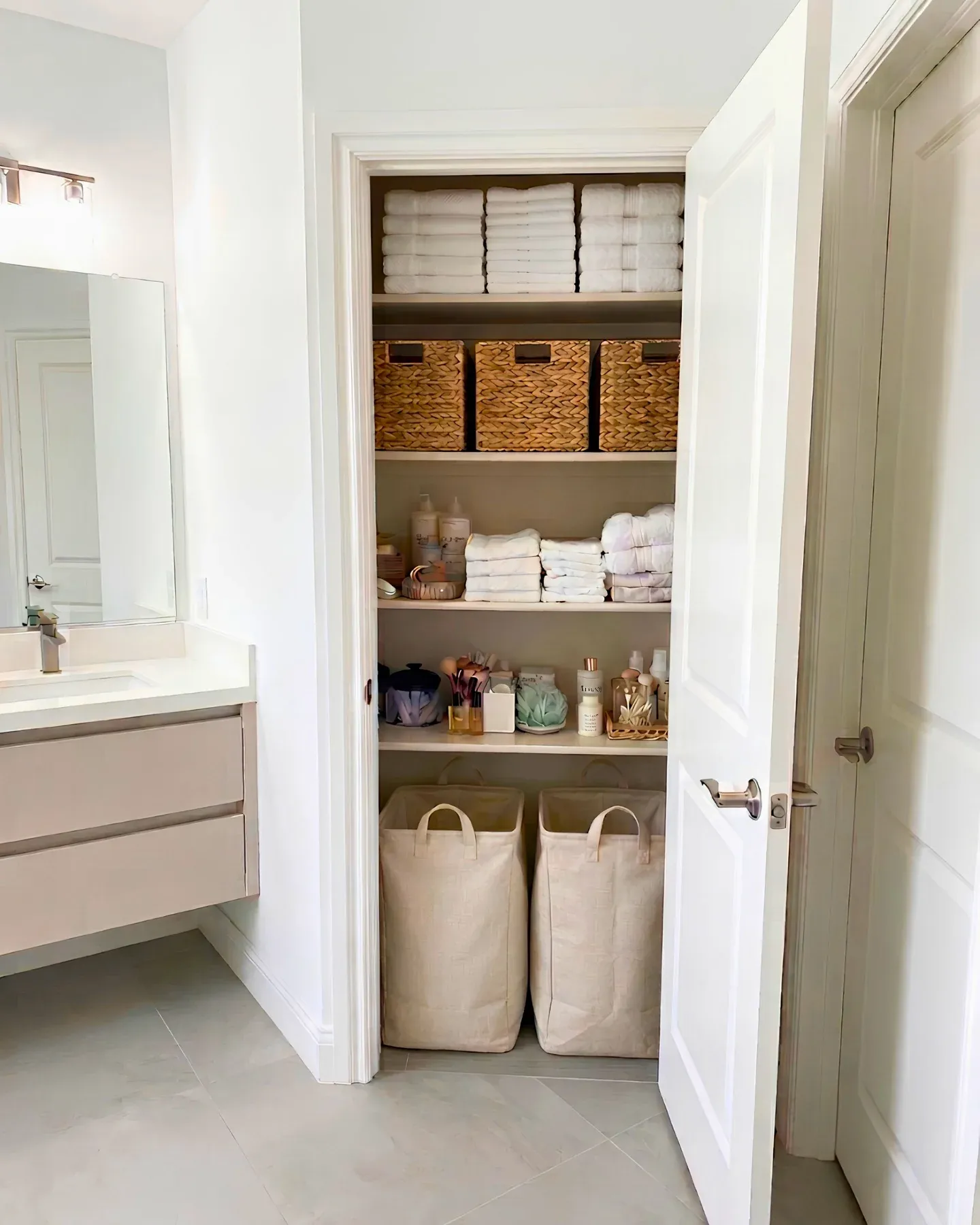
Floor baskets work well for awkward items that do not fit neatly on shelves. They keep those pieces down at floor level instead of forcing them into a shelf space that is a poor fit.
Floor baskets can hold bathroom backups, toilet paper, and extra towels. Keeping these bulky items in baskets is more orderly than leaving them loose in the closet.
Frequently used small items should stay on the shelves above. Reserve those shelves for the things you reach for often, while less frequently used storage can remain lower down.
Category Storage Bins

In the bathroom, labels can keep storage practical while giving it a playful touch.
Category-specific storage bins help keep hair products, skincare, medicine, and cleaning supplies in the right places, making them easier to put away. Paper goods can have an extra category of their own.
In bathrooms used by children or several people, labels clarify where storage belongs. They are especially useful in shared-use bathrooms.
Separate Towel Sets

A few matching bins can make the closet feel calmer, according to the source claim. Use them to keep related towel sets together.
Sectioned storage keeps towels, washcloths, and backup linens in their own sections. That reduces the amount of shelf disruption when you take out one type of item.
In a rental, separate towel storage can leave the shelves untouched while increasing organization in the closet. It is a way to add storage without rearranging the existing shelves.
For small bathroom organization, look beyond the closet and consider the rest of the room as well. Closet organization is only a partial solution.
Family Extra Baskets

In a bathroom closet used by several people, basket storage suits a shared bathroom.
Keep towels easy to grab while baskets hold bottles, jars, and backup products. The baskets contain the backup products and prevent them from spreading across the shelf.
Keep toilet paper low so guests can access it more easily.
Clear Bins in a Stack
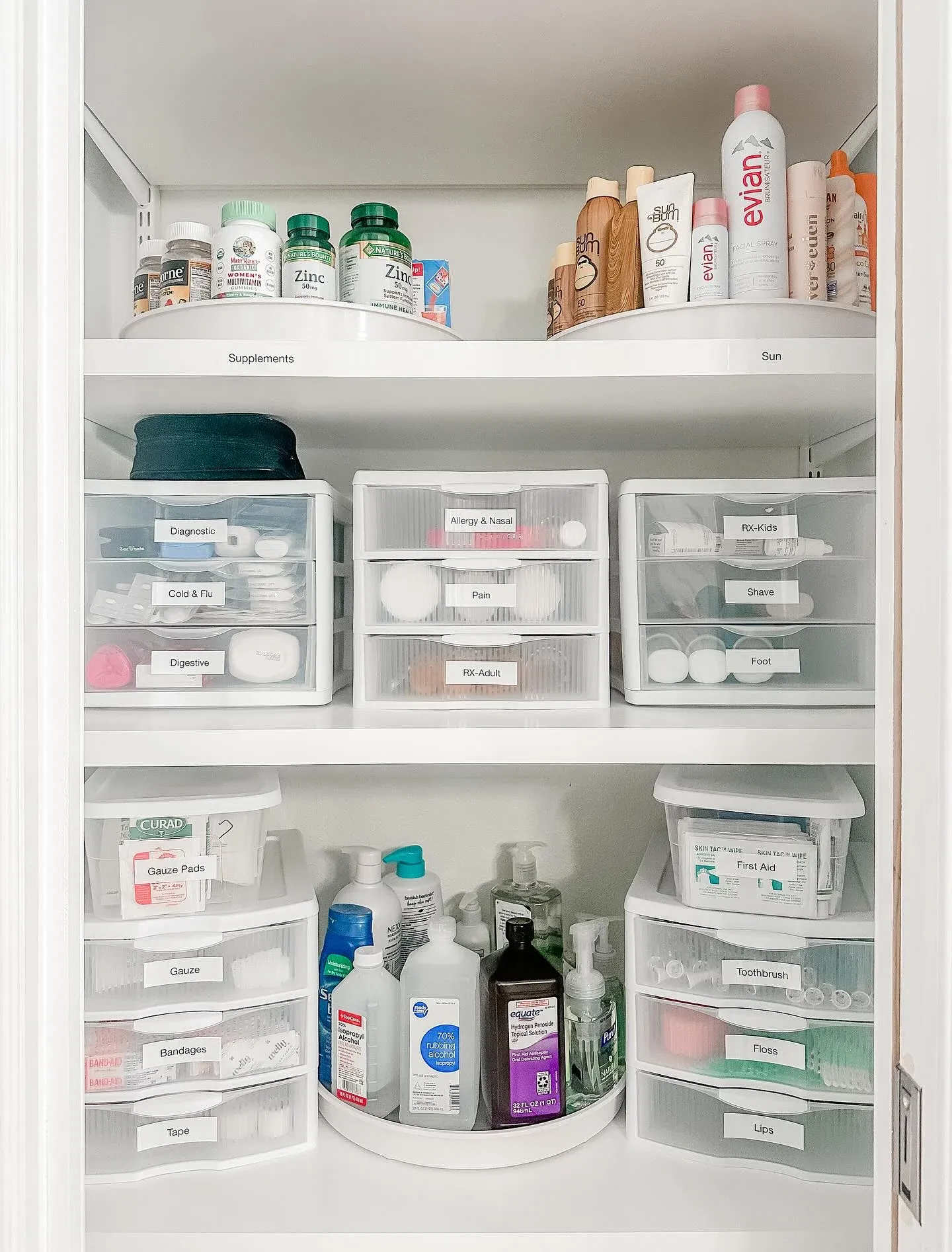
A stack of drawer-style bins can hold small bathroom backups while keeping each bin accessible. You can reach into a drawer-style bin without unstacking the others.
Drawer-style bins can store travel-size products, first-aid pieces, skincare, and extra toothpaste. They also help prevent items from getting lost at the back of the closet.
Drawer-style bins can hold medicine, first aid, extra toothbrushes, and skincare backups. Grouping these items in the bins keeps them from disappearing into the back of the closet.
Label Real-Life Storage Shelves
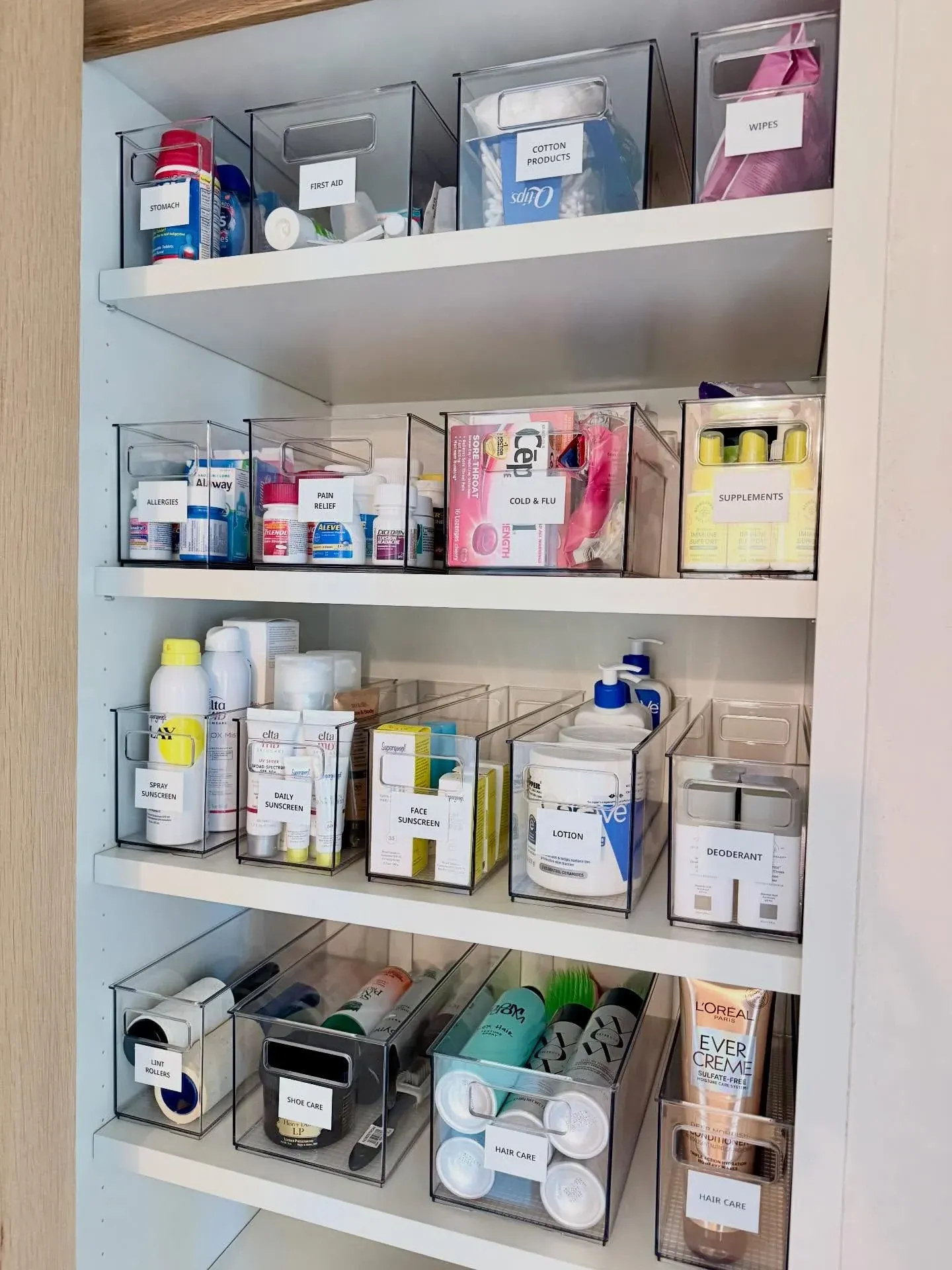
In a busy closet, labels give you more control over categories than styling does.
Shelves holding different products can be separated by category with labels. Without labels, bathroom storage tends toward mixed categories and can end up as a single pile.
Frequent item retrieval in a family bathroom supports using shelf labels, and the labels help in family bathrooms.