
Organizing a small pantry sounds easy until cereal boxes, cans, snacks, baking supplies, and partly opened packets all need to share a few shelves.
The best setup should stay manageable after grocery day. Pretty containers can help, but the real success is seeing what you have, reaching it quickly, and returning it without sending the entire shelf into chaos.
These small pantry organization ideas use bins, baskets, labels, door racks, pull out shelves, and clear containers. Some have a highly styled look, but the most useful details are practical enough for an ordinary small kitchen.
Now, let’s get into these small pantry organization ideas.
Snack Bins

A snack-bin setup is something the writer considers easy to copy. Snacks can be a recurring cause of shelf mess, so putting them into bins gives that problem a defined place to start.
White bins hold the snack packets and conceal them from view. Labels keep the mixed contents from becoming confusing, while visible cans make it easier to know what is already in stock.
Breakfast and back stock can sit alongside snacks and baking in the pantry. Keep the storage categories broad, since twenty small labels are usually easier to maintain than broad categories.
Decanting Basics
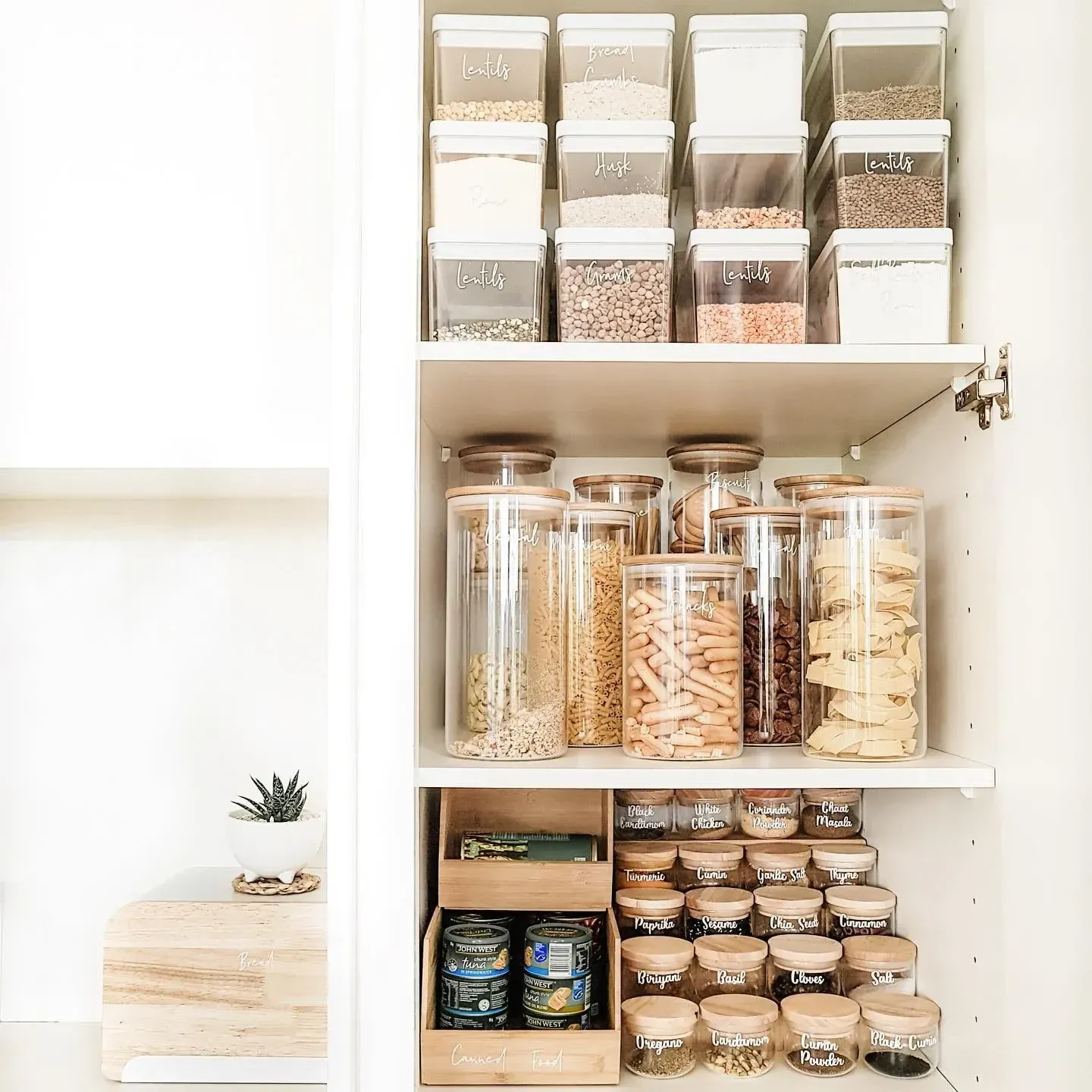
Decanting works best for food you use often, not necessarily for every ingredient in the pantry. Focus on the frequent-use food first.
Matching containers can hold pasta, cereal, oats, flour, and rice while reducing bulky packaging and saving shelf space. Keeping the quantities visible also makes a small cabinet feel calmer.
Keep labels for rice mixes and baking ingredients nearby, along with expiry dates and cooking instructions. After six months, unlabeled contents can become difficult to identify with certainty.
Jars and Baskets

A pantry system does not require every item to have a uniform presentation. Mixed storage is a realistic approach, with jars and baskets working together instead of everything matching.
Clear jars keep dry goods highly visible, while woven baskets conceal packets and awkward items. Jars and baskets balance visibility with concealment, and that mixed storage suits a working kitchen.
A partly visible pantry suits storage that mixes jars and baskets. Use the jars for an open-shelf display, then use the baskets for items that need less visible storage.
Deep Bins for Lower Shelves

Rear items are harder to reach in deep lower shelves. The depth can hide things in the back area, so the items stored there become less accessible.
Pull-forward bins improve the visibility of shelf contents and organize categories so shelf access is easier. Categories can be removed individually when needed.
On the higher shelves, keep lighter containers and everyday containers. Pull-forward bins can take heavier categories and messier ones, including potatoes, lunchbox snacks, onions, baking extras, and backup ingredients.
Visible Cans
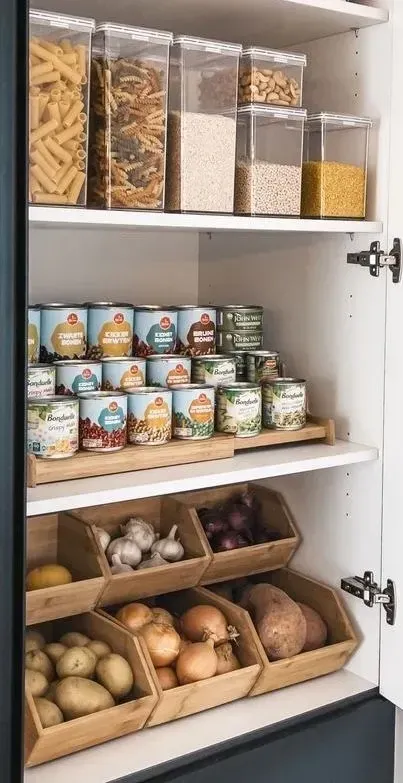
Cans can make a pantry feel more crowded when they are stacked randomly. Keeping them visible avoids adding that extra crowding to the shelves.
Rows of cans make inventory checking easier and can help prevent duplicate purchases. Potatoes and onions need designated storage too, so produce bins keep them off the pantry floor instead of leaving them loose.
Group cans by cooking use, such as soups, beans, tomatoes, and quick dinners, rather than giving every can a separate location in a small pantry.
Open Shelves for Baskets
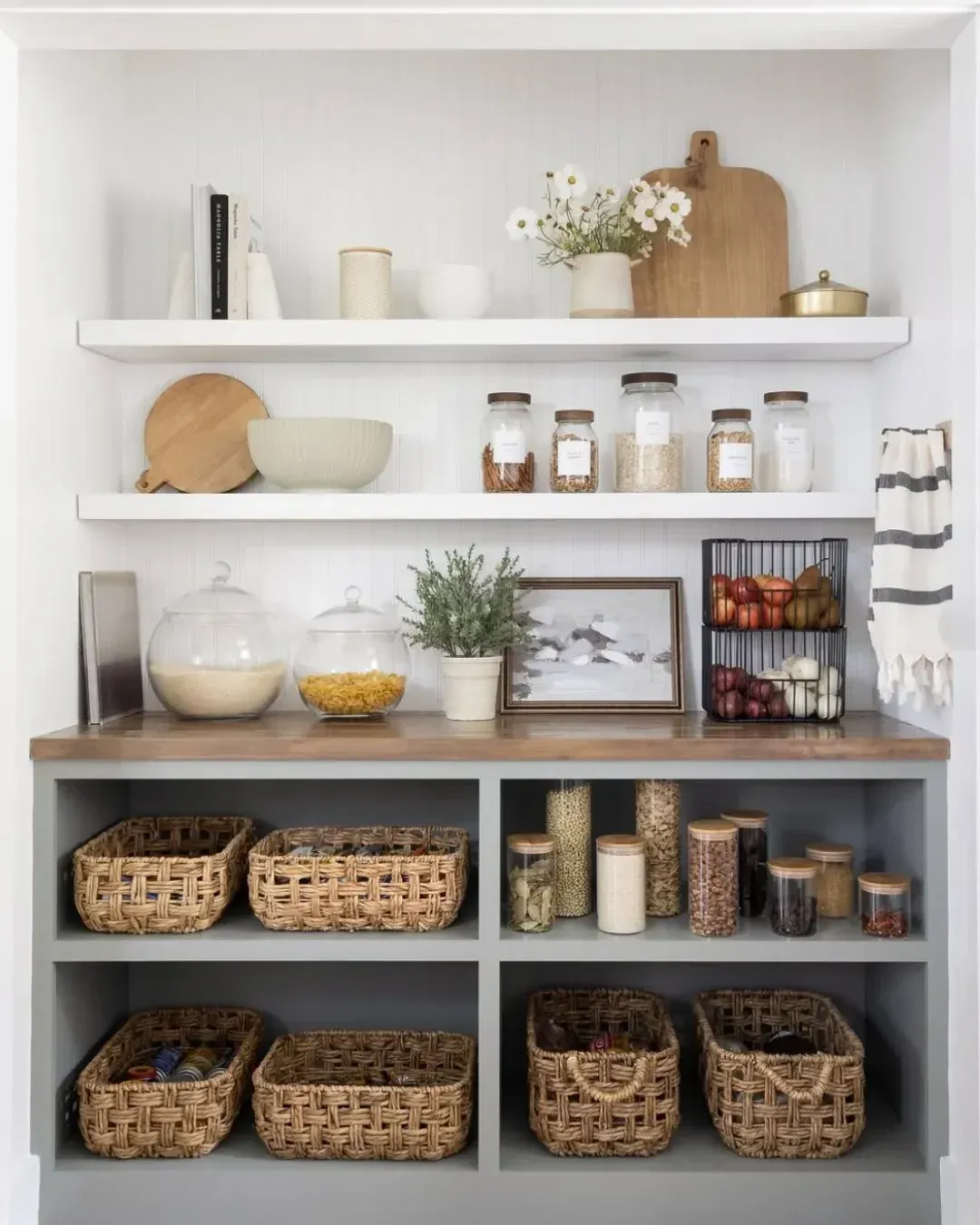
In open pantry shelves, every item is on display, so the shelves require visible organization. The storage has to look organized because all of its contents can be seen.
Baskets on the lower shelves organize that area and reduce its visual busyness. On the top shelves, jars and simple decor can create a more intentional appearance.
When storage is limited, top-shelf decor may not be practical, so keep the decor there limited. Baskets work well for visible kitchen storage, including a butler’s pantry or pantry nook.
Labeled Storage Baskets and Jars
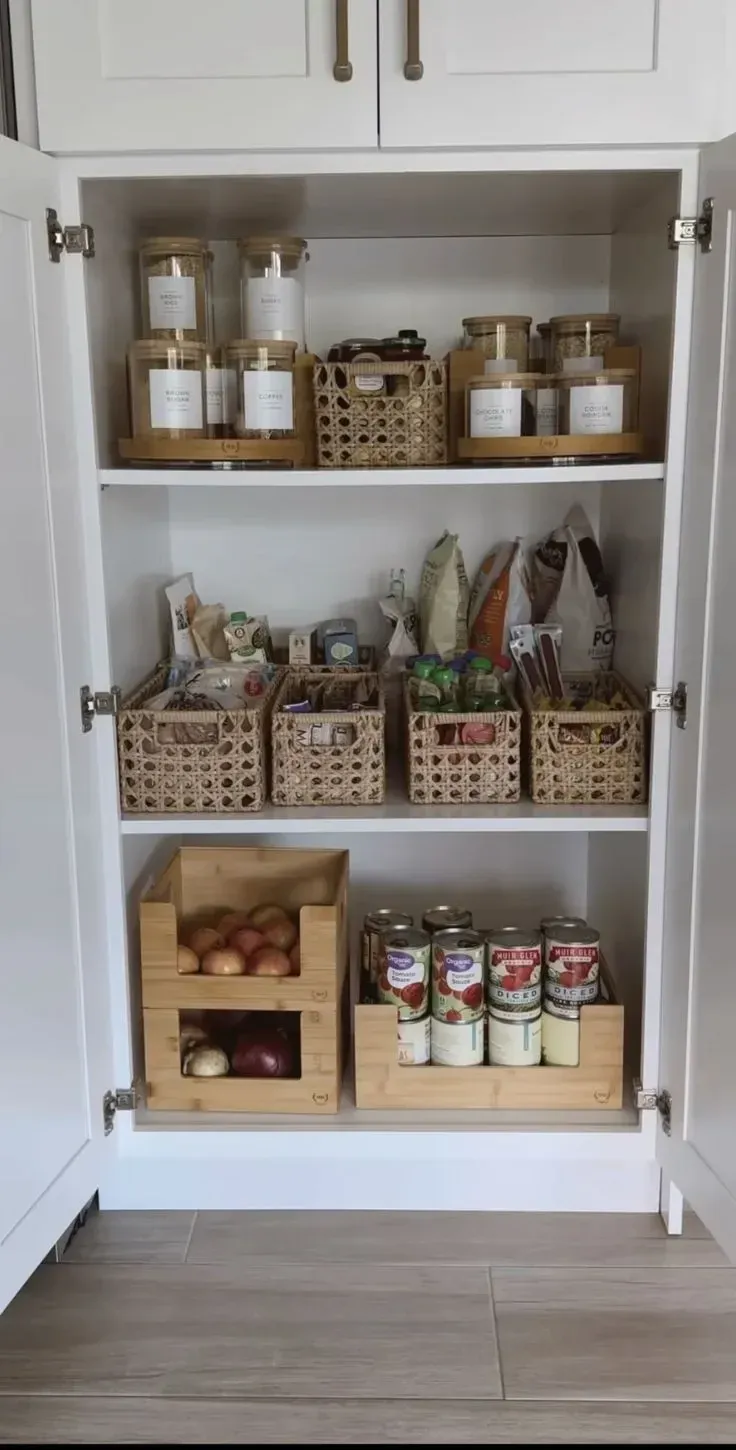
In a multi-user pantry, labels provide functional organization because everyone can see where things belong. Their usefulness is especially clear when more than one person is putting items away.
A labeled jar holds dry goods, while a basket groups the packets. Organized storage gives groceries designated homes and speeds up unpacking, and labeled jars make contents quick to identify.
Labels such as snacks, breakfast, baking, cans, and extras keep the system simple and flexible. When shopping habits change, broad labels are preferred over exact-item labels, so the labels should stay flexible and simple.
Pantry Door Storage

The back of a pantry door adds storage, which can be especially useful in a small pantry.
A slim rack on the back of the door can hold spices, packets, bottles, and other smaller items. Keep jars, bins, and bulkier food on the main shelves so the door racks free that shelf space.
Door storage is best for lighter items and things used frequently, but monitor its weight. Heavy glass jars and big bottles belong on the main shelves.
Shelves That Pull Out
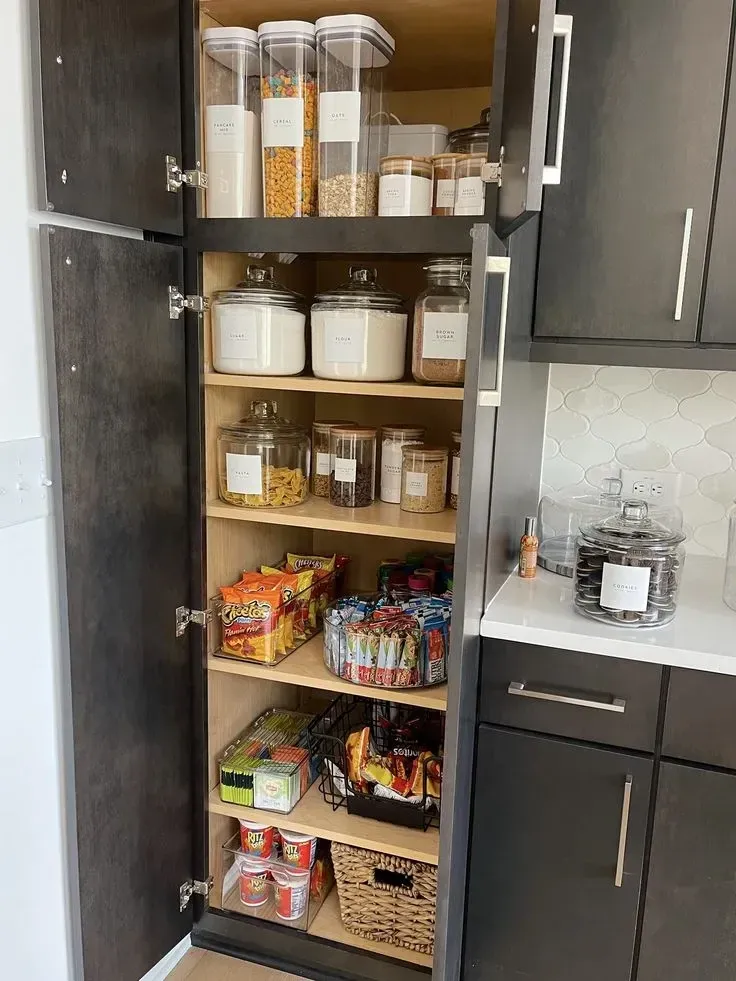
Pull-out shelves fit deep pantry cabinets and improve access to the back of the cabinet. They are a useful upgrade when deep storage is hard to reach.
In a narrow pantry, pull-out shelves expose the back storage instead of making you unpack a shelf to see what is there. That visibility helps prevent forgotten jars, snacks, and containers from taking up space and wasting money.
A pull-out shelf is not always the cheapest option, since it may cost more than other alternatives. Still, consider one for a deep, difficult pantry, because a single shelf can improve the worst storage section.
Bottles on Door Racks
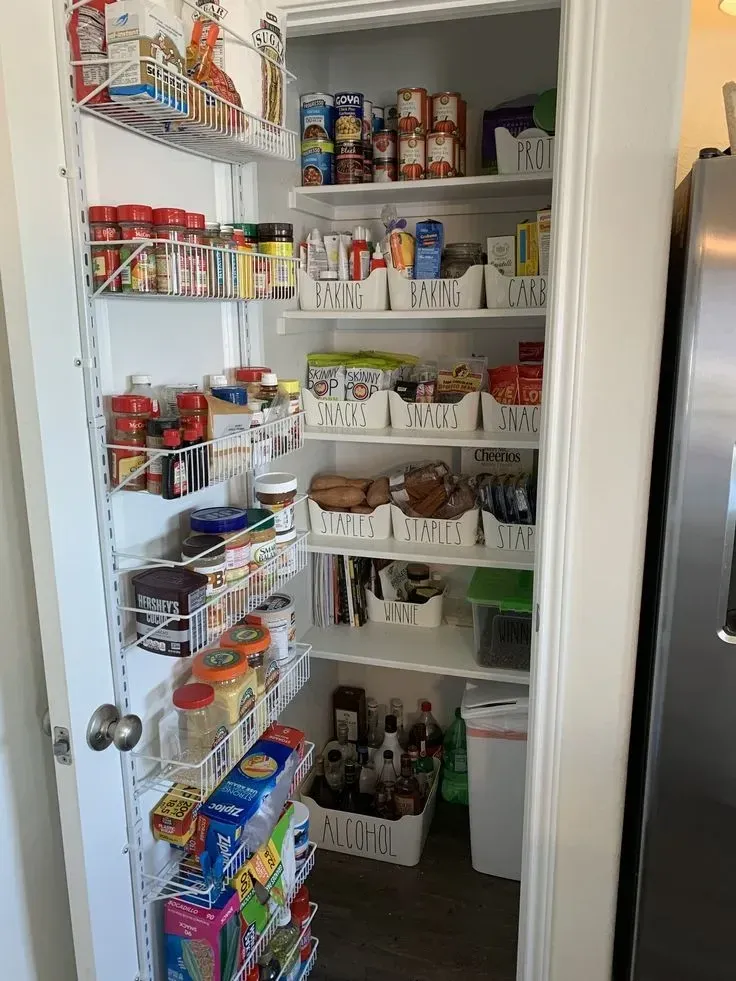
Pantry door storage can look more lived-in than a carefully styled arrangement, and that kind of lived-in storage is helpful.
A rack fitted to the pantry door can keep bottles, jars, packets, and other extras together while preserving the main shelf space. It may not be perfectly styled, yet the door storage reveals how much pantry space is available.
Keep backup and infrequently used items on low racks, while frequently used items should stay at eye level. Low racks are also suitable for backups and other items you do not use often.
Clear Containers

Clear containers support practical pantry organization, and they can also make the pantry appearance highly polished. The same containers serve both purposes without separating function from appearance.
Matching bins reduce visual mess, while clear containers support low-stock checking. Keep snacks in one storage zone and cans in another so those groups do not end up mixed together on the shelf.
Start a clear-container system with one shelf, giving the first shelf the foods you use every week. Expand the containers gradually instead of buying a full pantry system if you are working with a budget.