

Decorating a narrow living room takes thoughtful planning. Every piece of furniture needs a clear purpose, from the sofa and coffee table to the plants, shelves, and dining area.
The most important detail is keeping a clear path through the room. A walkway that feels intentional can help the space feel cozy without turning it into one long hallway.
These ideas show how to work with the shape of a narrow living room instead of fighting it. Some looks are calm and neutral, while others bring in color, but each one keeps the layout feeling organized.
Long Rugs for Narrow Living Rooms
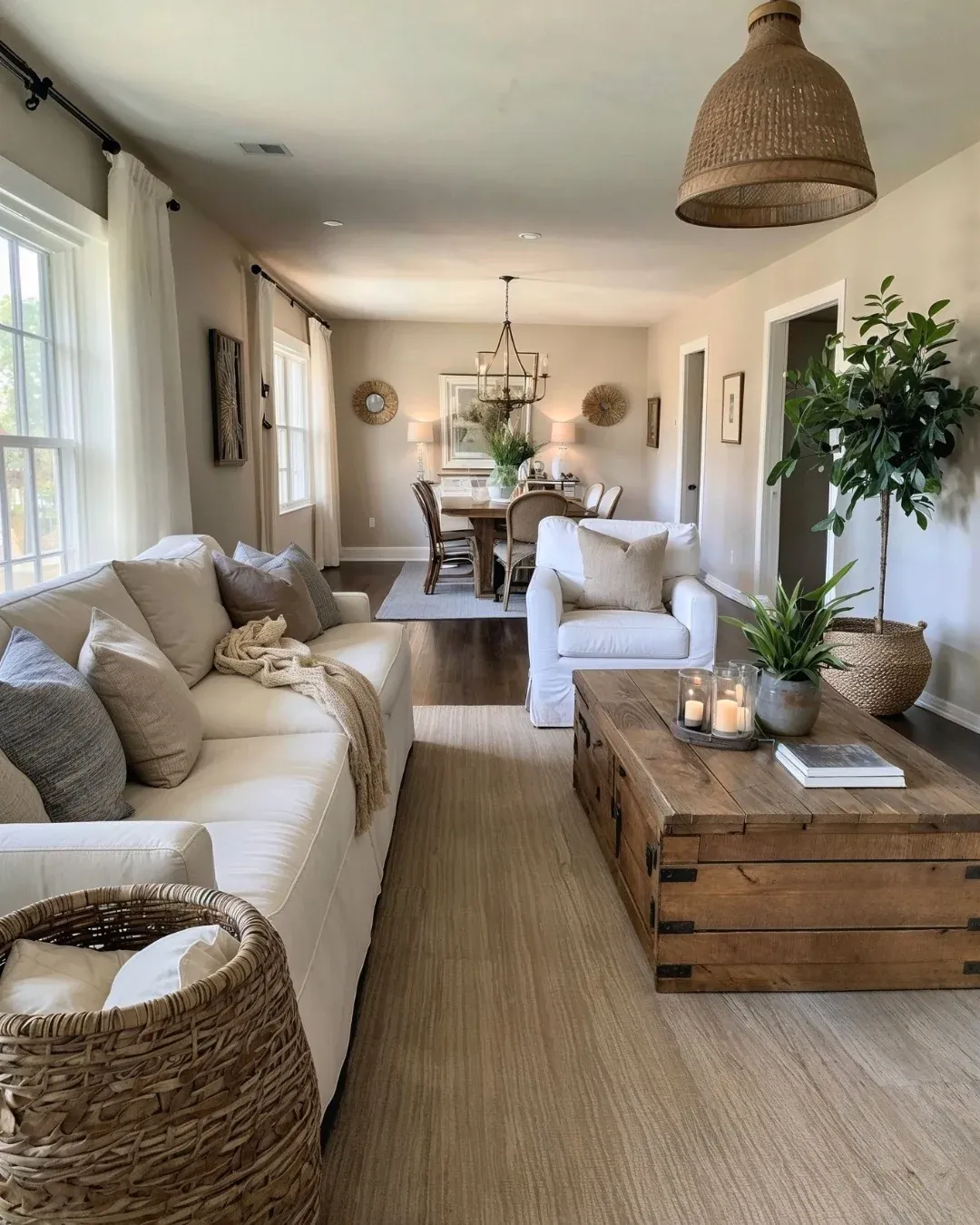
A long rug makes the layout feel intentional in a narrow living room rather than like a walkway. It helps the room read as a planned space instead of a passage between areas.
The rug follows the sofa and anchors the seating area, with the coffee table sitting on top of it. A clear path remains around the arrangement.
In a corridor-like room, connect the sofa, table, and chairs with one rug. Make the rug long enough to define them as a single seating zone.
Slim Console for the TV Wall
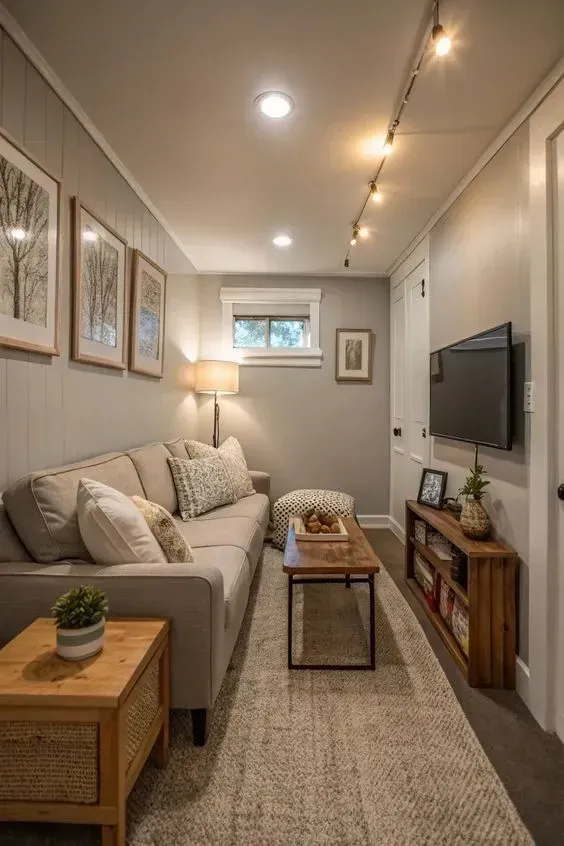
In a narrow living room, a bulky TV unit can make the space feel crowded. The unit takes up more visual and physical room than the layout may have available.
The slim console below the TV provides storage and leaves the walkway clear. The preferred gallery frames sit over the sofa and dress the wall without bringing in another piece of furniture.
Closed doors hide clutter, while a low console keeps the TV wall useful and preserves an open feel.
Kitchen Mirror

A mirror helps a narrow open-plan living room feel less closed by bouncing light around the space.
A round mirror near the kitchen breaks up the long wall and creates a soft focal point. Paired with a round coffee table, it keeps the room layout from feeling too boxy.
Many small mirrors can make a narrow room feel busier, especially when the room is already tight or dark. In that case, use one simple, large mirror instead.
Wall Mounted Desk

The desk sits flat against the wall, which helps it fit into a narrow room. Its small size keeps the desk from taking over the available space.
A rug defines the living area without crowding the middle of the room. The desk works alongside the sofa and chairs, so the layout brings the pieces together without making the center feel busy.
In a narrow room, a chair that tucks in keeps the walkway clear. Choose a slim desk as well, since furniture that sticks out can become a walking annoyance.
Use the Walls for Decoration
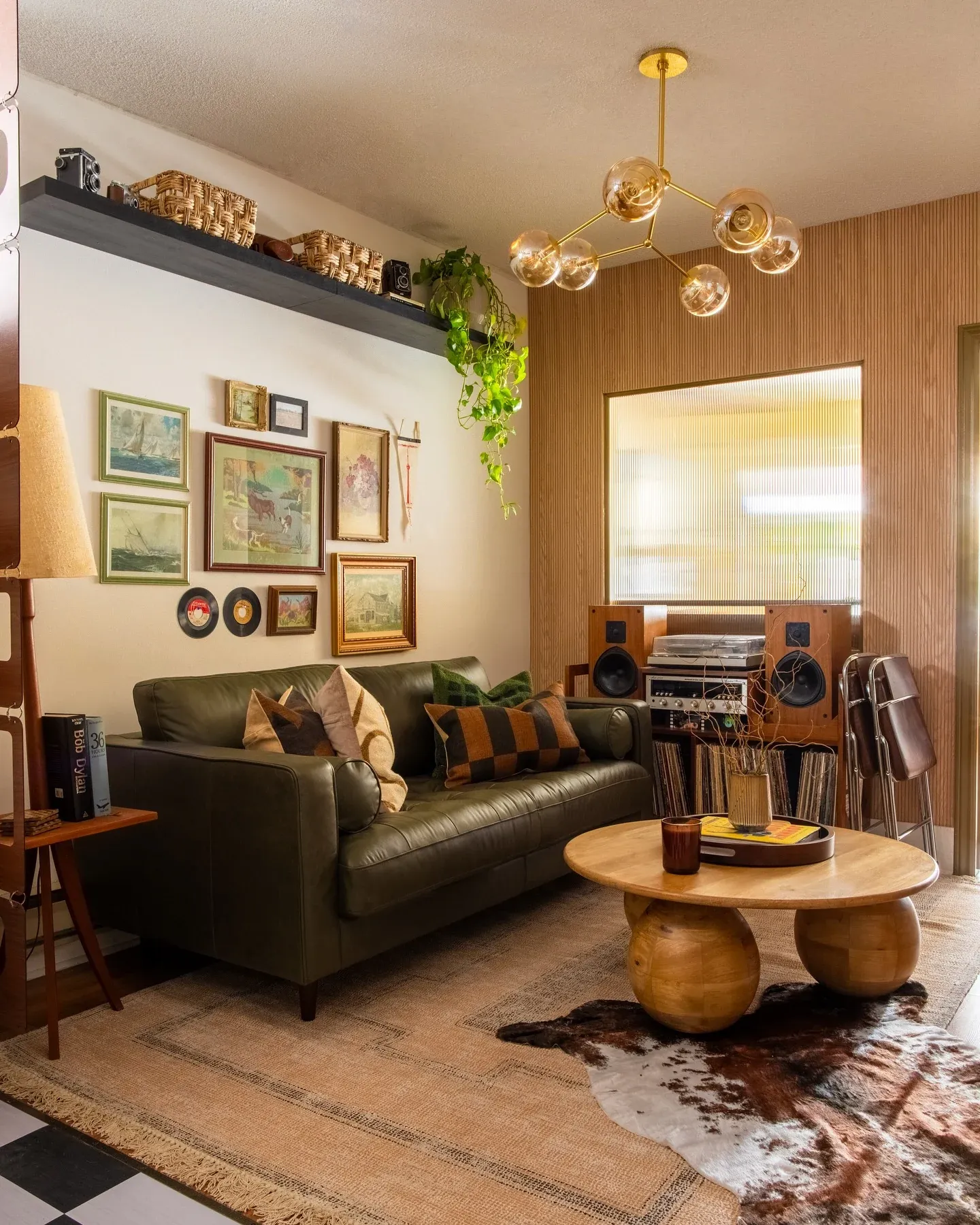
When floor space is limited, the walls can carry more decoration. Art and other wall elements leave the floor available for the furniture the room needs.
A high shelf adds another layer for plants and lighting, while a gallery wall builds up the walls in a narrow living room. These wall elements reduce the need for side tables and cabinets.
Wall decor adds personality while preserving clear floor space. Prioritize art, plants, and a narrow shelf before adding more furniture.
Light Sofa, Light Rug

Light-colored furniture reduces the boxed-in feel of a narrow room. Keeping the main pieces light helps the room feel less enclosed.
A simple coffee table and low TV unit keep the arrangement understated, while a white sofa and pale rug make the room feel wider. Black pillows and the TV bring contrast and keep the light furnishings from looking flat.
If natural light is limited, keep the largest pieces pale and use smaller accents for contrast.
Use a Rug to Define the Living Area
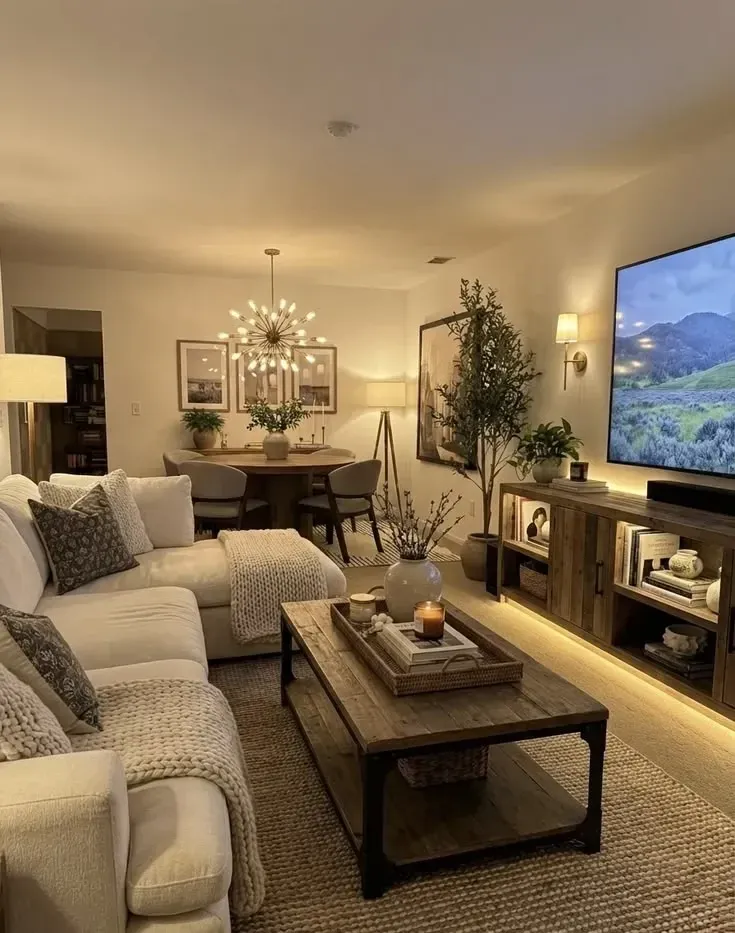
A rug marks out the living area and keeps it apart from the dining area as part of a room that is long and open, so no divider is needed.
Behind the sitting zone, a dining table separates the dining area from the sofa, chairs, coffee table, and rug. A narrow TV console avoids visual heaviness while preserving the usefulness of that side of the room.
For one long room, keep the dining furniture light and place it behind the living area. Use a rug to mark the living area, creating a layout that supports the room’s two functions.
Slim Coffee Table

A coffee table can be the key space risk in a narrow room layout. Its size needs attention because it can take up more room than expected.
An ottoman provides comfort without requiring a bulky chair. A slim rectangular coffee table suits the sofa’s shape and preserves walking space.
Measure the space around the coffee table before you buy it, and leave enough room for movement. Adequate clearance prevents people from having to walk sideways.
TV Base Storage

For a narrow living room, low storage is preferable to tall, bulky storage.
A low, long TV unit keeps the wall open while storing everyday items. The rug and sofa follow the room’s length, creating a calm arrangement that works with the room’s shape.
Under the TV, use storage with drawers or closed cabinets because open shelving can quickly clutter a small narrow room.
Clean TV Wall

In a narrow open-plan living room, the TV wall works best with a clean treatment. Keeping this wall clean supports the room layout.
A round coffee table reduces the sharpness of the arrangement. The sofa stays near the opposite wall, while a long console provides storage and the dining area at the back retains usable space.
A plain finish helps the TV wall stay simple when it connects to the kitchen or dining space. Too many shelves, cabinets, and decorative pieces may make the room feel tighter.
Far-End Accent Color

Add color at the far end of a narrow living room to direct visual attention there.
A green sofa, orange curtains, a bright pendant, and a bay window mark the far end of the room. Compact furniture supports easy movement, so the end feels intentional rather than forgotten.
The main sofa, the curtains, and one end of the room can carry color, while lighter furniture reduces visual fullness and the coffee table and side pieces stay light.
Long-Wall Shelves

Along the long wall, shelves use the room’s length without taking over the narrow living room.
A window at the end provides a natural focal point, while sofas facing inward support the living-space layout. Shelves preserve floor space and provide room for storage and decor.
Baskets, books, plants, and framed pieces can share the shelves with useful items. Keep the shelves shallow and mix practical pieces with decor, since many small objects may make them look cluttered.