
Ready to make an industrial loft feel stylish and livable? These ideas highlight the character already built into the space.
Industrial lofts come with plenty of natural personality, from exposed brick and tall windows to concrete, metal, wood, open layouts, and high ceilings. The strongest decor choices work with those existing features instead of hiding them. That approach keeps the room feeling distinctly urban.
A loft can be spacious and striking while still feeling warm. Rugs, lamps, plants, art, and softer furniture help fill a large room without making it feel empty or cold. Each detail adds comfort and life to the open space.
Dark colors and heavy materials do not need to take over the entire room. Soft seating, warm wood, large rugs, and plants can balance the look of brick and metal. The result is a loft that feels like a real home, not just a huge room.
Exposed Brick Bedroom

If the brick is already exposed, the loft bedroom has a strong feature in place. The author recommends giving that brick visual priority rather than letting it fade into the background.
Keep the bed low and the bedding simple so the exposed brick remains the main feature. One or two plants can add something to the room without taking over.
Warmer textures elsewhere in the bedroom can make the brick feel less harsh. With minimal surroundings, the brick can come across as hard, so softer materials help balance it.
Open Loft Living Zones

A loft is often one large room, and arranging that large space into functional zones can be difficult. The living area usually needs some clear separation without turning the room into smaller enclosed spaces.
A large rug under the sofa marks the living area. A dining table placed nearby does not necessarily make the room feel messy, especially when the sofa and dining table have clear positions.
Keeping the ceiling and windows visible helps preserve the sense of height and light. The author recommends using furniture that stays low and open, since low open furniture does not interrupt the view of the ceiling or windows.
Low-Hanging Pendant Light

A high ceiling can leave the dining area feeling unanchored. A low pendant light brings the dining area down to a more grounded scale.
A warm paper shade can soften the metal railings, exposed brick, and black window without removing the industrial style. The shade adds a gentler element to those harder features while keeping that style in place.
Hang the pendant light over the dining table or seating area rather than placing it close to the ceiling. The author recommends using its lower position to connect it more clearly to the area below.
Furniture for Loft Scale

A loft can easily make tiny furniture look out of proportion. A large sofa is more appropriate for the scale of a loft and can hold its place in the room.
A large rug defines the living area and prevents a floating seating zone, while the large L-shaped sofa fills the area.
A generous rug, large sofa, and substantial coffee table establish the living area before the smaller details are added. The author recommends prioritizing those pieces over having many accent pieces, which should remain lower in priority.
Open Loft Layout
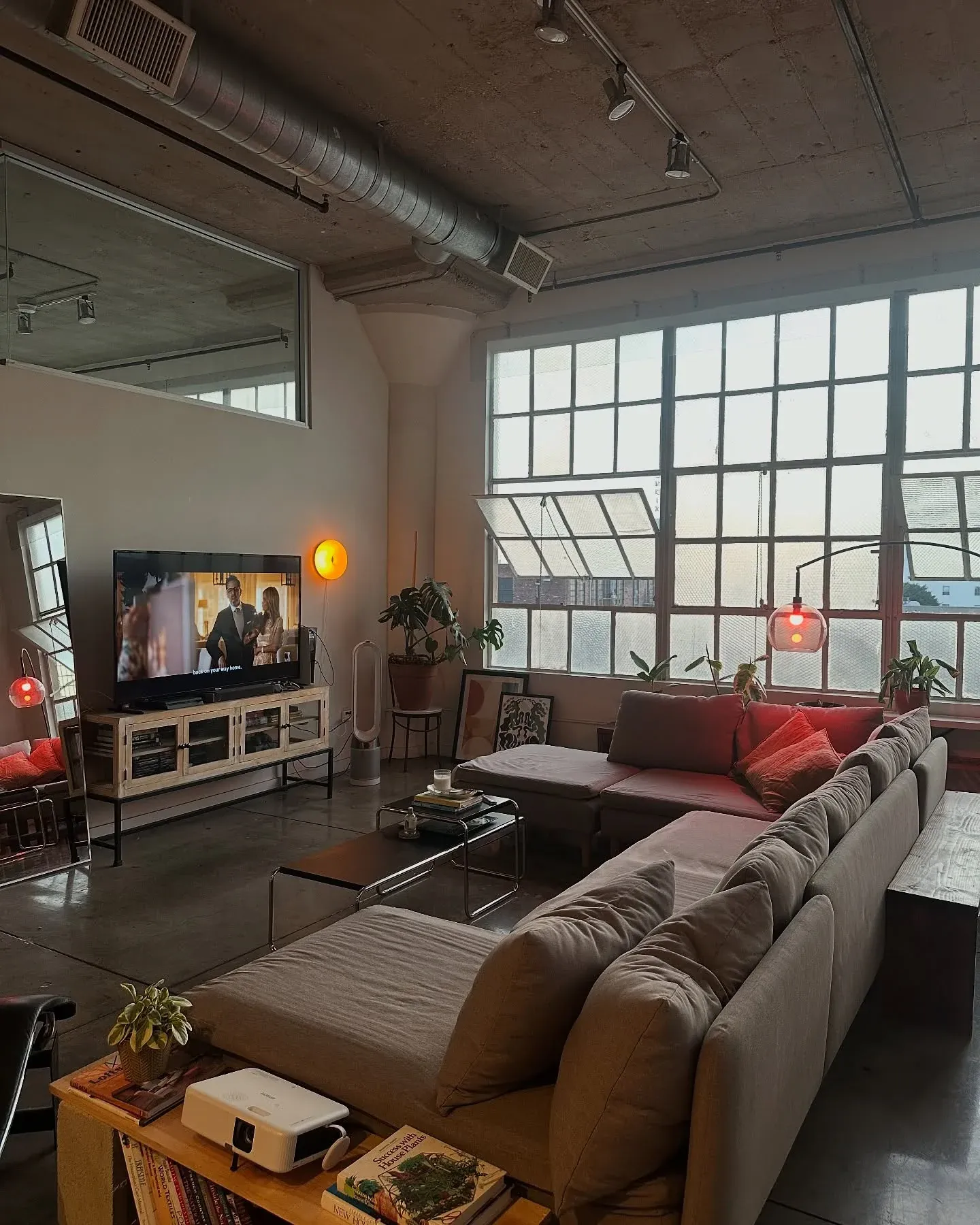
Furniture can define a living room without blocking the windows or walkways. Keeping those routes clear lets the living room have a defined shape while the rest of the loft remains open.
A simple coffee table joins the large rug and low sectional to shape the living area. The arrangement leaves plenty of open floor.
Concrete floors and huge windows emphasize the openness of a loft. The author recommends avoiding tall, bulky furniture in the center so those features remain visible.
Bookshelves with Brick
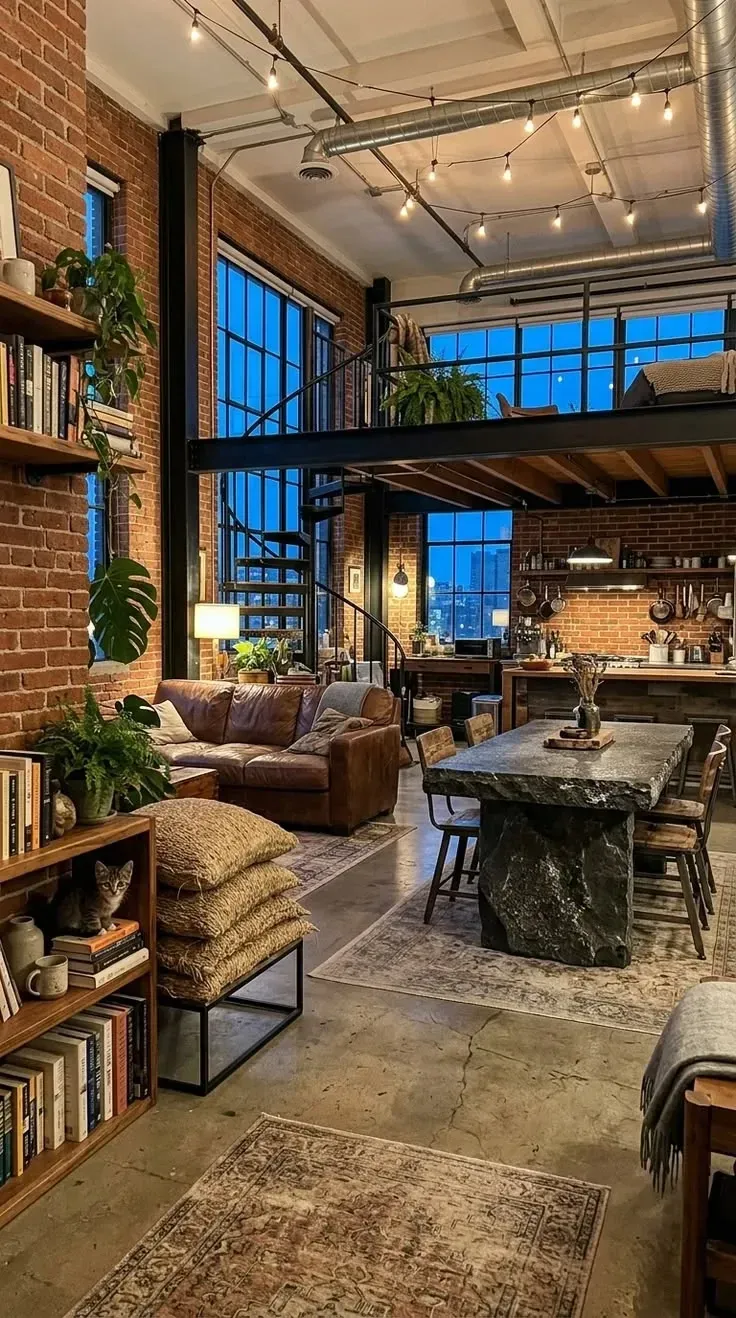
Against brick, bookshelves can make an industrial loft feel more lived-in. They bring useful storage and a settled presence to the brick wall.
A leather chair, dark table, plants, and shelves can each add warmth to the loft. Use selected furnishings rather than over-decorating the space.
Bookshelves are a suitable addition when a loft has strong architectural features but still feels bare. The author recommends them for a bare loft because they add presence without hiding those existing features.
Loft Plants
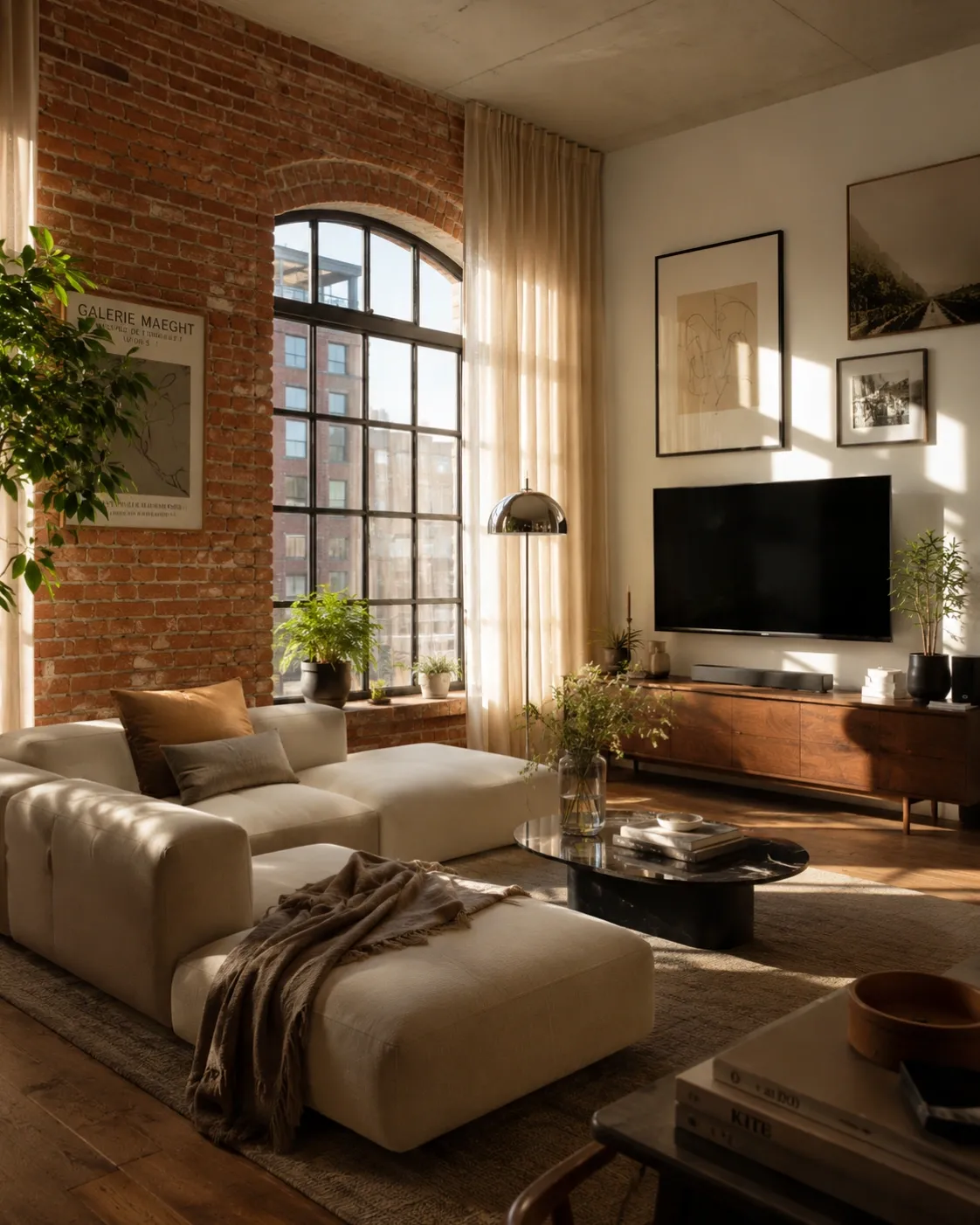
In an industrial loft, plants are especially good at breaking up hard brick, metal, and other hard edges.
Greenery placed beside the sofa or near the window brings a softer feel to the sitting area. It also sits comfortably with the industrial walls without taking attention away from them.
Above the furniture, empty space can make the room feel unfinished. If the ceilings are high, choose taller plants to reduce that empty area.
Vintage Pieces for Loft Warmth
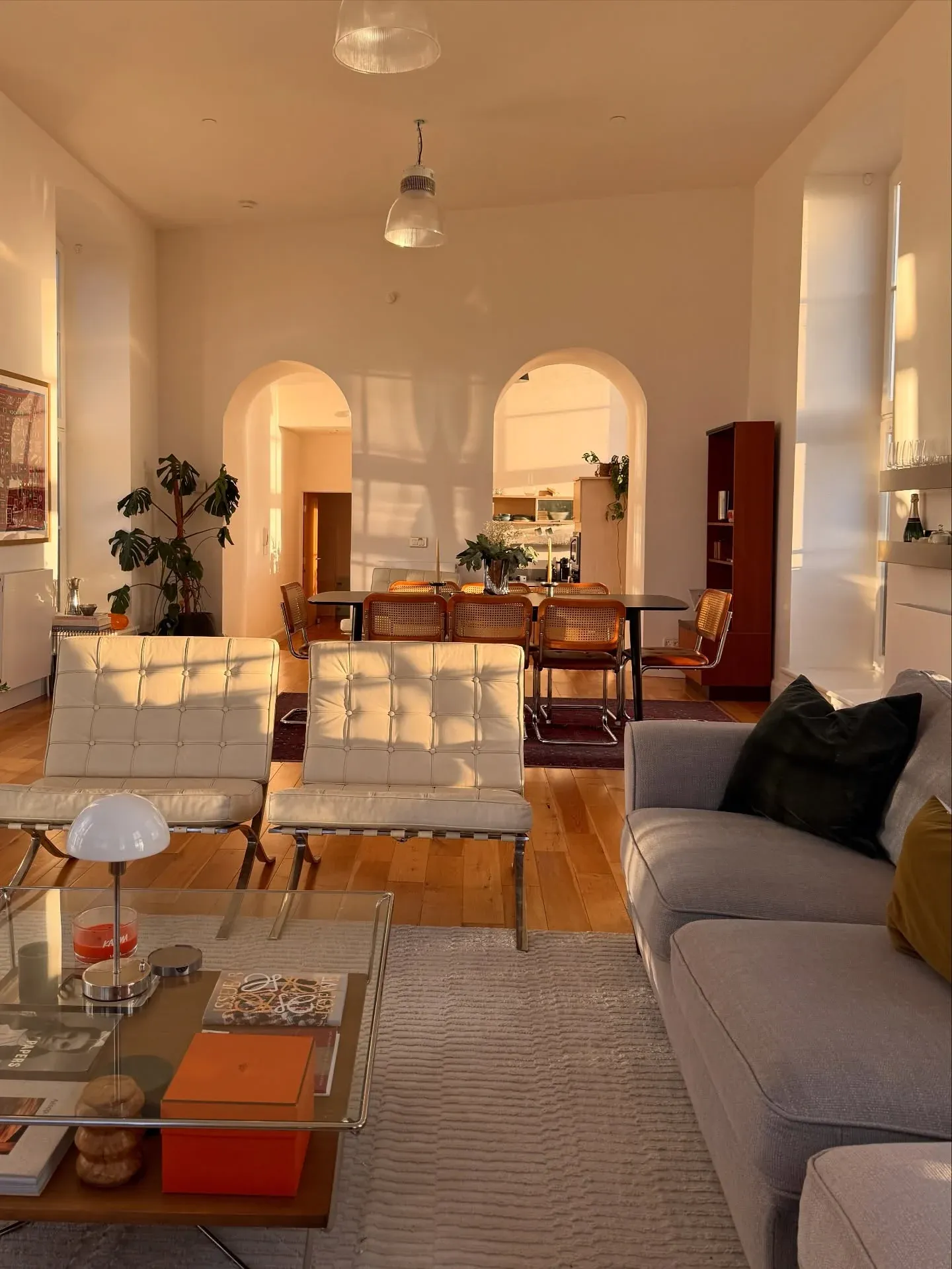
Vintage pieces warm up an industrial loft and keep it from feeling too new or too plain. They give the space a less bare feeling without changing its industrial character.
Older chairs, warm wood, soft lamps, and a simple rug all contribute to a collected space that does not feel cluttered.
In a room with a high ceiling and hard finishes, begin the search with secondhand wood furniture. Its worn texture can suit those existing features and give the room a more grounded feel.
Exposed Pipes

Exposed industrial detail should not be hidden in an industrial loft.
Huge windows, exposed pipes, a concrete ceiling, and track lighting give the room a warehouse style.
Keep the ceiling raw and place softer furniture below it, rather than giving the room an over-polished appearance.
Space Above Loft Windows

Above the loft windows, wall space is often ignored. Leaving that space completely blank can make the wall look unfinished.
Keep the windows uncovered and do not block the light. A few plants, posters, and framed prints can add color around the window area.
When shelves, sofas, and plants already keep the lower walls busy, use the upper wall for art. This leaves the existing arrangement in place while giving the artwork a clear spot.
Bold Color Schemes

Across the open space, stronger color can add presence without seeming out of scale. An industrial loft can handle that intensity, and it supports both the room’s greater height and its open space.
An orange sofa helps create a playful room, especially with a checkerboard rug and graphic posters contributing to the same effect. The brick and black windows still work with the look rather than fighting it.
In the space, repeat the main colors several times so they support an intentional appearance. Colors that appear only once can make the room look random.
Low storage at the back of the sofa
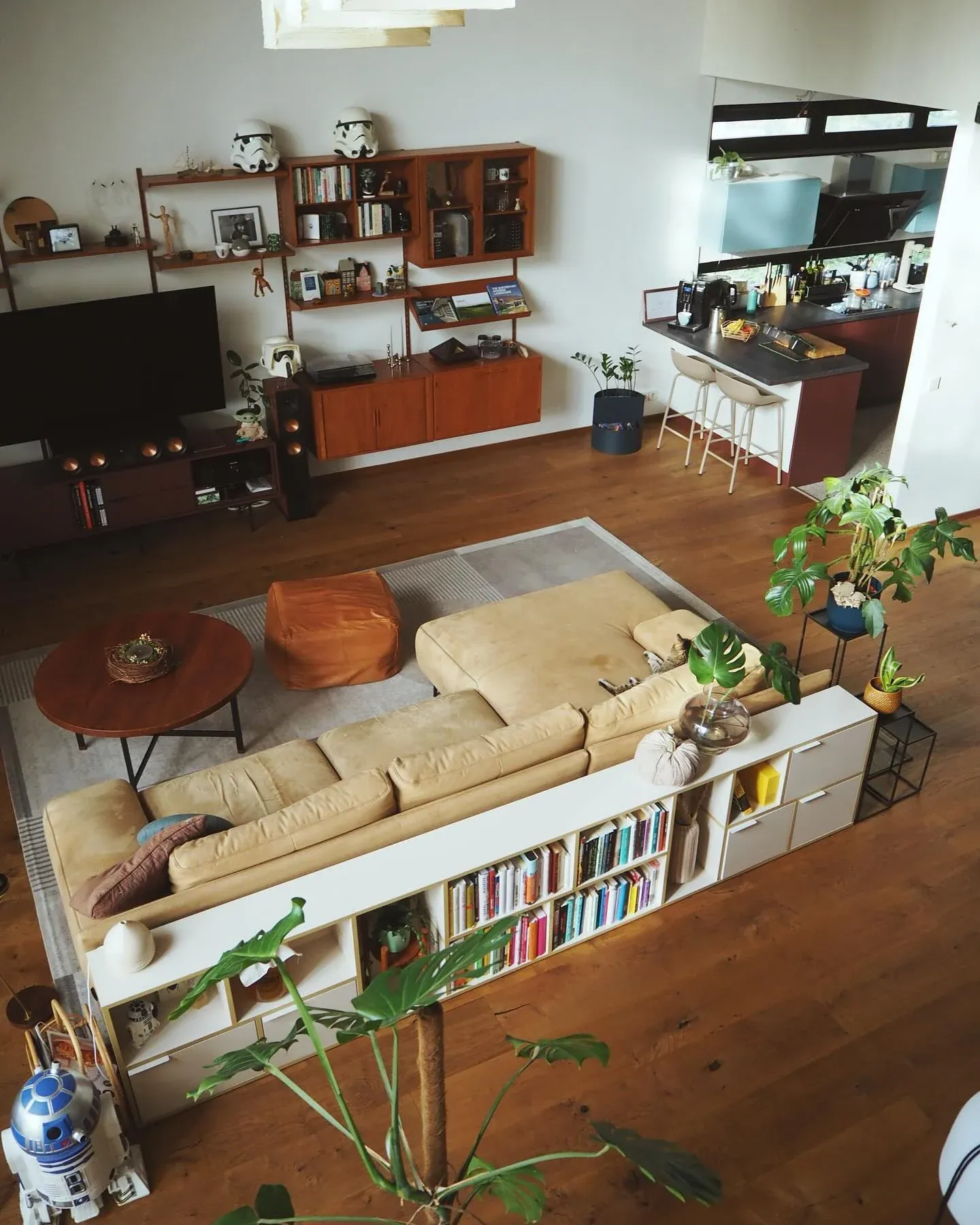
Behind the sofa, low storage can give an open loft some room structure. It is useful in an open loft because it adds definition without closing off the space.
Low shelves hold books and everyday things while preserving open space. Their low height keeps the space open.
From the kitchen and dining area, the sofa back is visible. Low storage is especially useful when that sofa back can be seen from both areas.
Tall Plants in Empty Corners
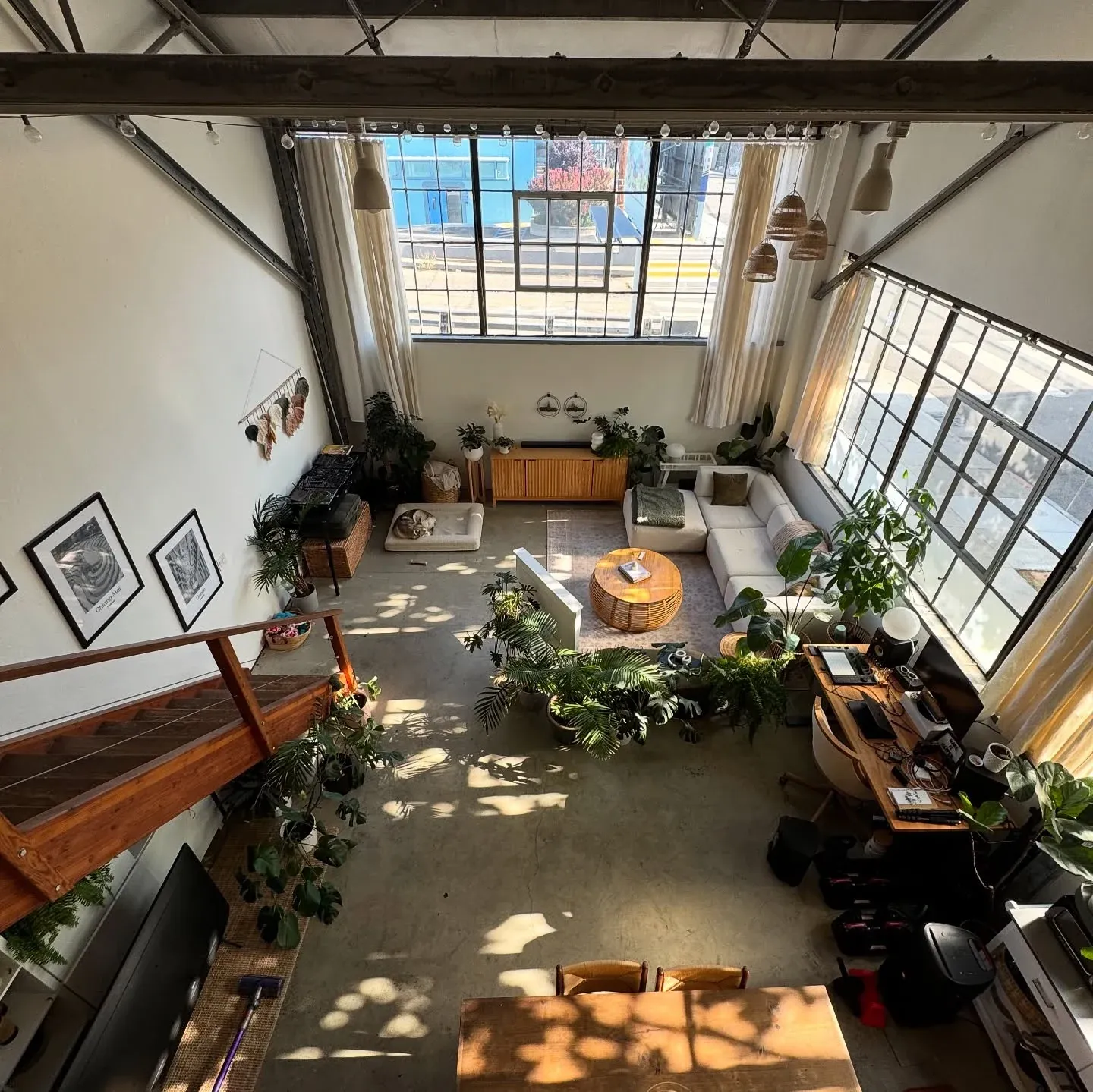
In a tall loft room, a tall plant helps draw the eye upward. Plants are an easy way to fill vertical space.
Greenery can fill an empty corner and the area around a window, so there is less need for heavy furniture.
Near windows or stair rails, taller plants can address the empty space above sofa level and keep it from looking bare.