
Studio apartment living asks one room to handle everything, but the right setup can make it feel surprisingly comfortable. The best ideas create a sense of separation without making the space feel cramped.
Before bringing in more decor, start with the layout. Consider where the bed belongs, which way the sofa faces, what could be divided by curtains or shelving, and which corners could provide extra storage.
Rugs, curtains, shelving, lighting, mirrors, and thoughtful furniture placement can completely change the feel of a studio. These details help the space feel like a real home instead of one room filled with everything at once.
Floating Sofa Divider
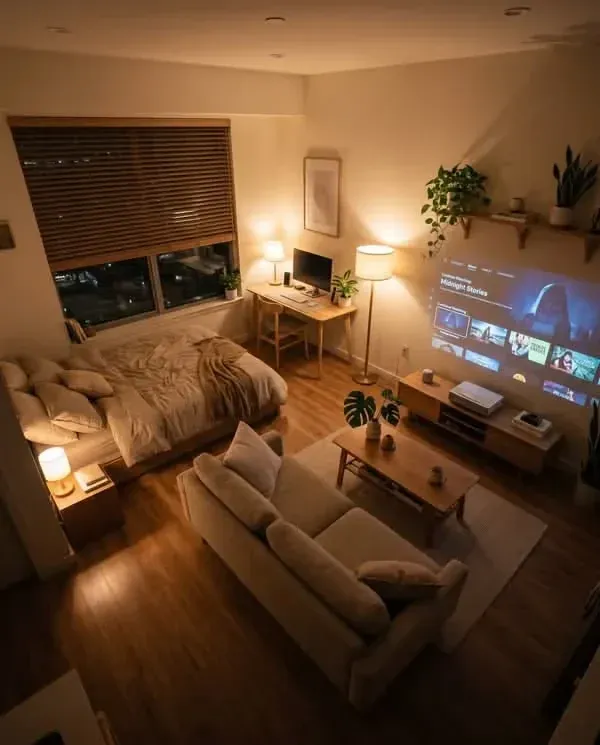
In a studio apartment, let the sofa float rather than placing it against a wall.
The sofa can separate the bed from the living area without relying on a wall-based furniture layout.
A narrow table behind the sofa gives you a spot for lamps, books, or a drink if needed. It also makes use of the space behind the sofa without taking up much room.
Bookcase Bed Divider
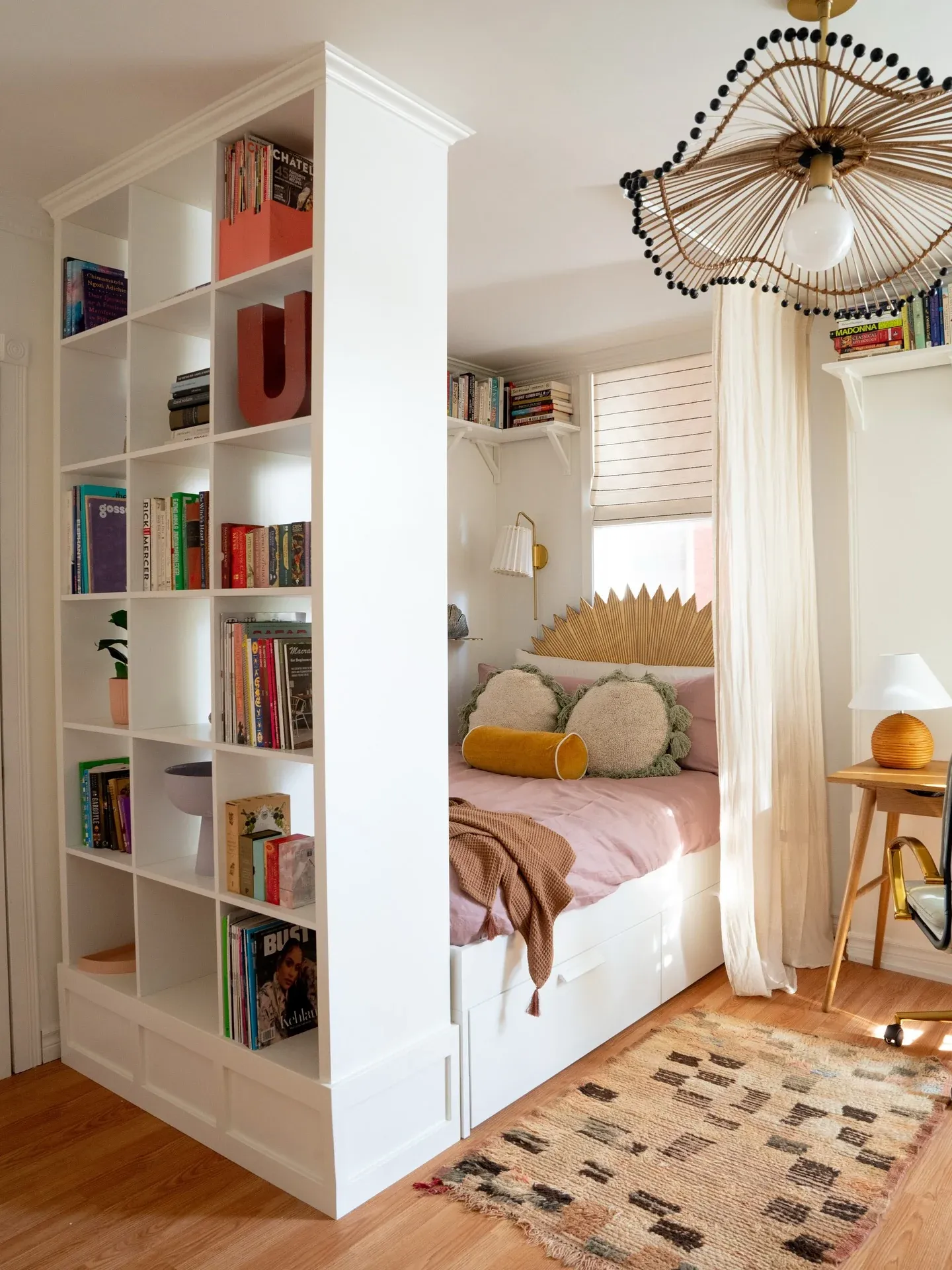
A bookcase divider gives a studio apartment storage as well as a way to separate the bed area. The first-person source calls this a favorite idea.
The bed sits behind a light bookcase, which separates it from the remaining room. The bookcase keeps the division visually light.
Keeping the bookcase shelves partly open reduces the risk of making the room feel divided or crowded. The partial openness lets the room remain connected.
Projector as a TV Alternative

In a studio, a projector can support a movie setup without requiring a large TV console. The setup keeps that console out of the room.
Behind the sofa is the bed, while the sofa faces a wall. This arrangement gives the living area a proper layout.
In the apartment, the projector setup supports a clean and open daytime atmosphere as well as a cozy nighttime atmosphere.
Room Divider With a Slim Profile
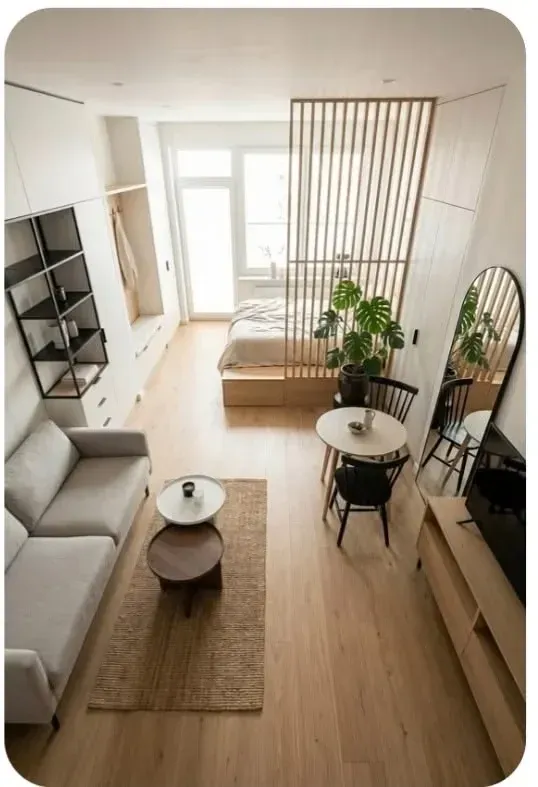
The slim divider keeps the room bright while tucking the bed away. It separates the bed without making the room feel closed off.
The vertical slats bring a light, open look while serving as a practical divider. They mark off the sleeping area, dining space, and living space without closing off the sense of openness.
When curtains feel too soft, a slim divider offers a firmer way to separate spaces. It also works when a full wall would feel too permanent.
Cozy Lighting
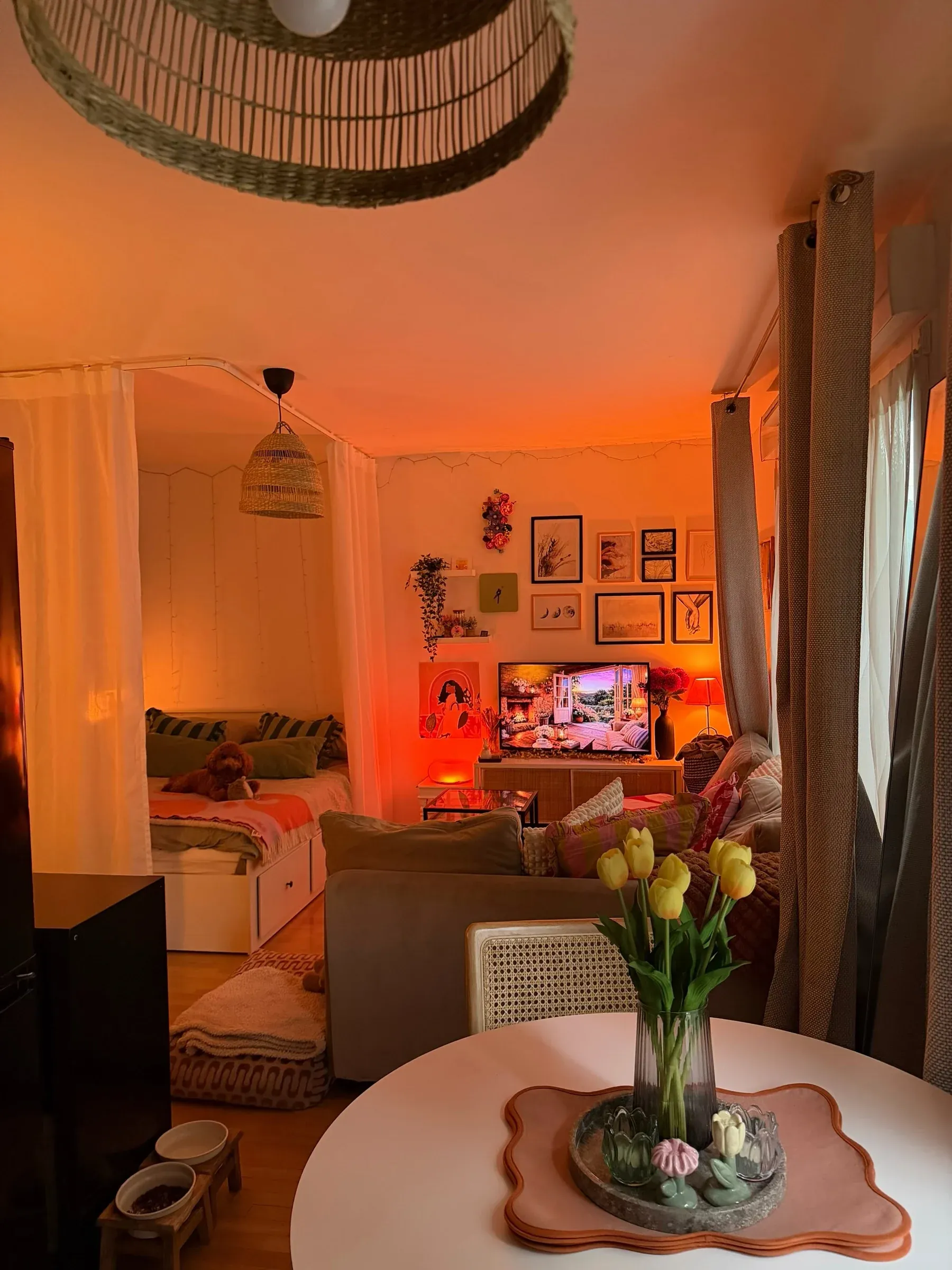
Warm lighting makes the studio feel less plain. The light adds a warmer tone without changing the basic setup.
An orange glow, a gallery wall, and the TV area all contribute to a relaxed corner. Minimal extra furniture keeps that corner from becoming crowded.
An apartment that feels too open at night can use lamps and warm bulbs. The source describes this as a quick fix for creating a more settled nighttime feel.
Personalized Wall
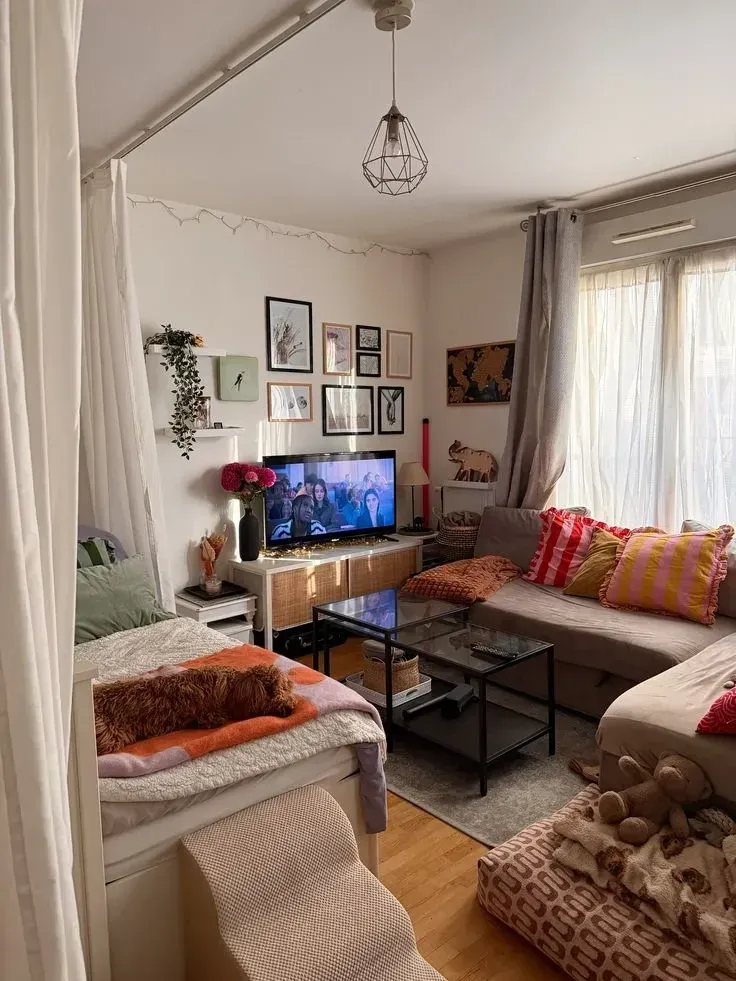
A gallery wall personalizes a studio, especially when the furniture stays simple. The wall gives the room a more personal feel without changing the simple furniture.
Art, a TV, colorful pillows, and soft curtains can add personality to a space without requiring much extra decor.
Let the other parts of the room stay calm while the wall takes the main focal role.
Recessed Bedroom Nook
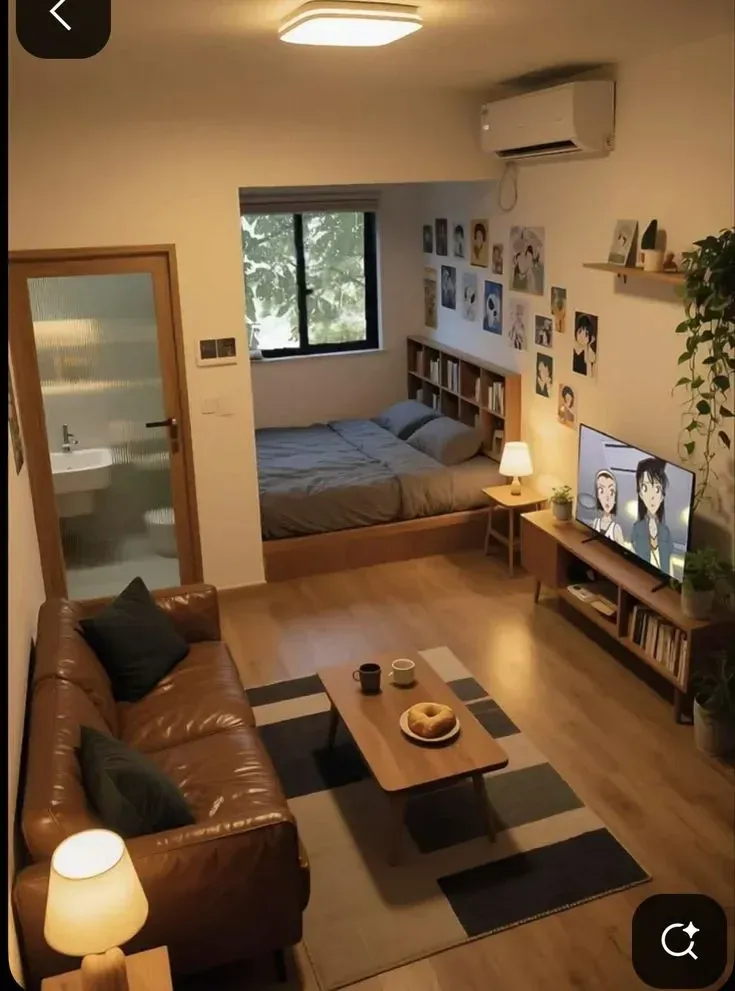
A recessed bedroom nook can make a studio apartment resemble a one-bedroom apartment. The tucked-away sleeping area gives the bed a more separate position.
The recessed area contains the bed. The sofa and coffee table are located in the home’s primary living space.
Simple bedding helps support a calm nook. Compared with a cluttered nook, the simpler bedding keeps the nook calmer.
Living Area Rug

When a studio has a single-room feel, start with a rug. Without clear grouping, the studio can look visually ungrouped, and the rug helps mark the living area.
In the living zone, the sofa is grouped with a coffee table and small stools. The bed sits near this living area, keeping the main pieces close together.
The windows stay accessible beside the separate living area. A divider creates the separation without blocking them.
Mirror Beside the Bed
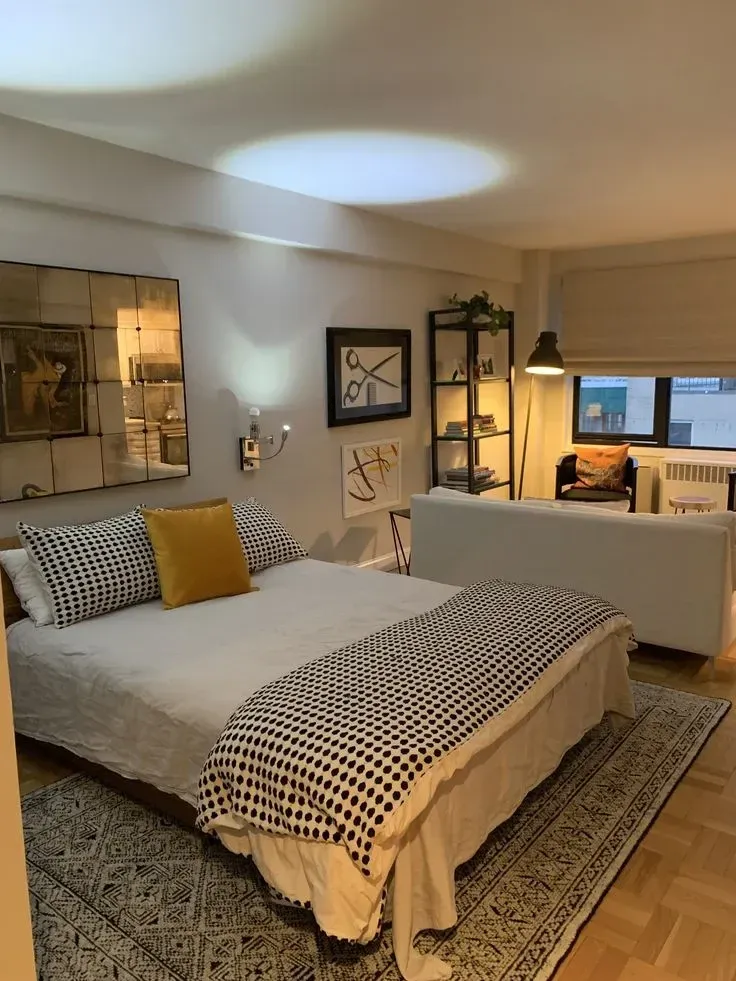
In a studio, a mirror can bounce light around the room and increase its perceived size.
Simple bedding, a rug, slim lighting, and a mirror can reduce clutter on the bedroom side and give it a finished look.
Place the mirror so it catches a window or lamp, and avoid positioning it where it will reflect a messy corner.
Open Shelving Room Divider
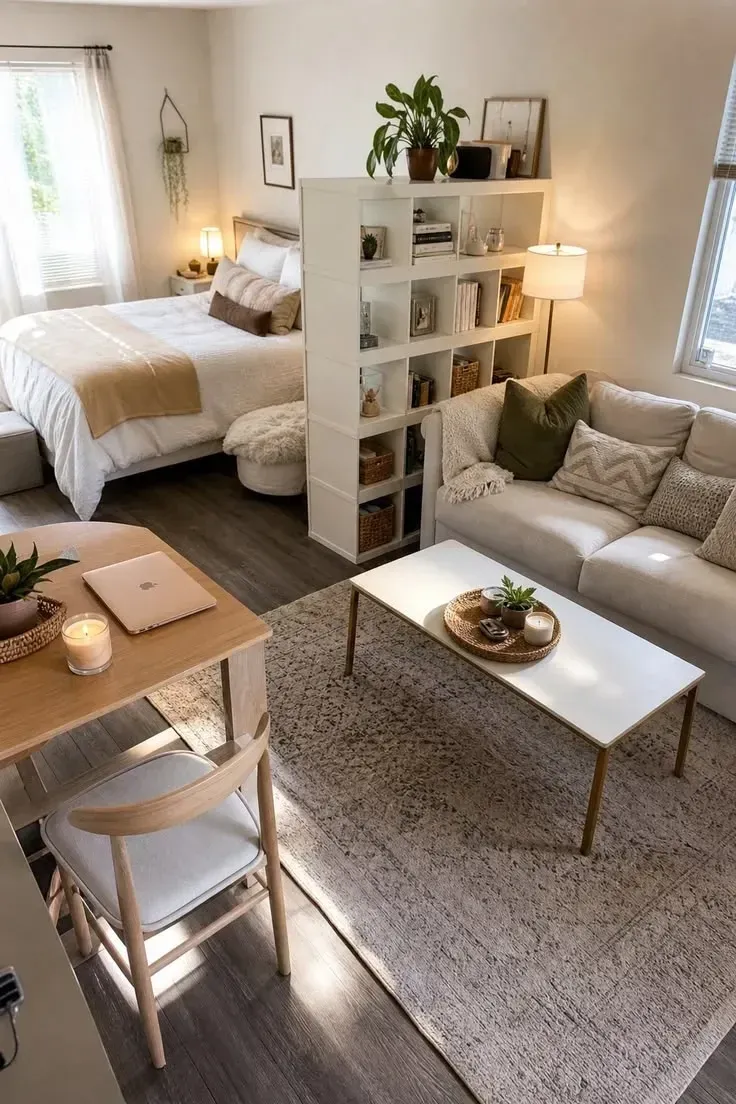
Near the bed, open shelving separates the bed from the sofa without taking away floor space. It divides the two areas while keeping the room connected.
Shelving gives a small apartment room for books and baskets, with space on the shelves for plants and lamps as well.
Leave some breathing room instead of filling every shelving cube. The shelving will appear lighter that way.
Small Sitting Nook
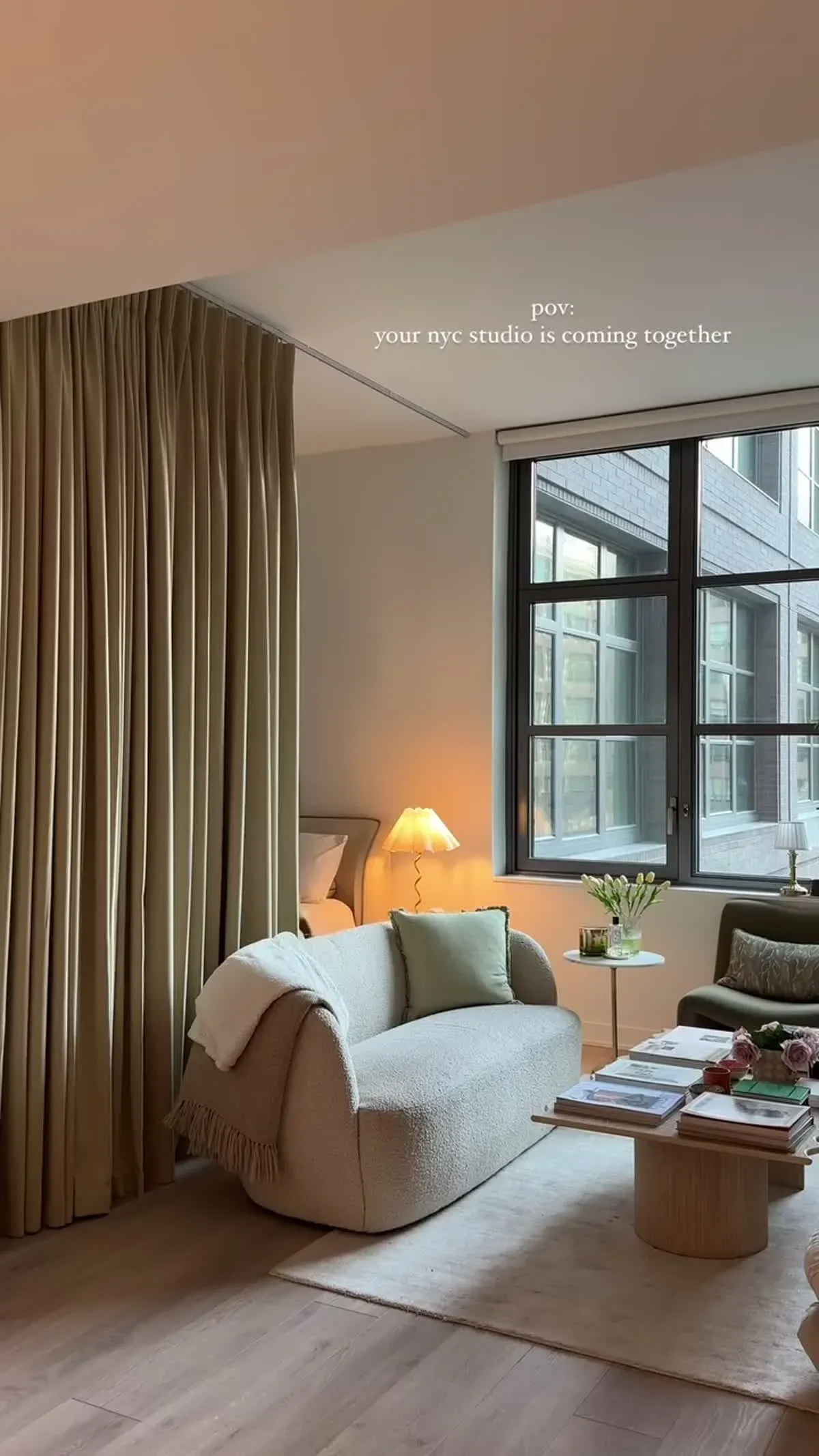
When there is no full living room setup, create a small sitting corner instead. It gives the studio a place to sit without requiring a complete living room arrangement.
Soft curtains, a lounge chair, a lamp, and a small coffee table can come together in the sitting corner. The result functions as a place to sit without taking over the whole room.
Keep the coffee table small, and place the sitting corner near a window or in a quiet corner. The smaller table keeps the walkway open.
Furniture That Maintains Openness

In a studio, bulky furniture quickly reduces the room’s perceived size. Choosing furniture with a lighter presence helps maintain the sense of space.
Near the bed, an airy layout comes together with a simple dresser, a low sofa, light curtains, and a coffee table with an open base. Each of these pieces contributes to the airy layout.
If you are furnishing a small apartment, look for furniture with visible legs and open bases, along with lighter finishes.
Glass Divider
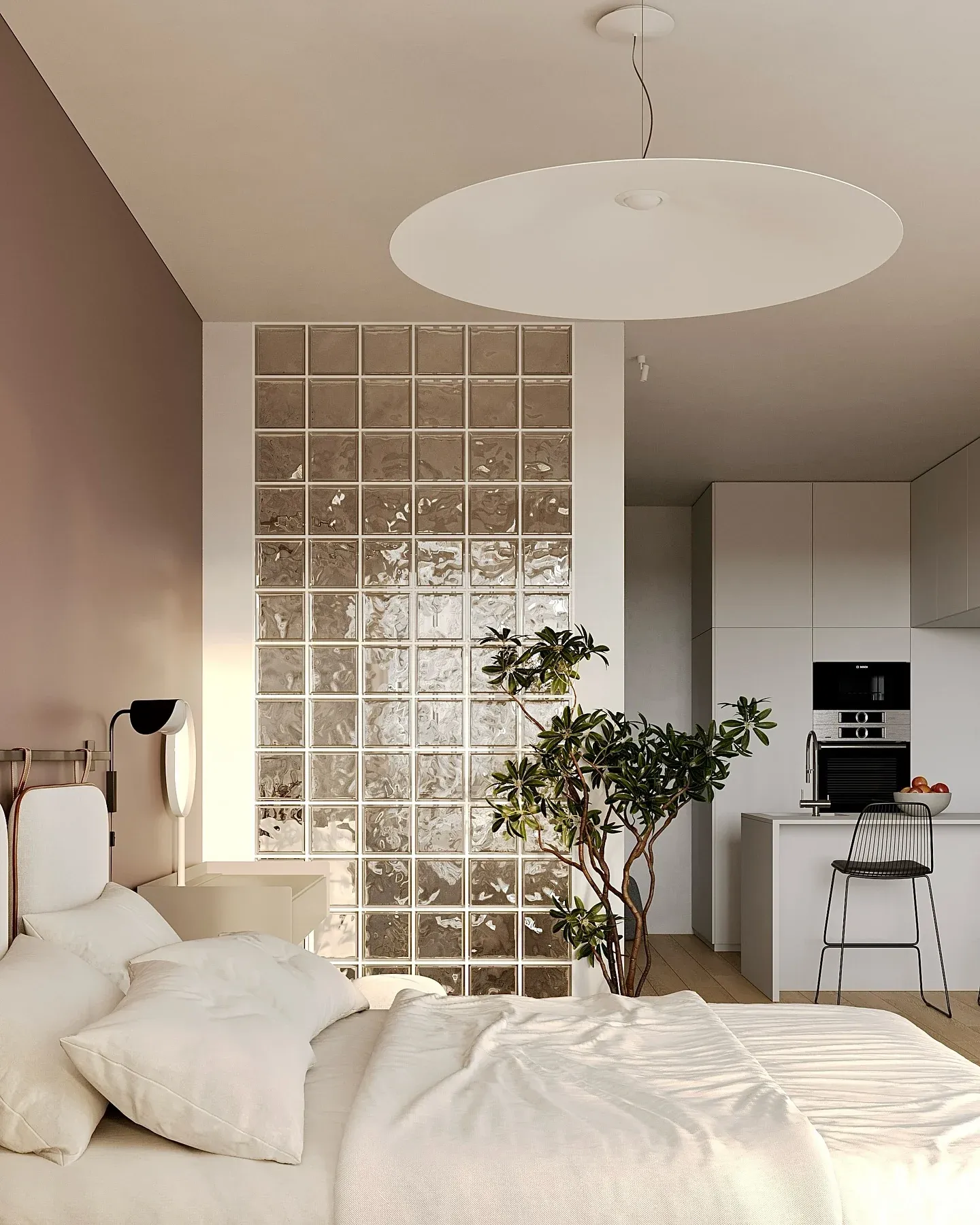
A glass divider can separate the bed from the rest of the studio while still letting light through. It marks off the sleeping area without blocking the light.
The glass divider preserves the kitchen’s openness, so the kitchen remains bright. Glass blocks can also provide privacy in the sleeping area.
For a modern studio, a glass divider creates a lighter separation than a heavy wall. It suits the open character of the space without making the divide feel solid.
Kitchen Edge

In a studio, kitchen integration is unavoidable. The studio kitchen often forms part of the living room, so the two areas share the same open space.
A rug, stools, a media cabinet, and a slim island can make an open layout more useful. Bulky furniture also has to be considered within the layout.
A simple color scheme visually connects the kitchen, seating area, and TV area. It also reduces visual busyness across the open space.
Bed Framing Curtains

Renter-friendly curtains provide increased privacy around the bed. They add a little separation without requiring a permanent change.
By the sofa and desk, the curtain setup reduces the bed’s exposure while still allowing light to reach the bed. Light access remains preserved.
Around the bed, choose light curtain fabric in a small room, since heavy curtains can give the sleeping area a boxed-in feel.
Window Desk
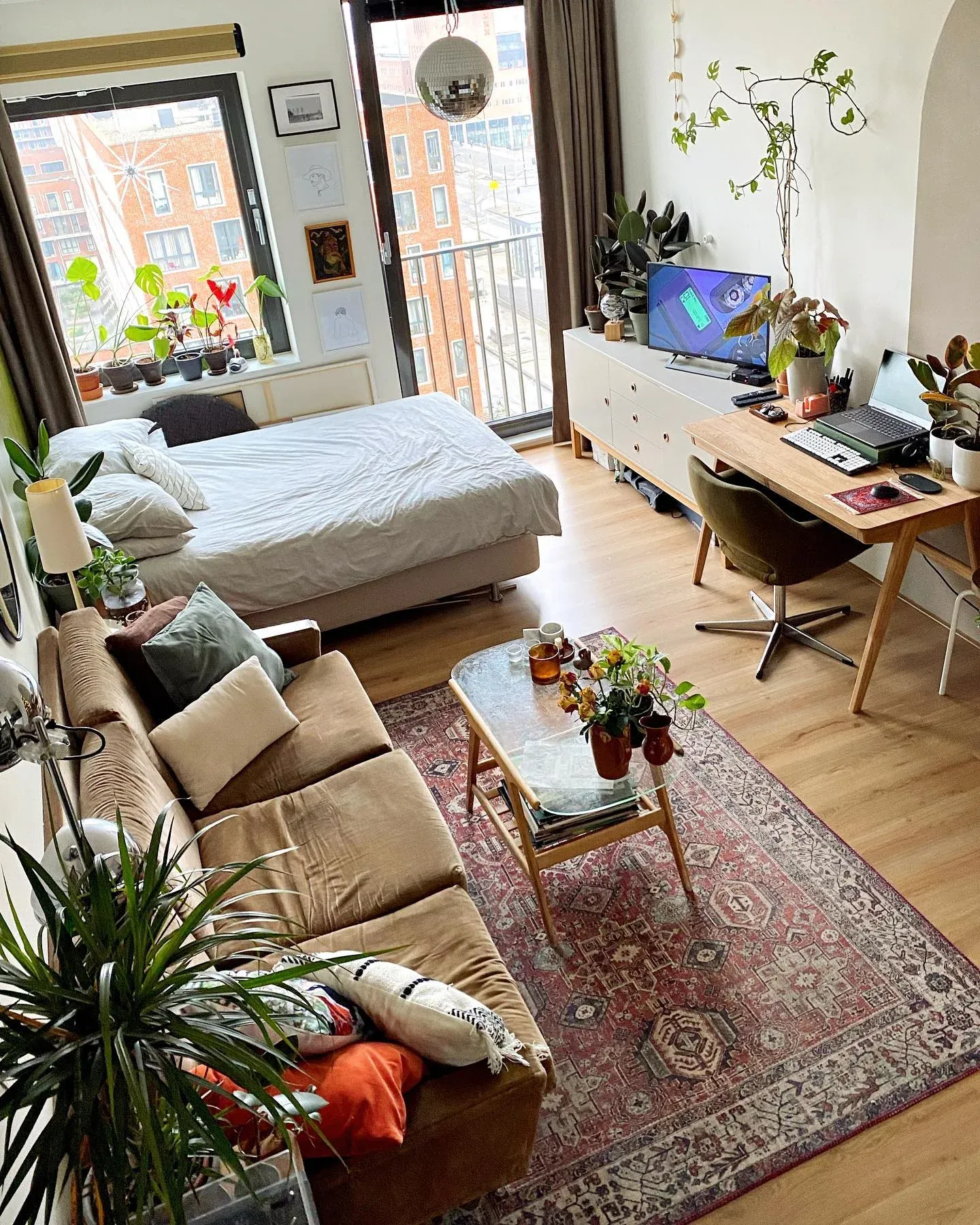
Desk placement matters in a studio apartment, especially when you are working from home. Putting the desk by a window gives that decision a clear place in the layout.
The desk receives window light, while the sofa and bed each have their own separate spaces. That keeps the work area distinct from both the sitting and sleeping areas.
Keep office storage neat because the whole apartment is visible from the work area. In this layout, visible office storage requires a tidy appearance.
Neutral Color Scheme

In a small space, use a neutral color scheme to keep the room feeling calm. The restrained colors support a sense of calmness without adding visual noise.
White walls work well in a narrow studio, where reflected light can increase the perceived space. White furniture reflects the light too, helping the room feel more open.
Even small accent pieces can make the space feel finished. Choose a few pieces in soft colors so they add detail without taking over the room.