
These homework station ideas for small spaces make it easier to create a study spot without giving up an entire room.
From floating desks and pegboards to wall shelves, closet nooks, supply storage, and compact study areas, these organized setups help keep everything within easy reach and make back to school feel more manageable.
Let’s get into these smart homework station ideas for small spaces!
Shelves by a Large Window

An arched window sits beside the study area, bringing the window and the workspace together.
Shelves keep books and supplies close at hand, while a patterned chair stores neither but gives the area more distinction than a plain desk. The chair is more distinctive than the plain desk.
A window-side homework spot works well when the window is arched or otherwise notable, and the homework spot feels inviting.
Closet Study Nook
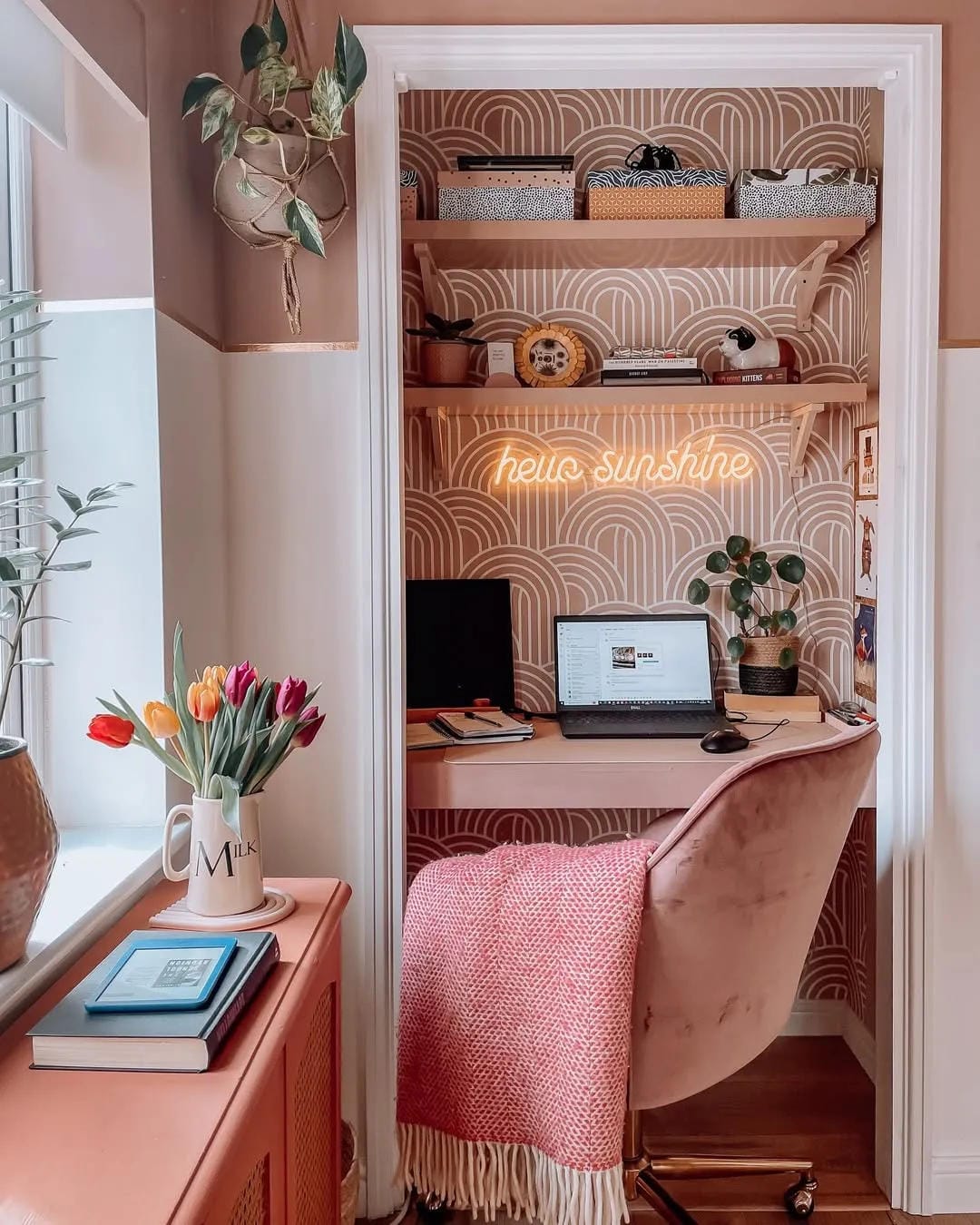
The closet desk is pink, giving the study spot a cozy and fun mood.
Books and supplies sit on shelves above the desk, while the chair tucks under it. That keeps the desk area feeling contained.
An empty nook or closet can serve more than storage. Use it to create a homework spot reserved for schoolwork.
Supply Pegboard Storage
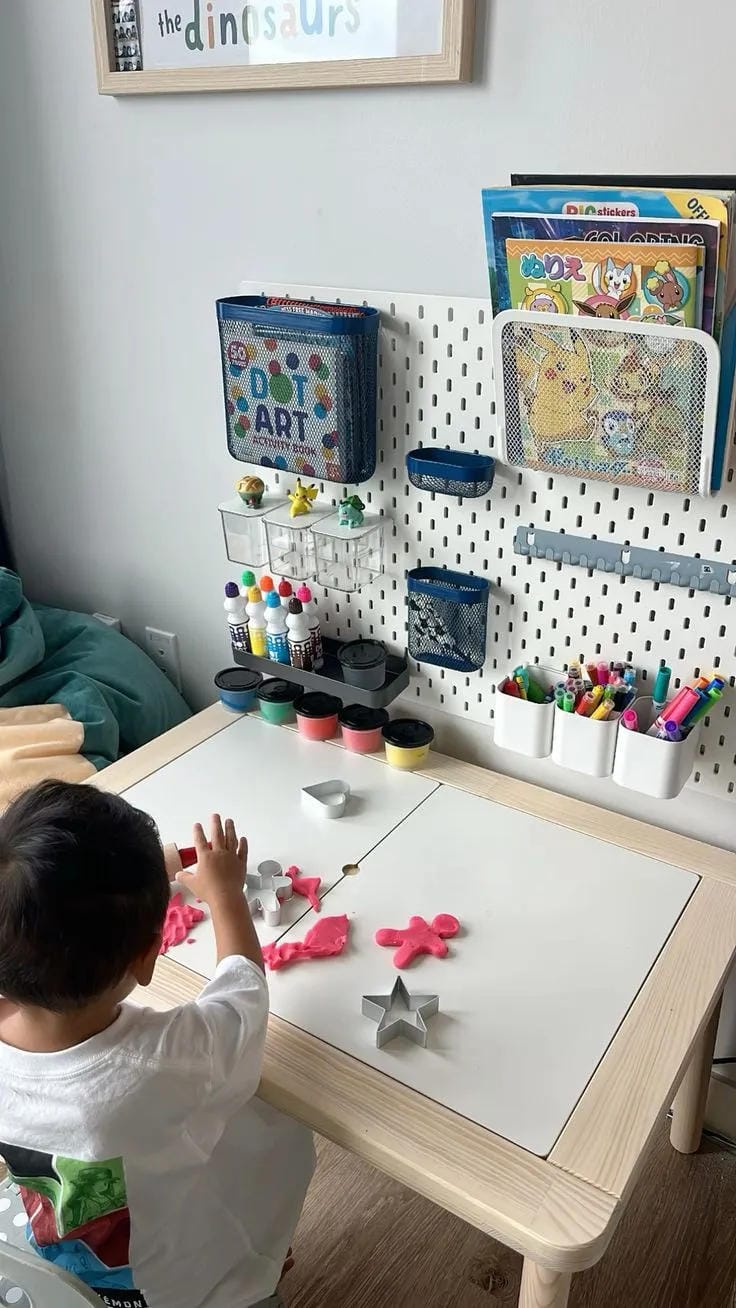
A pegboard works well in small spaces when you need storage for a homework station. It uses the wall to keep supplies close by.
Crayons, markers, and papers stay visible in pegboard accessories such as cups, pockets, and shelves. The supplies are easy to see instead of being tucked away.
Pegboard storage works well for younger kids because supplies are easy for them to pick up and put back.
Under-Stairs Homework Nook
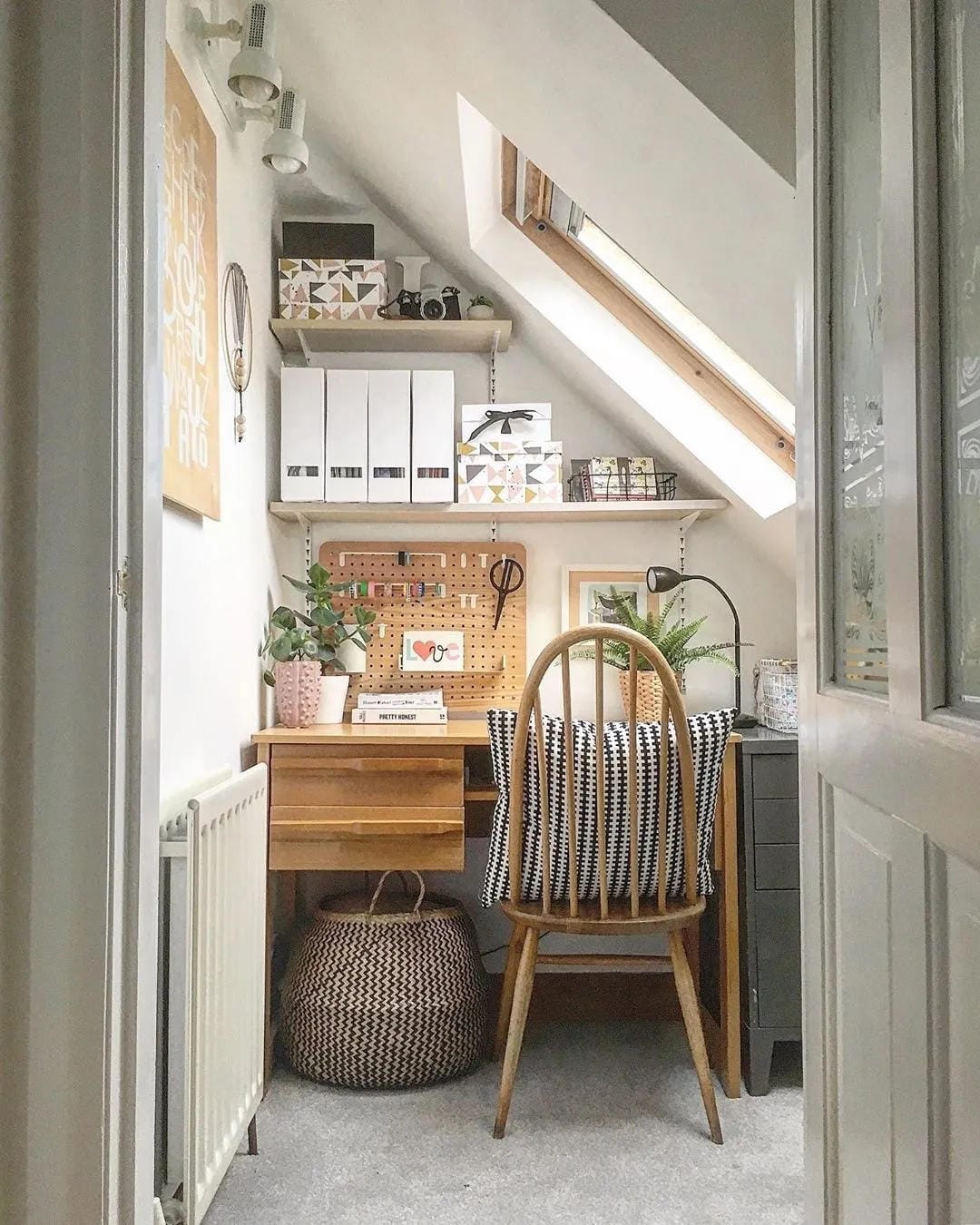
Under the stairs, a homework nook makes use of the space.
Shelves, a desk, a pegboard, and baskets all fit within the homework nook. This gives the under-stairs space a purpose instead of leaving it unused.
For small homes, an under-stairs nook can turn an awkward corner into useful space.
A single shelf floating over the desk
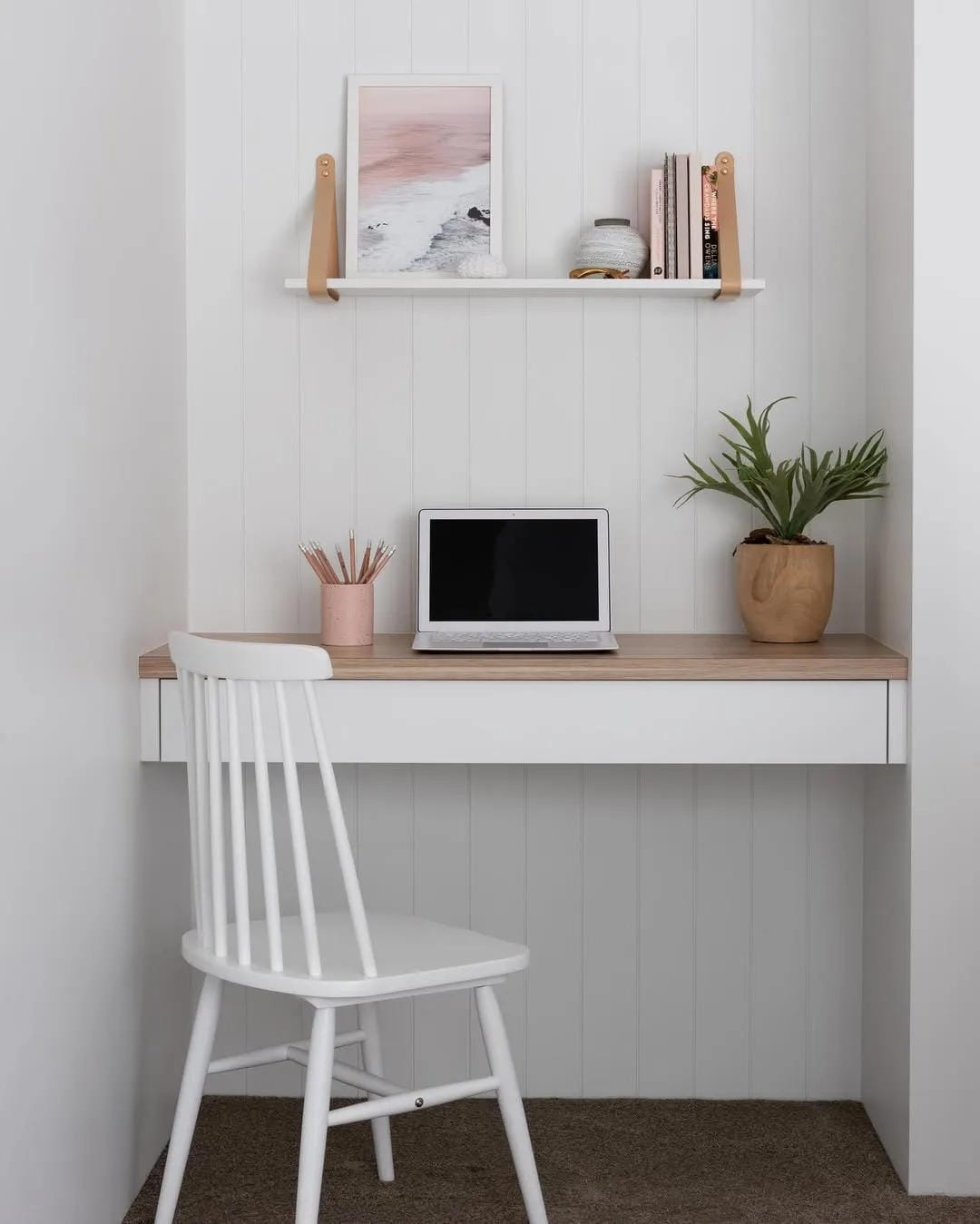
The tiny desk setup has a clean appearance that feels realistic.
A laptop and simple chair form the workspace, where focus stays high. The floating shelf contains a few essentials.
The smallest possible homework station can still be intentional. I recommend keeping the homework station intentional and as small as possible.
Homework Desk on the Wall
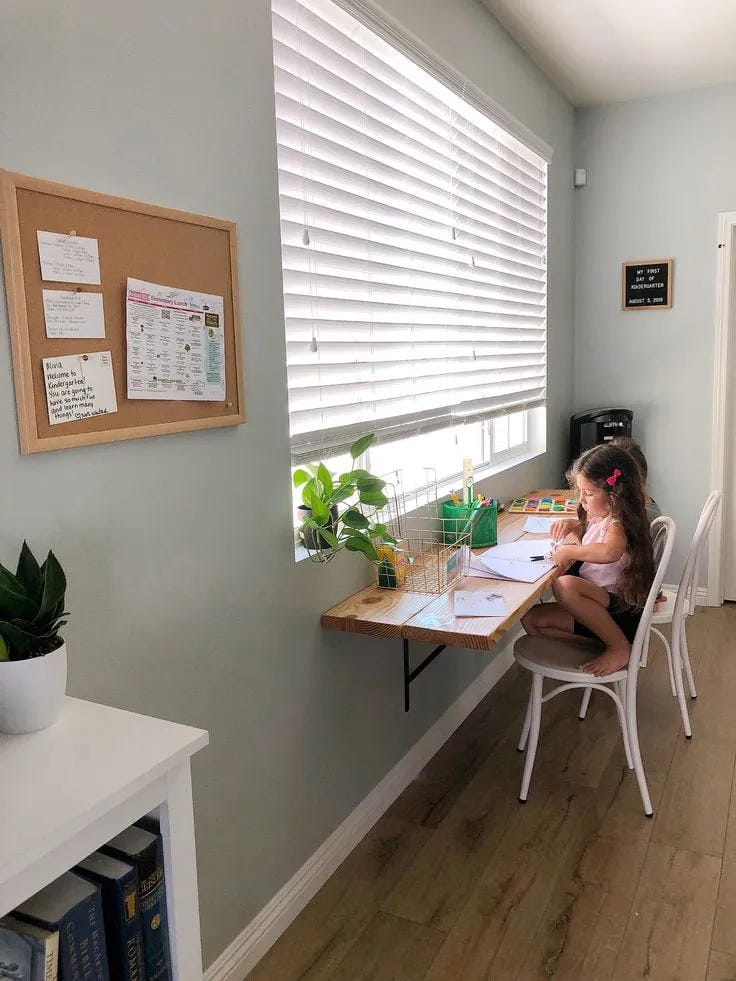
In small spaces, a floating desk can provide a homework surface without needing much room. Its wall-mounted form keeps the setup compact.
The window provides natural light near the desk. A wall board adds space for notes and school reminders.
When you want a lighter visual presence, choose a floating homework desk. It feels less heavy in the room.
Simple Desk Built In
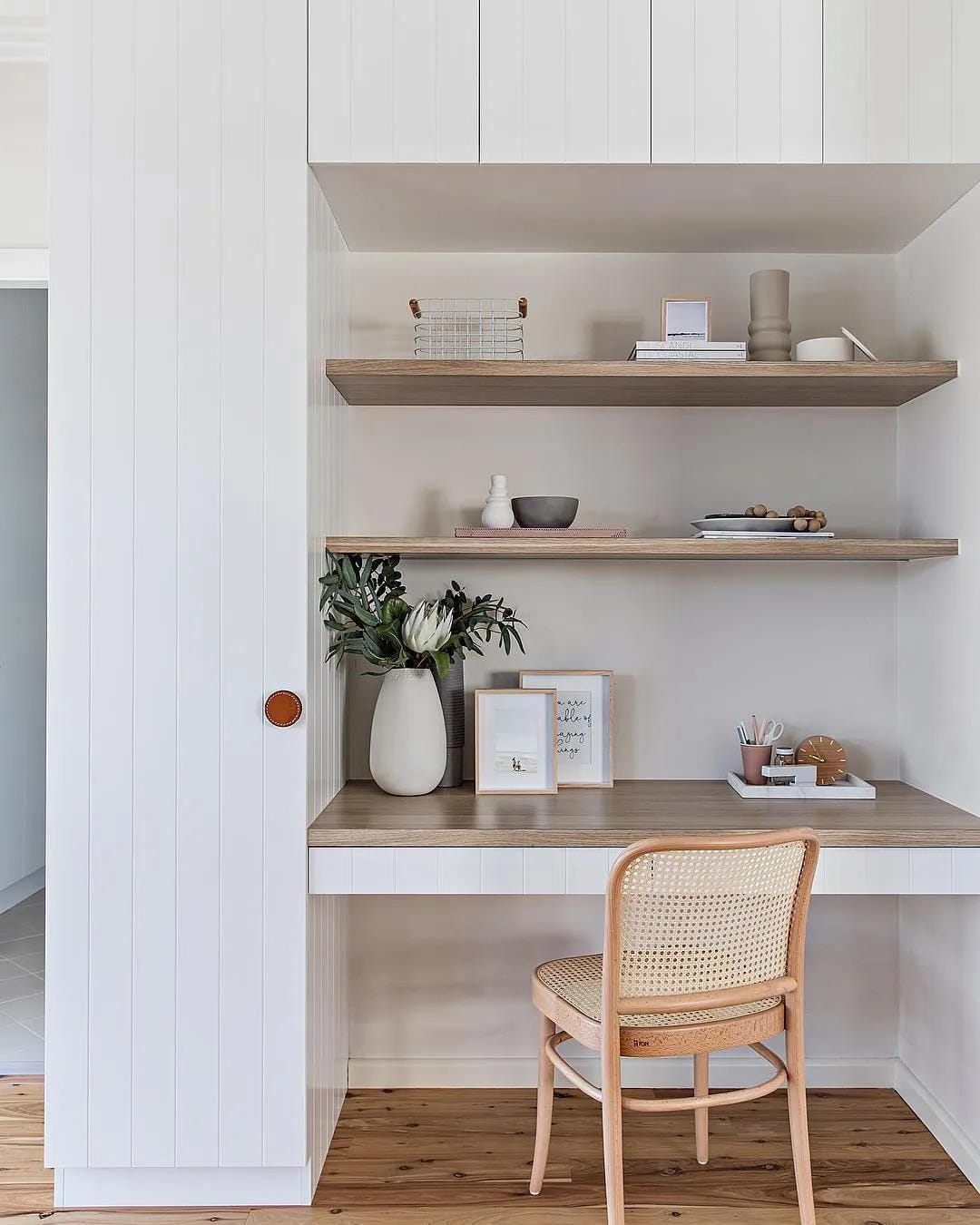
A calm, minimal style keeps the built-in desk from feeling busy. The desk stays simple.
The desk surface remains clear for homework, while the limited open shelves provide space for books and decor. Both areas have a defined purpose.
A built-in desk can help a study area blend into the home, which I like. The setup stays connected to the room instead of standing apart from it.
Homework Desk for Two

With a shared desk, two children can work simultaneously without needing separate work areas.
A long desktop provides a shared workspace, while drawers and wall storage provide storage underneath and around it. The arrangement gives each side a clear place, so the shared desk does not require two separate rooms.
A shared desk lets siblings sit side by side while they work.
Baskets Above the Closet Desk
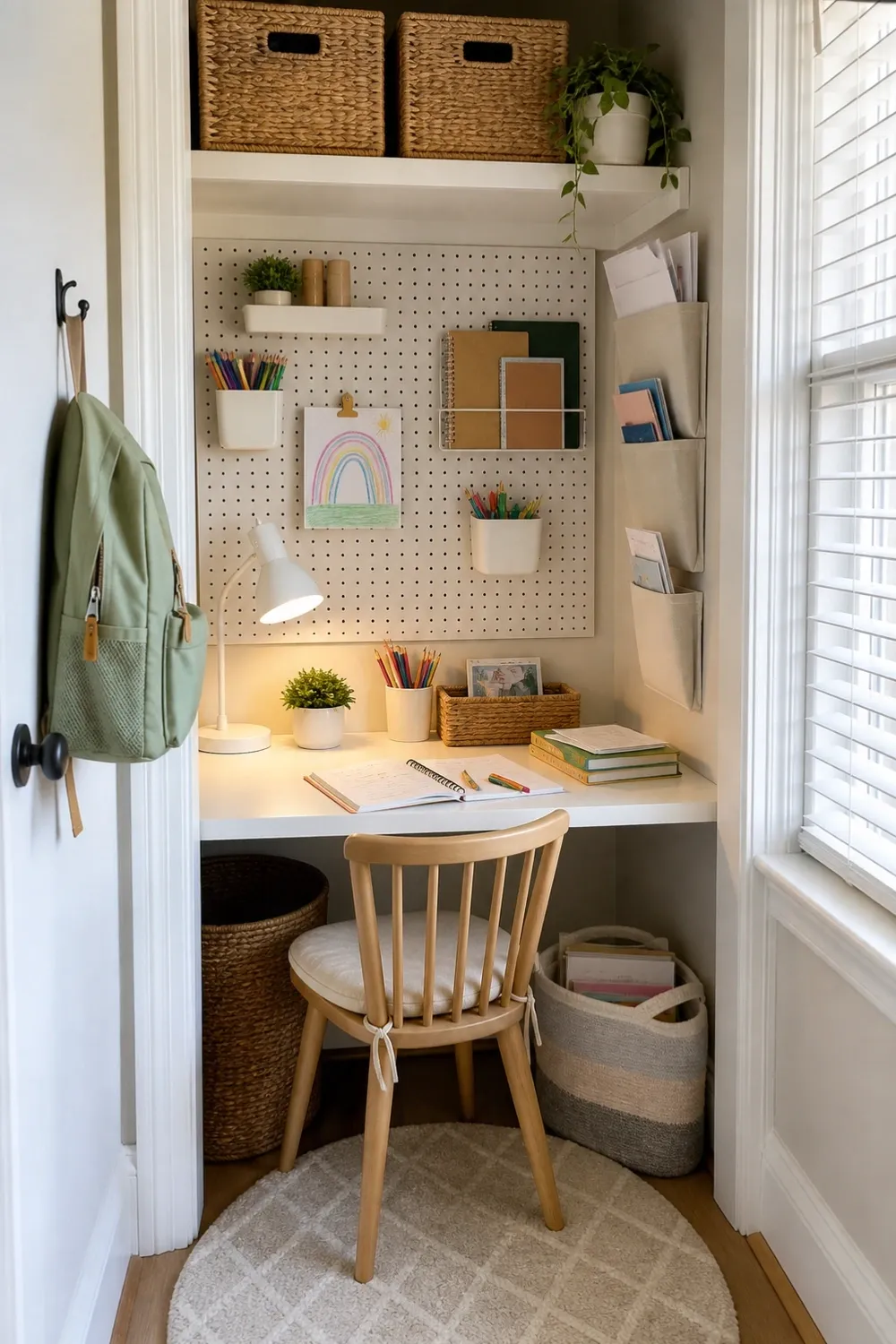
Vertical space makes this closet homework nook work efficiently, keeping its use focused on studying.
Above the desk, a pegboard keeps school supplies within everyday reach. High baskets conceal the extras, and the pegboard sits over the closet homework nook.
In a small room, a closet nook can contain all the items while keeping the organization neat.
Built-In Kitchen Wall Desk
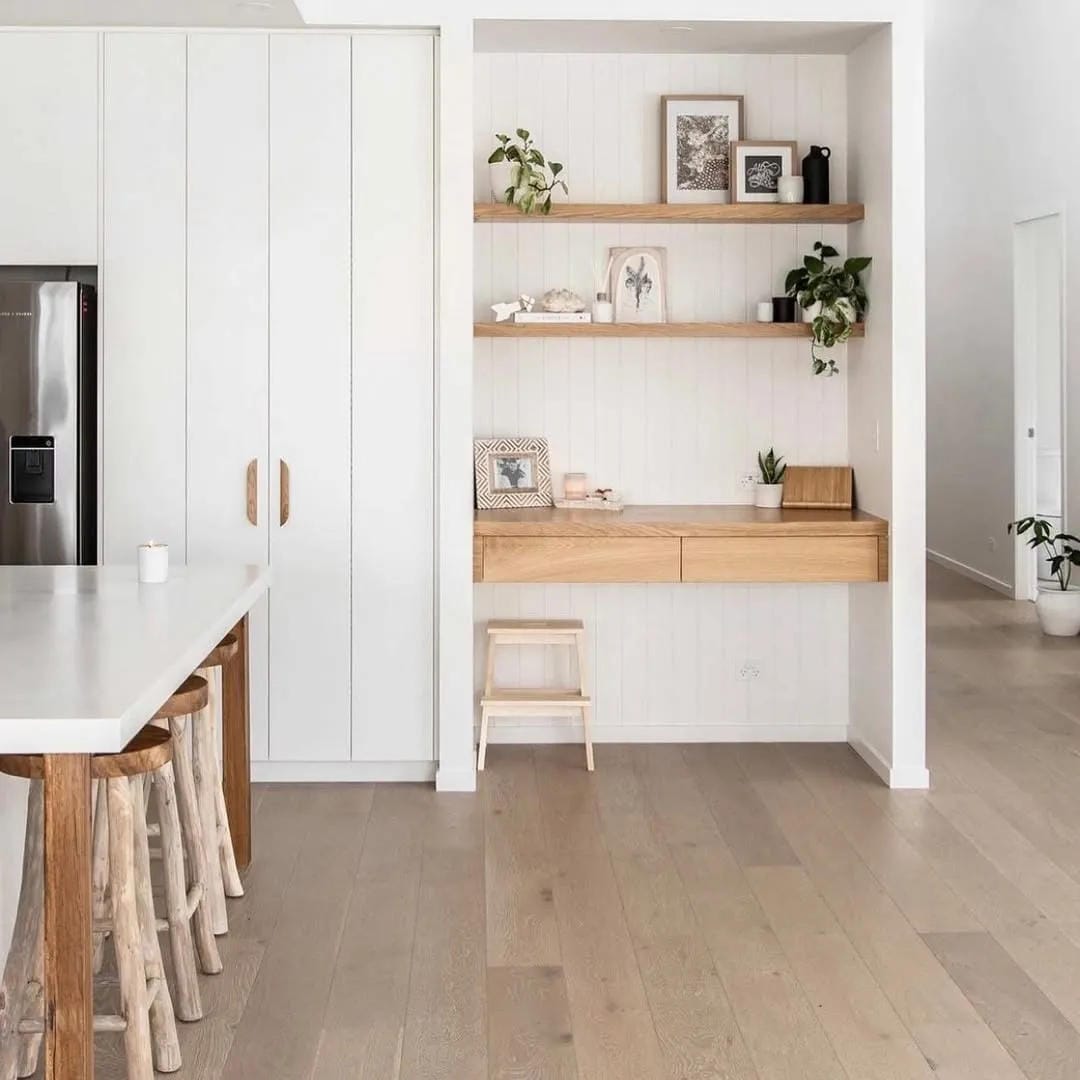
A built-in desk can serve as a small-space solution.
Shelves and cabinets connect the desk to the kitchen. With its pale wood desktop, the desk appears to be part of the kitchen.
A homework location near the main living area can support after-school routines and dinner routines.
Art Around the White Desk

Around the white desk, the arrangement has a cheerful, creative mood.
The wall arrangement uses no floor space and has an inspiring effect. Framed art, a pegboard, and small shelves fill the wall.
For a child, I recommend the desk corner for drawing, reading, and creative homework.
Homework Corner in the Playroom

Pink details give this station a younger child’s homework area a clear place in the playroom.
Books and toys fill the shelves above the desk. The desk provides a place for drawing and schoolwork.
The homework area has a playful style.
Simple Tiny Desk
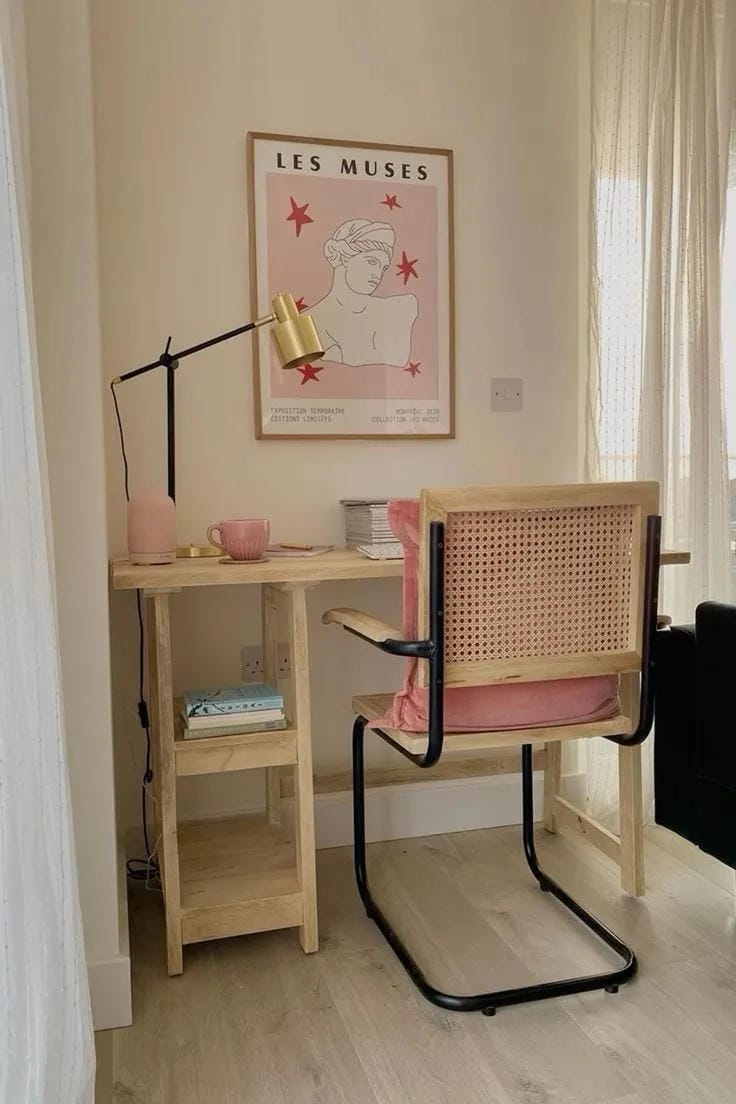
In this setup, the tiny desk demonstrates a simple appearance.
In the desk corner, a framed print sits near a small chair. Warm neutrals give the corner a peaceful mood, and the chair makes seating easy.
I recommend a homework station with a non-childish appearance.
School Paper Wall Calendar
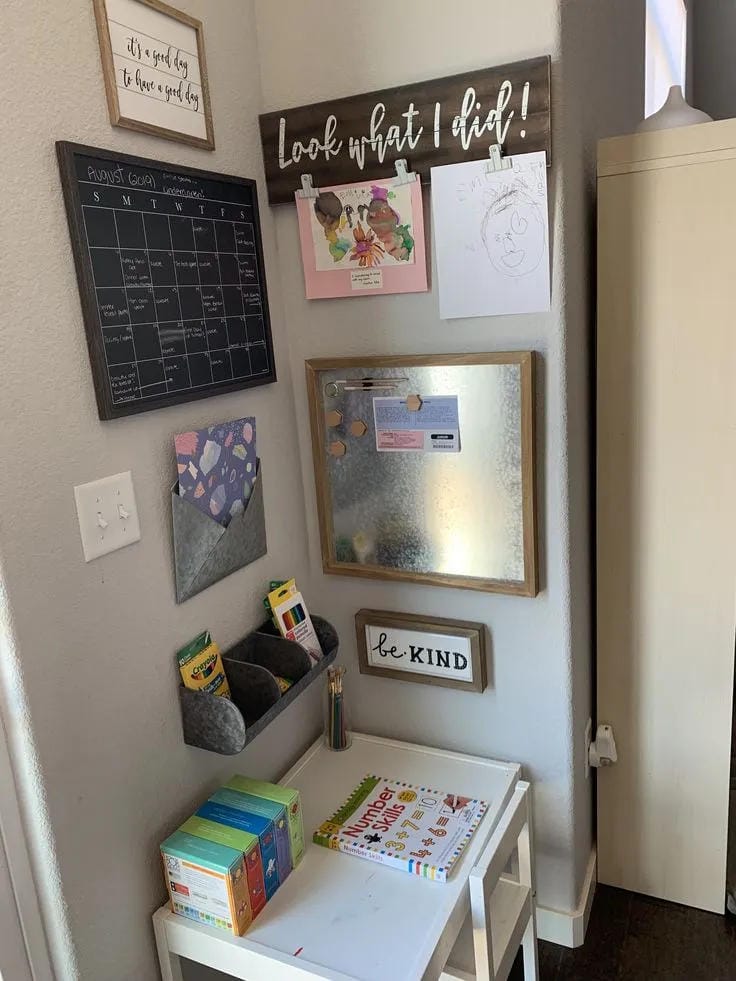
A command-center style gives this homework spot a role in school organization.
Paper pockets, a positive sign, and a wall calendar are part of the small desk setup. The homework spot organizes school notes and supplies.
The writer recommends placing the homework spot close to either the kitchen or entryway, since school papers tend to end up in those areas.
Organizer Over the Tiny Desk
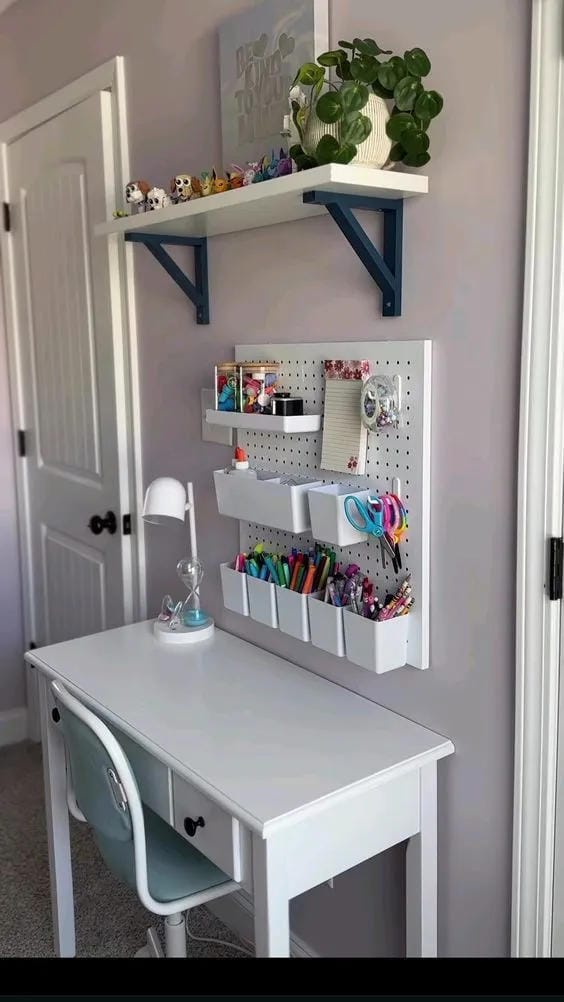
A homework station requires little space, and this tiny desk provides one. It works as a small homework station without taking up much room.
With a slim desk in place, the floor area remains open, while a wall organizer holds the small supplies.
A bedroom corner, hallway, or small wall can hold a desk setup. Use one when a small wall needs greater function.
Small Craft Table for Kids

Alongside the work area, a small kids table can handle both homework and crafts. The setup supports hands-on work.
Wall pockets, book storage, and supply cups sit within children’s reach, with the pockets holding supplies, the book storage holding books, and the cups holding supplies.
For younger children, a kids craft table is preferred over a formal desk as a creative station.
Drawers Beside the Compact Desk

The homework station balances storage and workspace in a mixed setup, so both functions share the same area.
Drawers provide storage, while a pegboard and wall notes organize the school supplies. The desk remains uncrowded.
For a study area, I prefer a practical setup that is also cute and bright.
Desk and Bench Nook

A bench helps define a soft homework zone for families, with the setup giving the room a place for schoolwork.
A bench adds purpose to the room, while the built-in desk and wall cubbies support the study area and make it feel built in.
Near a playroom or family room, a bench-and-desk homework station keeps schoolwork close to everyday family activity. The arrangement combines a place to sit with a dedicated study area.
Wall for Full Supplies
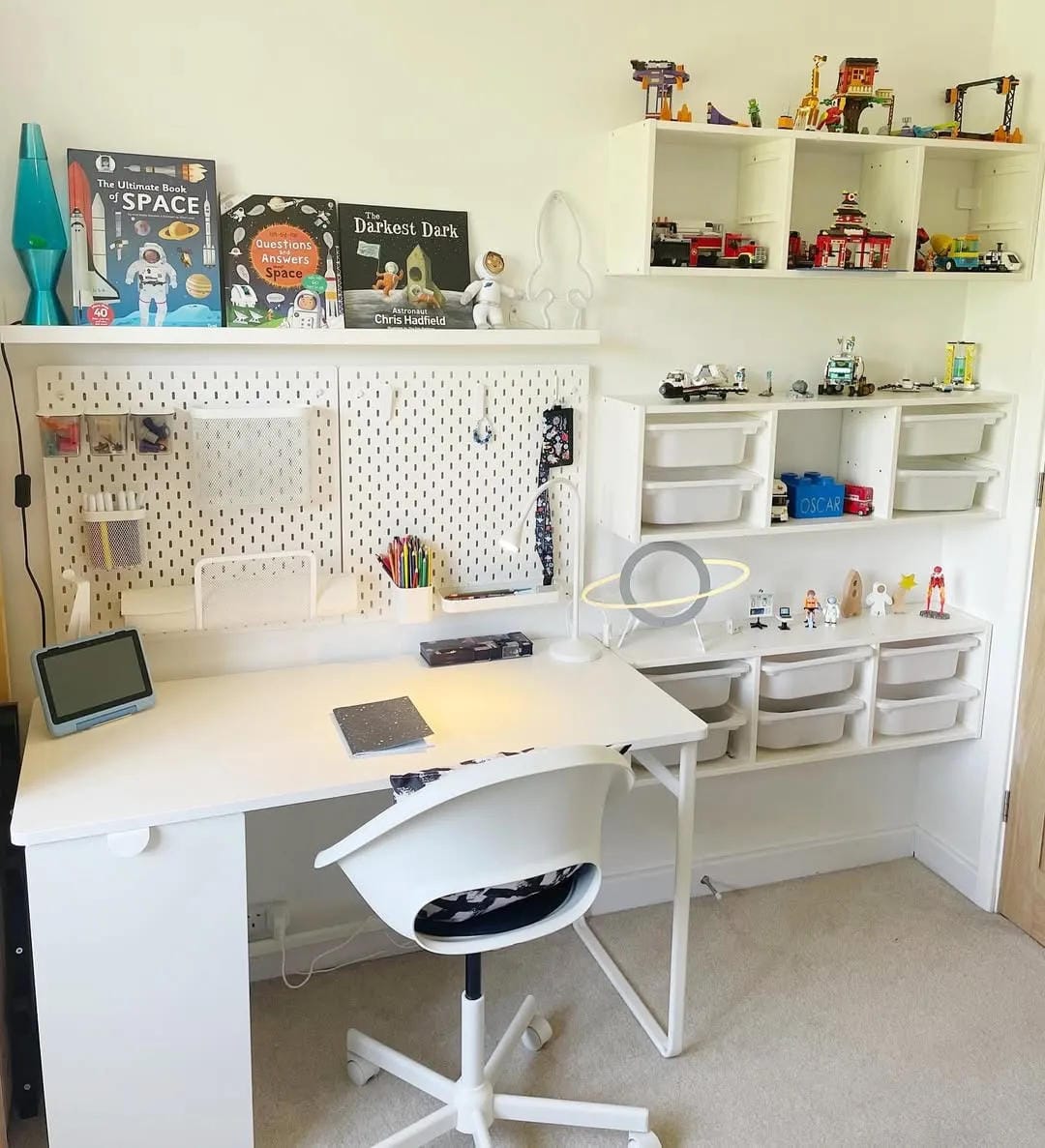
Frequent art and school-supply use calls for a full supply wall around the homework station. It keeps the materials close to the place where they are used.
Bins, a pegboard, drawers, and shelves store supplies across the wall. Keeping the supplies visible makes the organization easier to see and supports projects.
A shared family study space can make good use of a full supply wall. The same feature also fits a homeschool corner or craft room.
Vanity Nook Schoolwork Desk
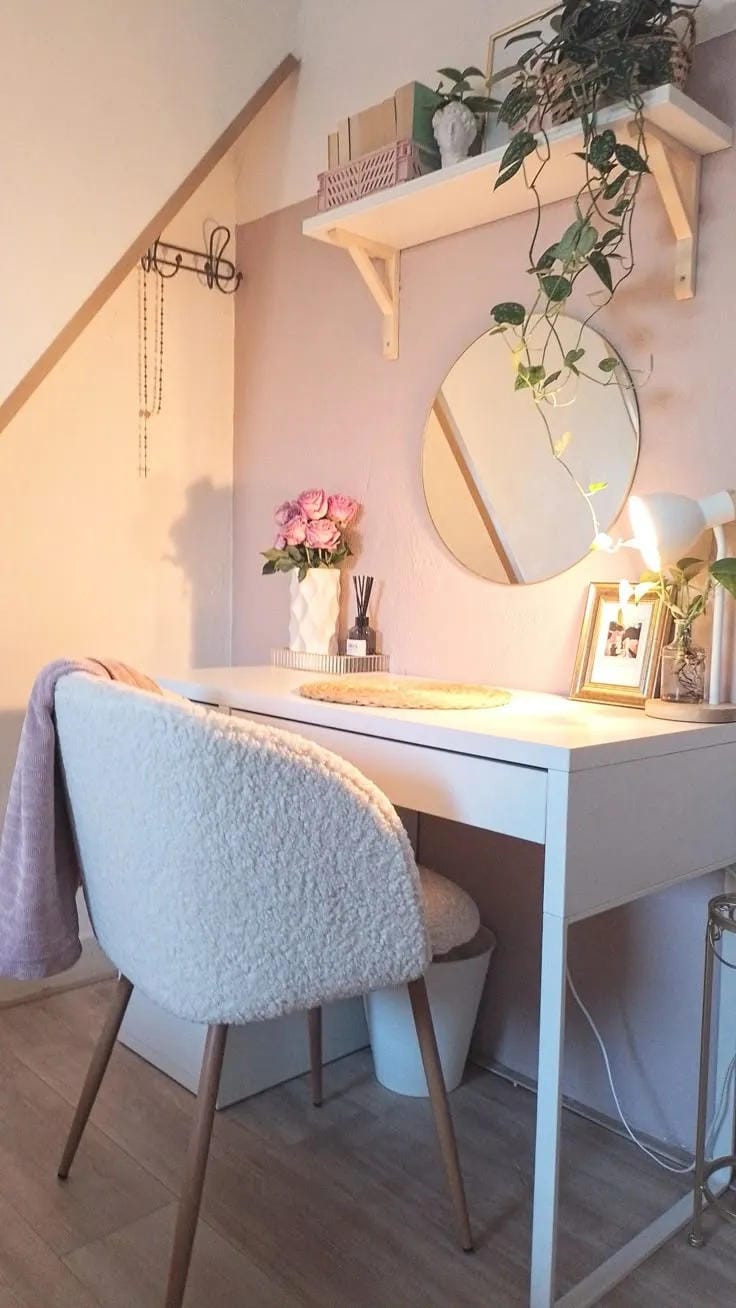
The desk corner has a soft mood.
A lamp lights the desk surface for schoolwork, which also holds a mirror, a shelf, and flowers. Its more grown-up look makes this desk a fitting choice for a tween or teen.
Narrow Desk Below Shelves
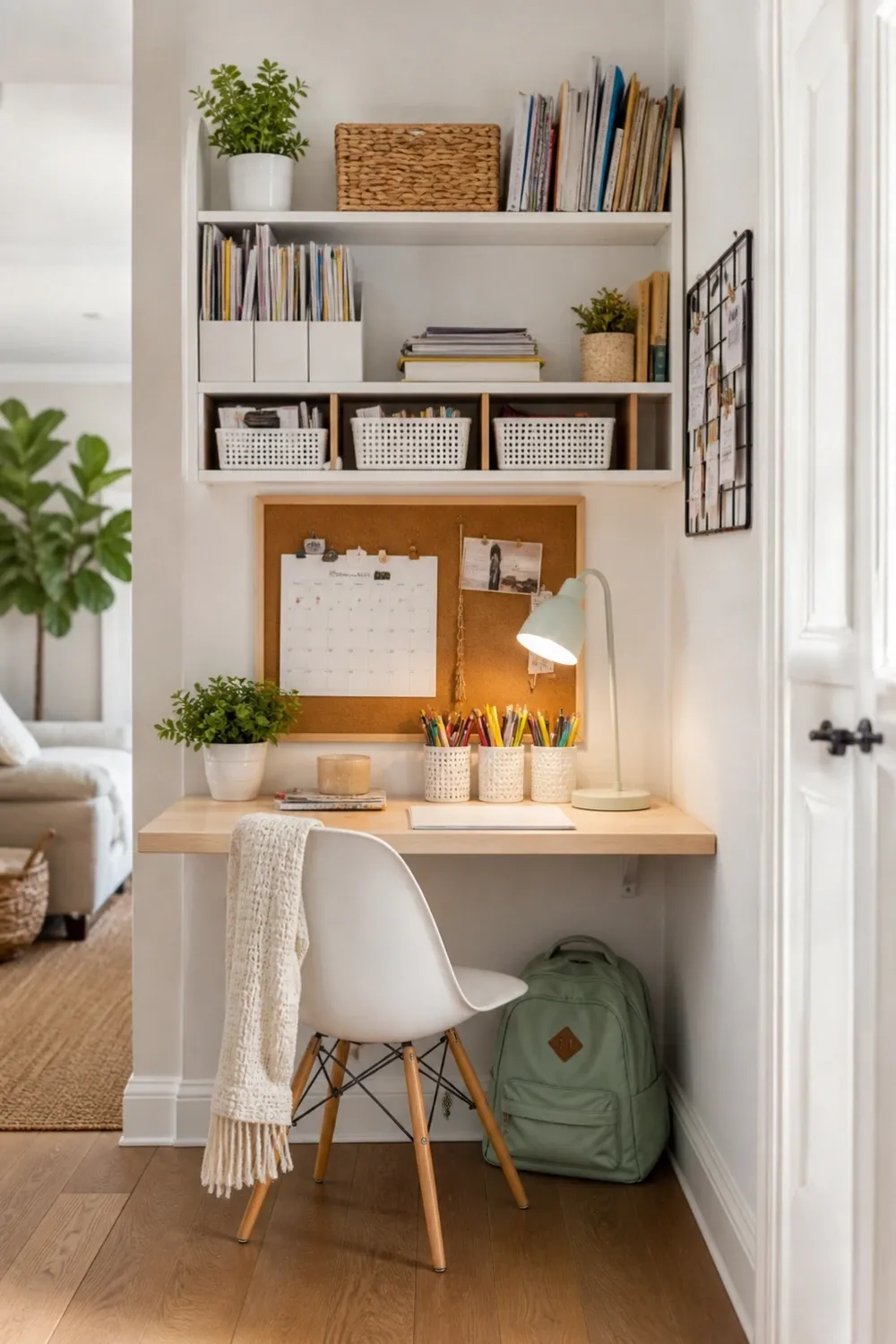
A bright homework nook makes it easy to work. The narrow desk fits beneath the shelves without taking over the space.
Above the desk, shelves hold baskets, books, and small plants. That leaves a mostly clear desktop for homework and other tasks.
A narrow wall beside a doorway can take a narrow-desk setup. It makes use of a spot that might otherwise go unused.
Cozy corner for evening study

In the evening, the lamp stays on in this study corner, giving it a calm, cozy mood. A wall pegboard supports the study corner, while small shelves and plants create a personal space around it.
In a study corner, the author recommends a quiet homework spot that suits an older child or a teen.