
The sweetest fairy gardens feel tiny, detailed, and just a little hidden.
Look for ideas that bring together real plants, pebbles, moss, fairy doors, miniature houses, and little paths instead of relying on a single figure in a pot.
A planter, the base of a tree, a raised bed, or a quiet garden corner can all become a charming spot for something magical.
Mushroom House

A whole fairy garden can be carried by a mushroom house that is pink.
Place tiny flowers, small figures, small pebbles, and small signs around the mushroom house so the surrounding elements do not look random.
With the surrounding plants kept mostly green, the pink mushroom house stands out against them.
Small Fairy Door in a Tree
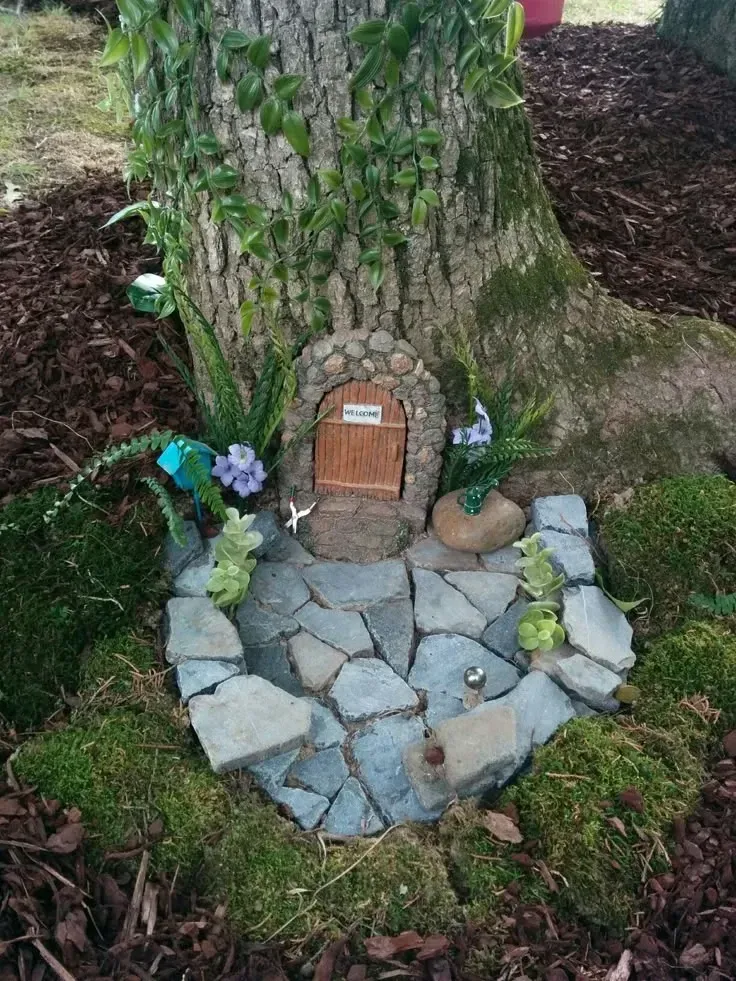
Pair the small fairy door with a stone path, using the tree’s pretty bark and roots as part of the setting. The tree may be enough to support the door and path on its own.
Surround the fairy door with flowers, rocks, and tiny accessories, but keep the fairy doorway area simple. The surrounding details should not crowd the door.
Use the fairy door and stone path as a single detail instead of creating a whole planter display.
Barrel Planter

A barrel planter has enough depth to hold a full fairy garden container. That depth supports a full-looking fairy garden.
A pink fence and blue mushroom house create a bright, playful appearance, while little hanging details and purple flowers fill out the barrel garden.
Trailing plants can be placed around the barrel edge, where they soften the barrel.
Tiny Lights
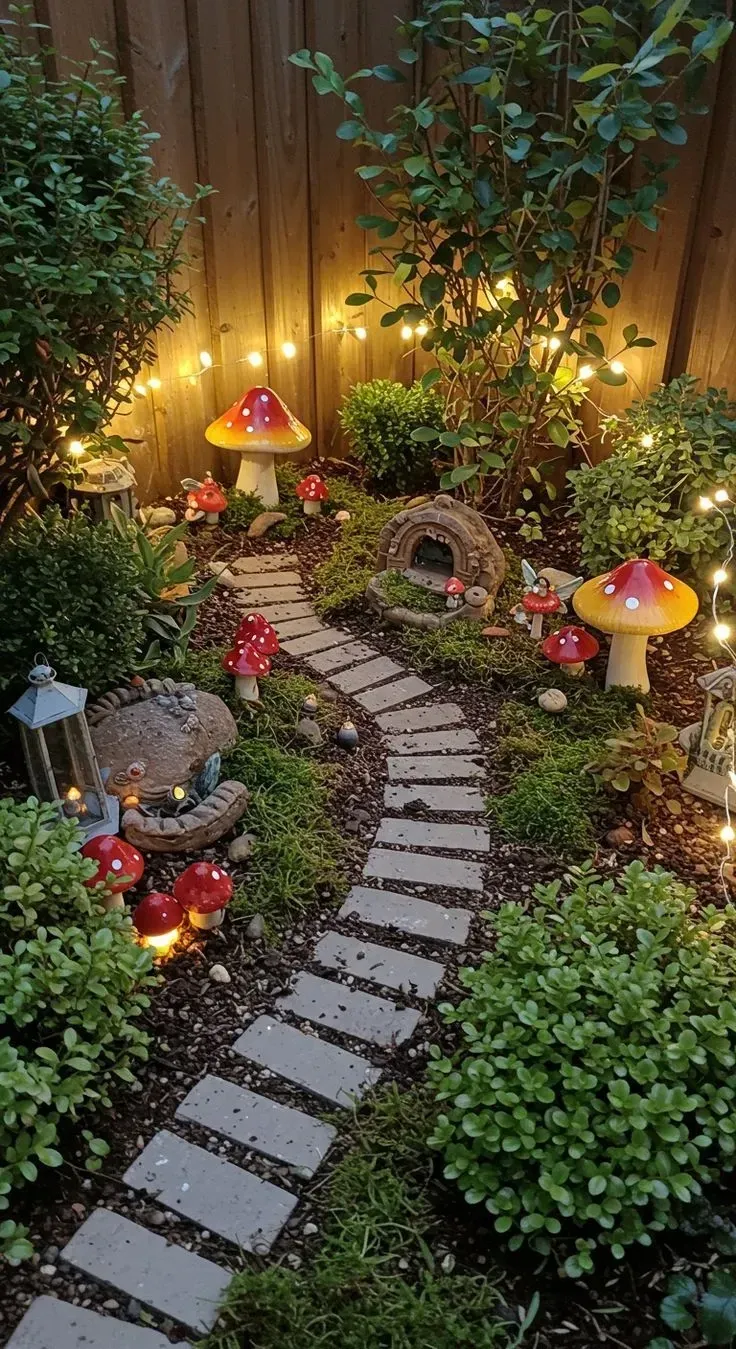
Add tiny lights so the fairy garden can be seen at night.
The path is winding, giving the setup a natural route through the garden. With mushrooms, a fairy door, and warm tiny lights along it, the path creates a miniature garden walk.
Use the fairy garden setup in the fence corner or the side yard. After dark, the location gets ignored.
Stacked Terracotta Pots

Stacked terracotta pots raise the garden and provide vertical height. The arrangement increases the available height.
Across the pot levels, fairy garden elements include moss, flowers, miniature trees, tiny figures, and small houses.
A porch or deck with limited floor space can still hold a fairy garden. Stacked pots are useful in that kind of space.
Fairy Trail

An alphabet trail with a fairy theme gives children something interactive to follow. Each letter can become part of the fairy trail.
A sign, a letter board, and red mushroom stools can turn the trail into a tiny outdoor classroom. The stools and boards provide the main classroom details.
Set it near the play area or beside the garden walk, where people can stop and look at it.
Shallow Bowl Planter

The shallow bowl planter supports the garden while allowing a view of the whole garden. Its low shape keeps everything in sight.
A pebble path runs through the miniature village, which also includes tiny houses, moss, little lights, and small plants. Together, these pieces make up the miniature village.
The houses should stay visible within the display. Keep the plants low enough that they do not block them.
Galvanized Tub
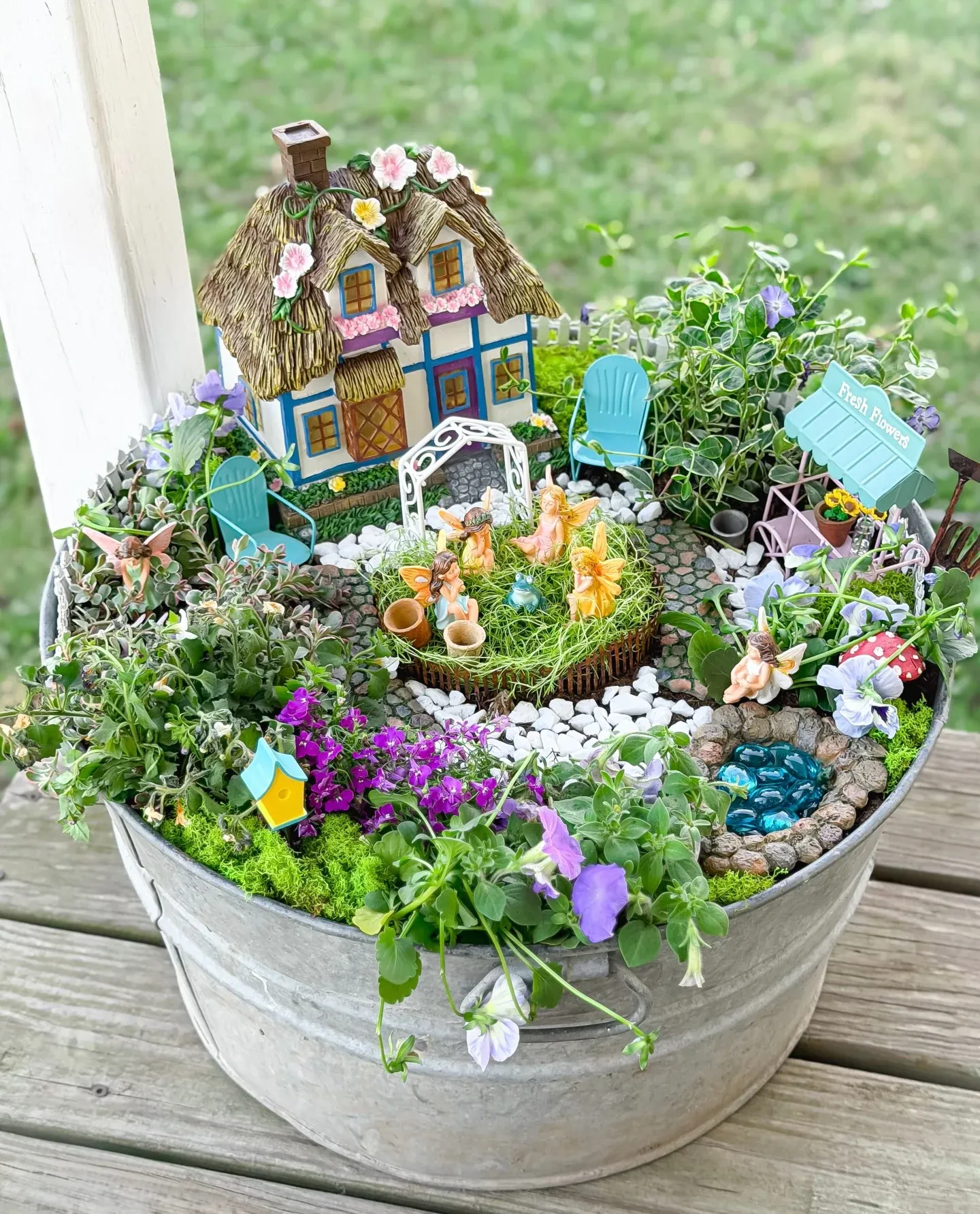
A fairy garden gives the galvanized tub a softer farmhouse style. The small garden brings that look to the tub without making it feel too formal.
Add a tiny house, a small path, and small chairs, then place flowers, greenery, and pebbles around them. The setup should look full from every side.
On a deck or porch, the galvanized tub is easy to view up close. That location lets you see the fairy garden from every side.
Old Birdbath
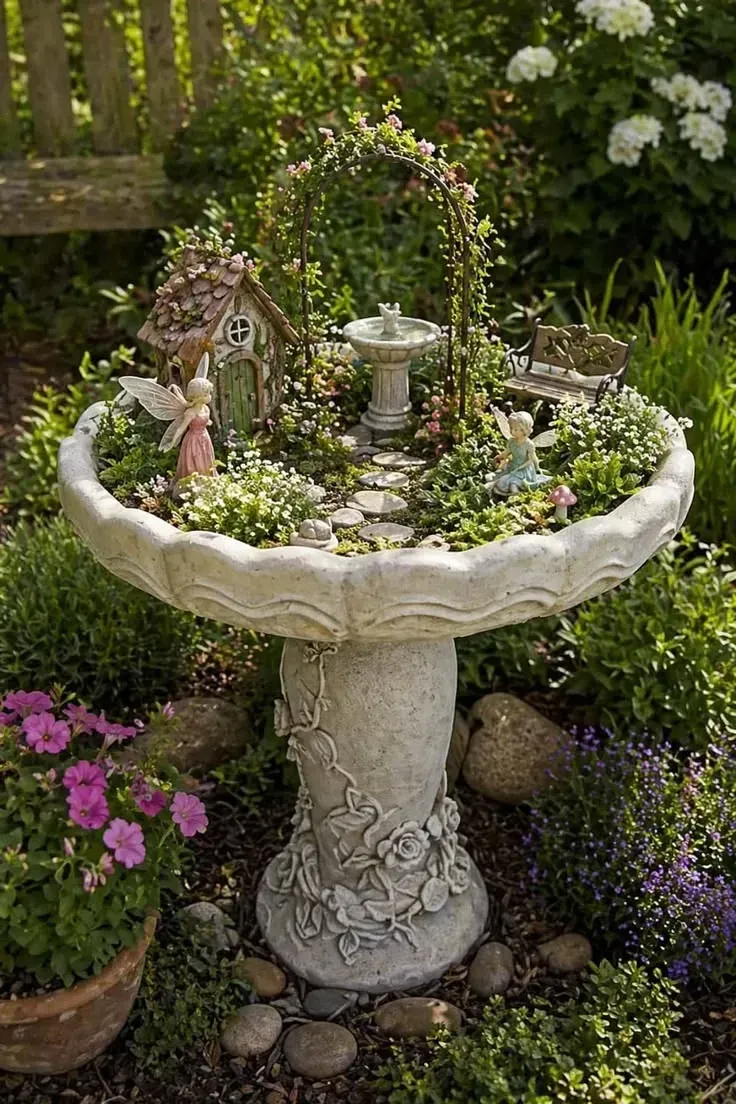
The raised garden is visible from its higher position. An old birdbath raises the fairy garden off the ground and gives it a raised base.
Moss and pebbles create the base, with tiny plants, a little arch, and a fairy house added to the main feature.
An old birdbath can be reused for a fairy garden even when it has poor water holding. Its original water-holding ability does not need to work well for this use.
Barrel
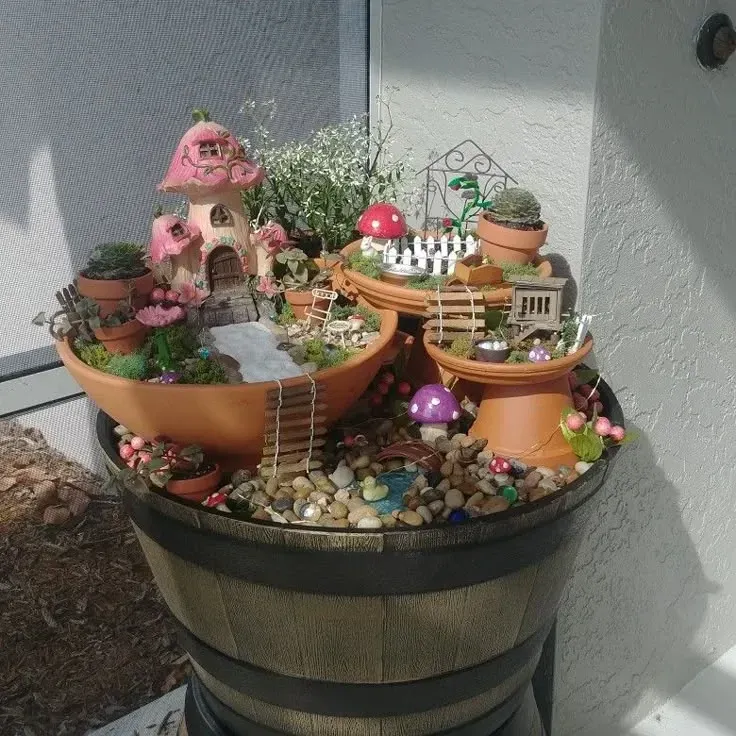
A barrel can support the main feature, and the fairy garden can be that main feature. Fill the barrel to use it as the base.
A fence and paths form part of the little yard, which also contains a tiny bridge, pond, house, and bench. Each piece belongs to the little yard and helps define its small layout.
Keep the layout open so you can view each piece. The open arrangement lets the tiny bridge, pond, house, bench, fence, and paths remain visible.
Moss Pebbles and Planter

Moss and pebbles give the planter a more natural appearance. Together, they soften the look of the planter.
White gravel adds texture around the doors, while tiny furniture, flowers, bark, and a tiny ladder fill out the scene. These details can add texture without requiring many plants.
Figurines can sit among the moss, pebbles, flowers, bark, and small wood pieces to support a natural appearance. The wood pieces help keep the arrangement connected to those natural materials.
Garden Sign
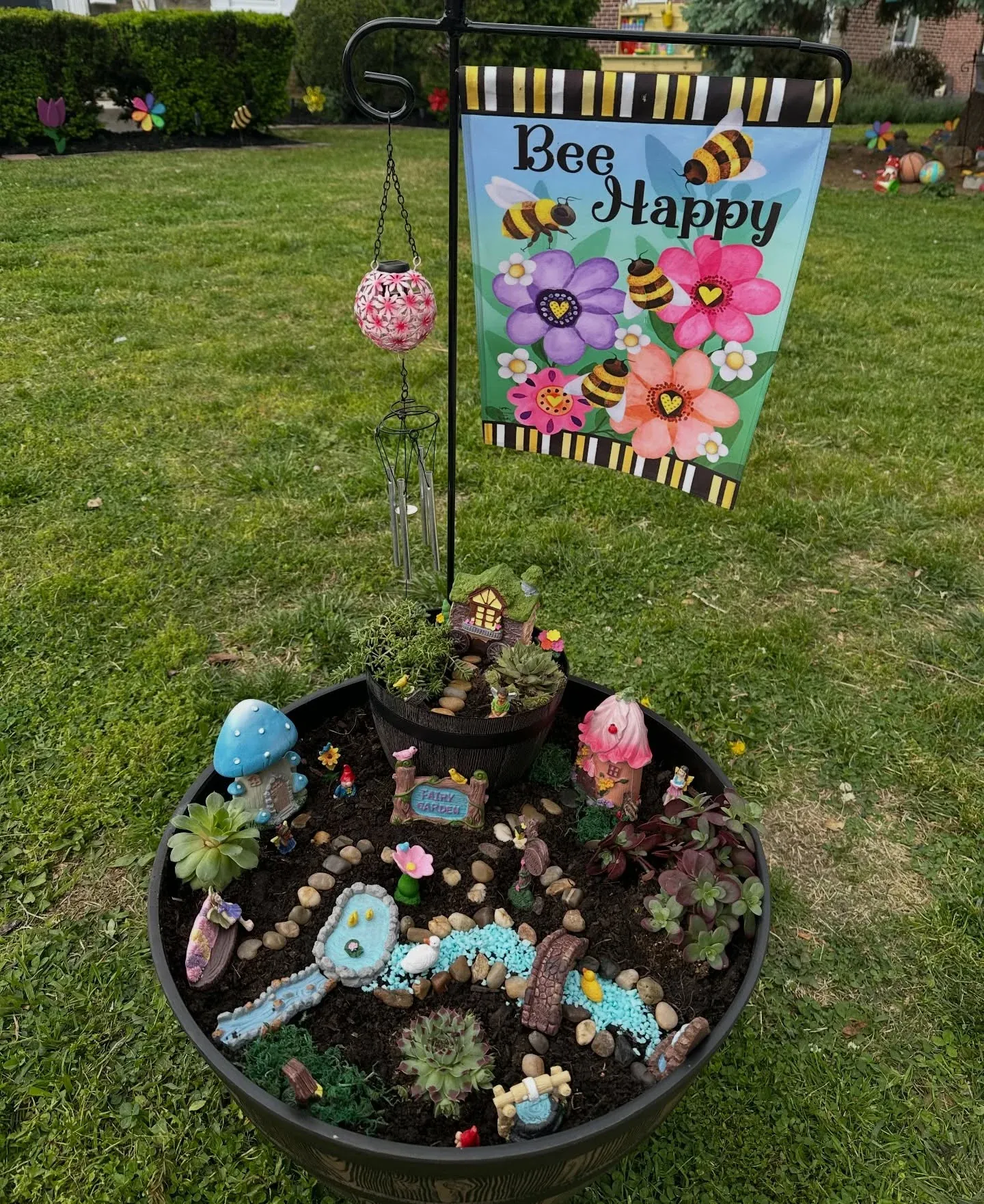
A small garden sign immediately gives the fairy garden its theme.
A layered planter holds mushrooms and flowers, along with little bees and a sign that says “Bee Happy.” Together, these details give the setup bright, summery character.
Place the garden sign in the front garden or at the patio edge, where its visible position enables people to notice the sign.
Tree Stump Fairy Garden
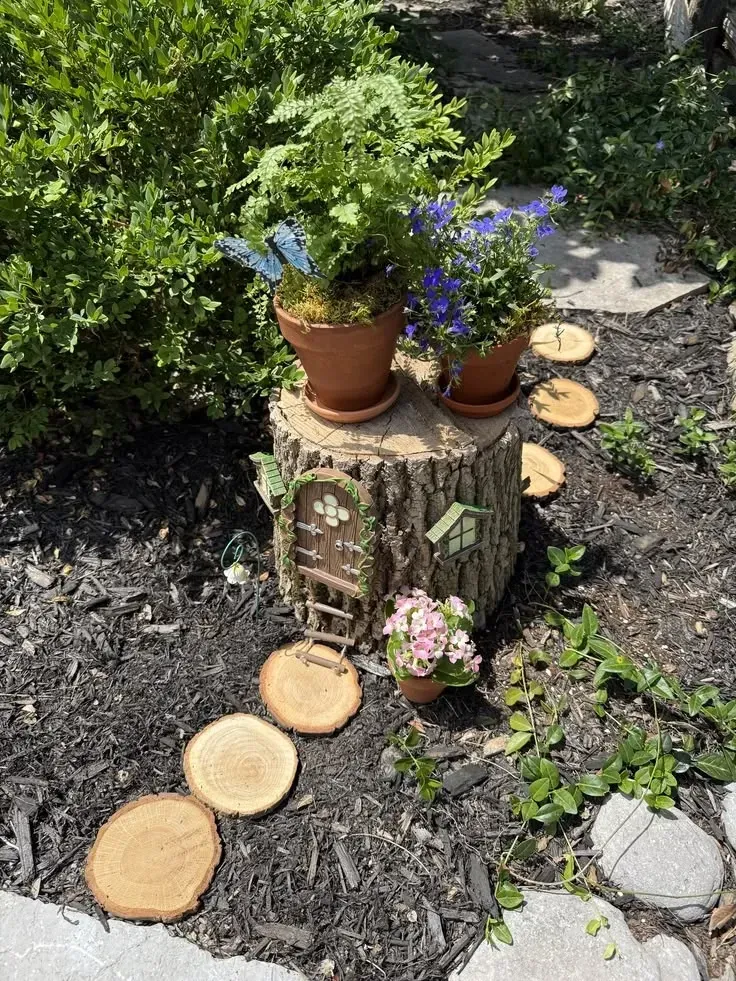
A tree stump provides height and makes the garden look built into the yard. It gives the fairy garden a raised place to sit within the yard.
Small pots can sit on the tree stump, while wood slices, a tiny ladder, and planted details gather around its base. These pieces build out the area without covering the stump.
The source author prefers a tree stump for a yard corner when the setting includes mulch, natural wood, and lots of greenery. Those conditions suit the stump placement.
Fairy Door
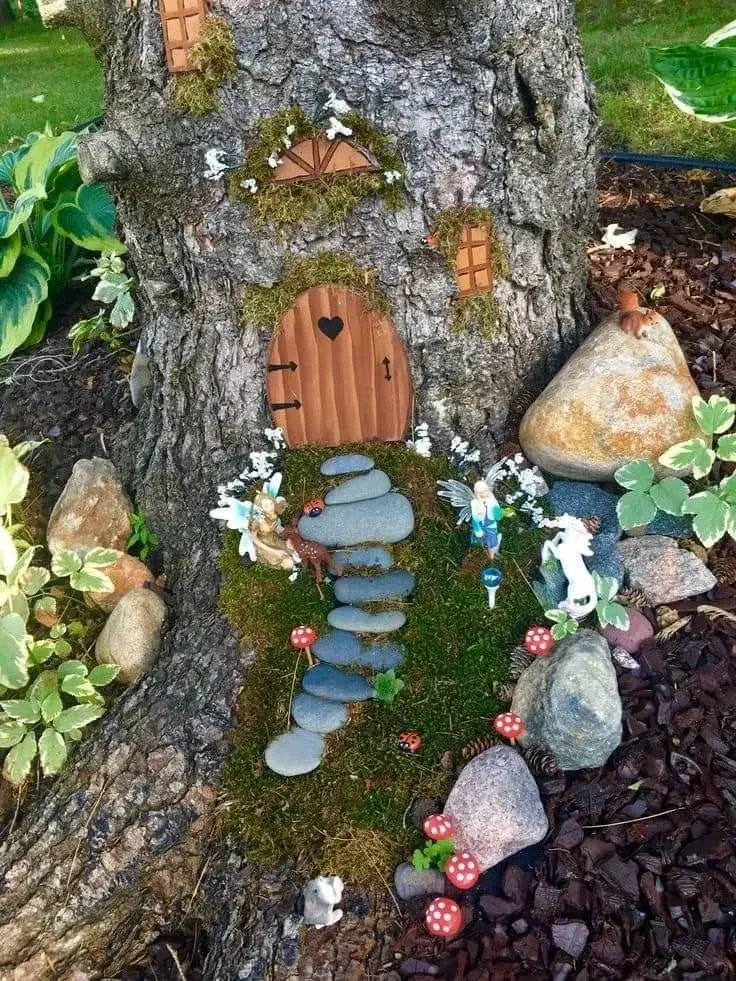
Tucked into the base of a tree, a fairy door gives the tree base a clear focal detail. Place the door at the tree base.
A stone path, moss, flowers, and tiny window details help integrate the fairy doorway. The doorway appears to belong naturally in the tree base.
The fairy door project has a simple scope, making it a suitable starting point without a full miniature garden.
Seasonal Fairy Garden

In a seasonal fairy garden, the details can change with the seasons. A Halloween version is easy to copy.
Orange leaves can sit with the pumpkins around the tiny haunted house, while the ghost adds to the scene from the black planter. Use it for an autumn version.
After Halloween, swap out those seasonal pieces instead of rebuilding the whole garden. The haunted house, ghost, pumpkins, orange leaves, and black planter can all be changed.
Lanterns
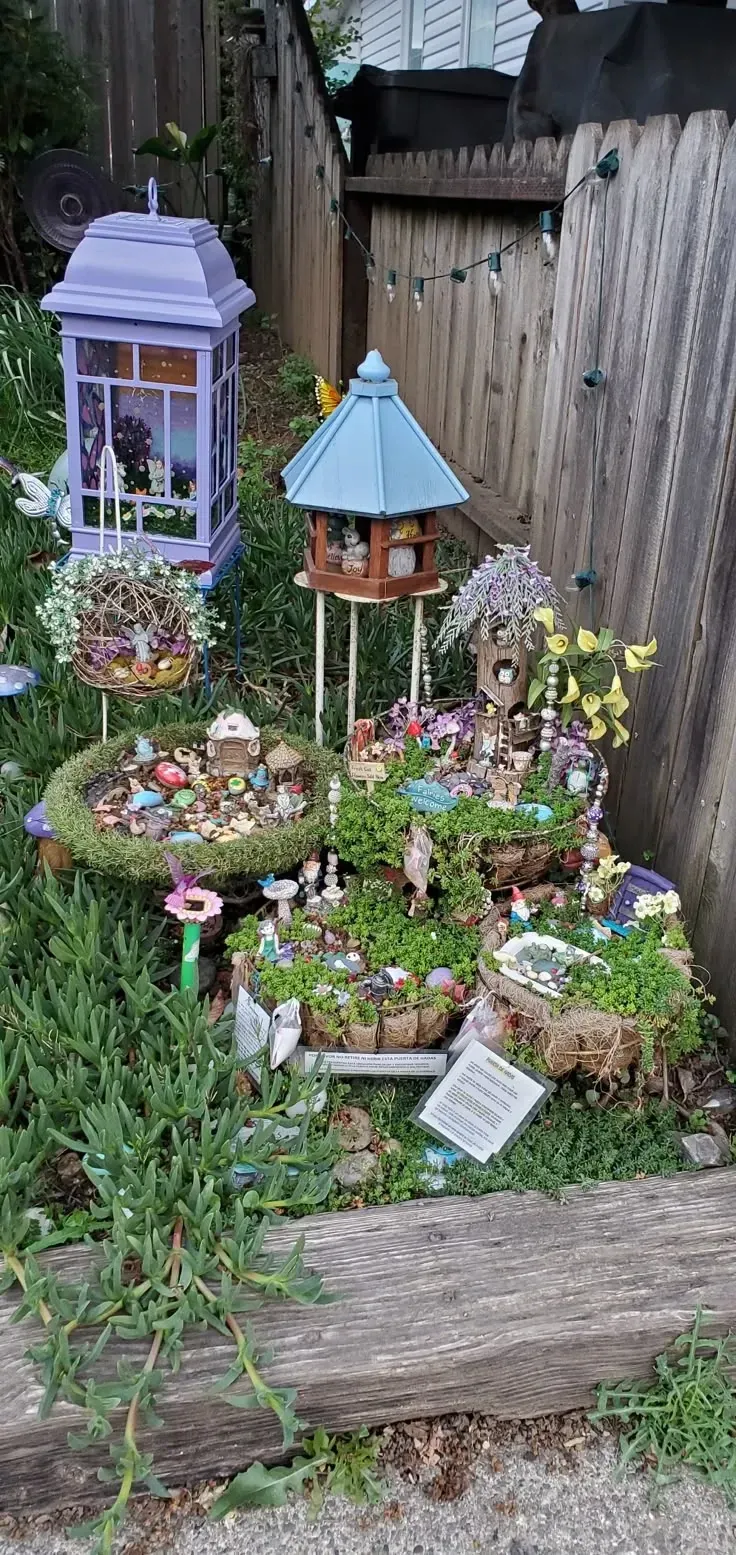
Lanterns make the garden more magical when placed near the tiny houses and plants. Keep them close to those features so they become part of the fairy garden.
Around the base are little figures, while the display includes a taller house, low moss, and a lantern of varied height. Use different heights throughout the display.
A fence or wall gives the display a backdrop. Place it close to one of these surfaces so the setting feels anchored there.
Tree Slice Stepping Stones
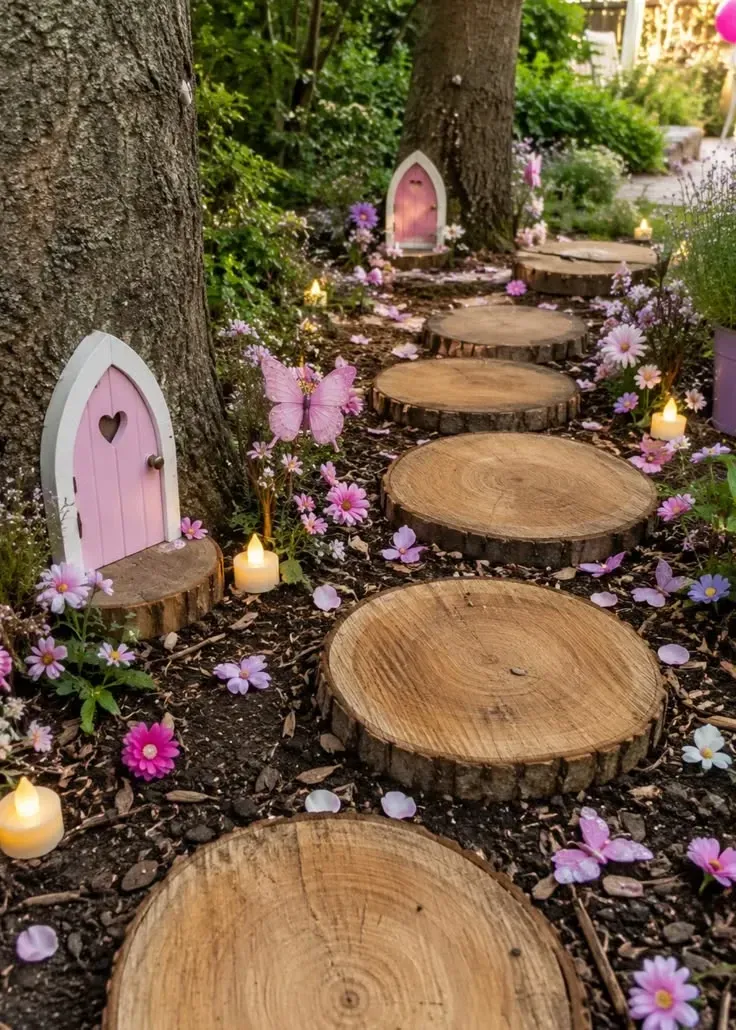
Tree slices create a tiny woodland fairy garden and can resemble a woodland walkway.
The fairy garden is arranged around the tree bases, with lanterns, flowers, mushrooms, and little figures surrounding a pink door.
In a shady, empty tree area, a fairy garden can fit naturally.
Raised Bed Fairy Garden
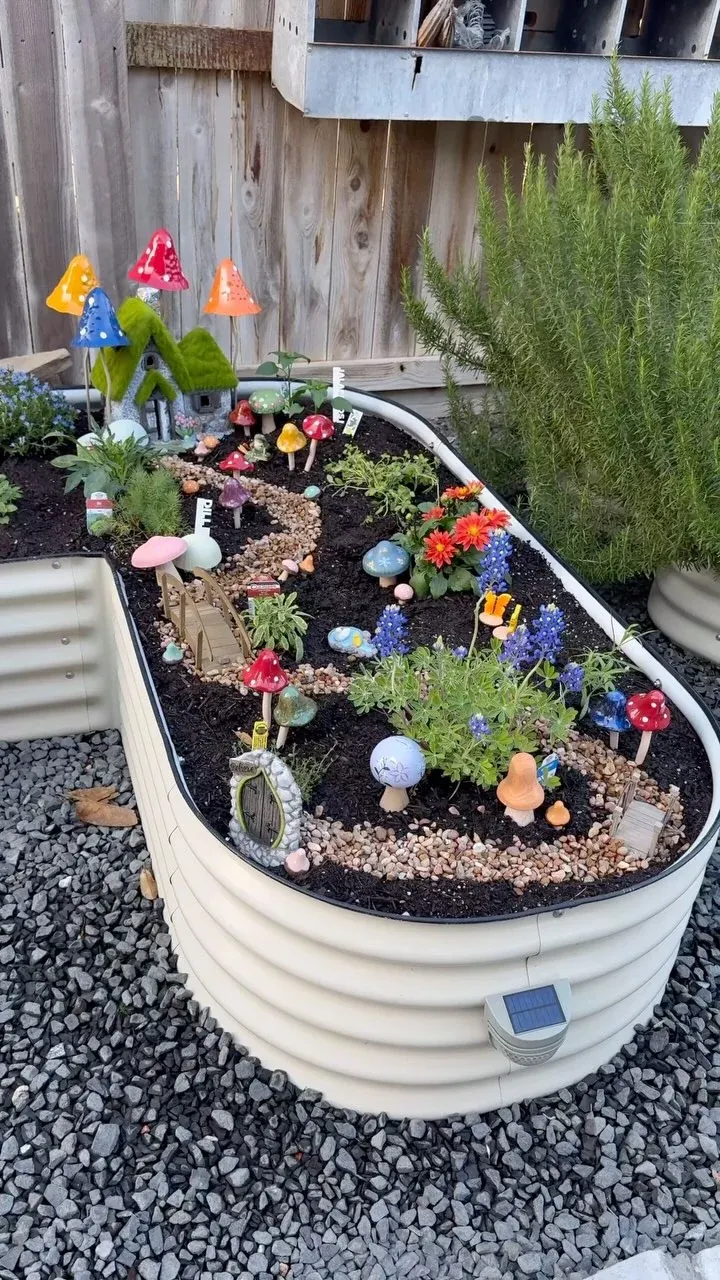
A raised garden bed keeps the garden neat and makes it easy to see. The raised shape gives the fairy garden its own clear area.
The little figures have their own section, while the tiny houses, colorful mushrooms, pebbles, and small plants each have a section too. The garden pieces stay together without being piled on top of one another.
Leave some soil or gravel visible around the pieces so they do not get lost. The open ground helps each piece remain easy to see.
Village of Flower Beds

A flower bed makes a setting for a fairy garden and provides room for a whole fairy garden world.
Among the flowers, tiny houses, benches, paths, bridges, and low plants can form a village. Let the flowers wind through these elements, and use low plants throughout.
Set the fairy garden pieces between real plants, arranging them in a varied grouping instead of one single straight line.
Painted Fairy Houses

Painting fairy houses is a DIY project, and each house can have a different painted finish.
Small pots, jars, and cans can be used as small containers. Paint doors, windows, flowers, and mushroom tops on them.
Several colors give the fairy garden the appearance of a tiny neighborhood. The color variation creates that neighborhood look.
Trough Planter
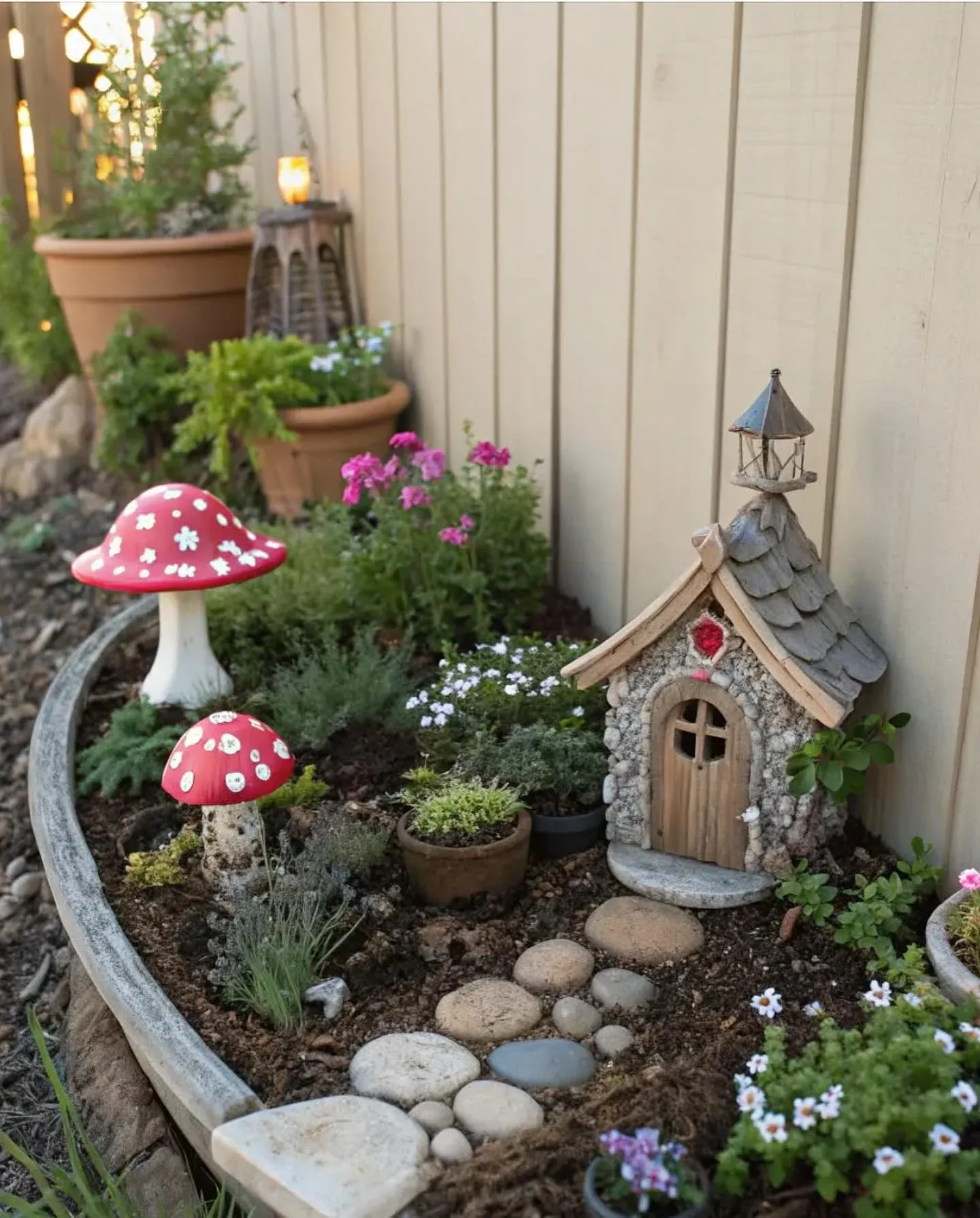
A trough planter provides enough length for a small fairy path to fit inside. The long shape gives the path room to run through the fairy garden.
Small flowers add detail alongside a tiny house, round stepping stones, and red mushrooms. The arrangement remains uncrowded, with each of these details having room to show.
A trough fairy garden is useful when a full garden bed would be too much. Set it on a patio, balcony, or narrow side yard where space is limited.
Two Connected Planters

Two planters can make the fairy garden look visually larger without requiring much more space.
Blue stones, moss, pebbles, tiny doors, and a little bridge connect the two planters. The bridge connects them too.
The author should keep the little bridge because it gives the fairy garden setup more story.