
Small kitchen cabinets can turn chaotic in no time, especially when they need to store dishes, mugs, food, pans, lids, spices, and all the extra kitchen pieces with nowhere else to go.
The best solutions make everyday access easier by using vertical space, keeping categories separate, and preventing the dreaded five item stack just to grab one plate.
These practical cabinet ideas work for ordinary kitchens, including spaces with narrow, awkward, or already crowded cabinets. Let’s get into them.
Under Shelf Mug Hooks
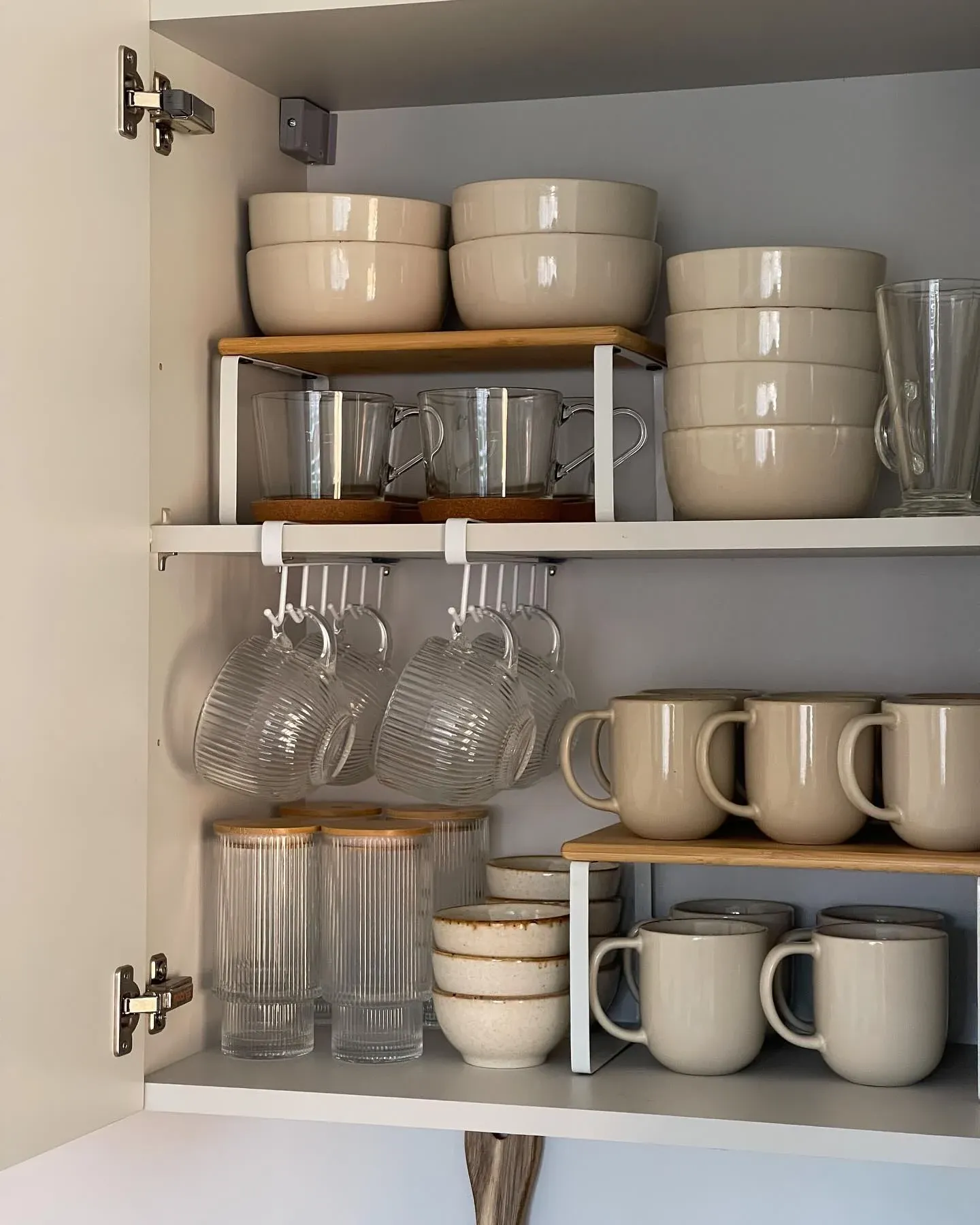
The empty space is under the cabinet shelf. Mug hooks use it for mug storage.
In the vertical gap, the cabinet stores bowls, plates, mugs, and glassware. The underside of the shelf is used for mug storage too, so the gap has a storage purpose.
Delicate glasses should not go on mug hooks, since hanging them every day can become annoying. Use the hooks for mugs that are used frequently.
Dry-Goods Storage
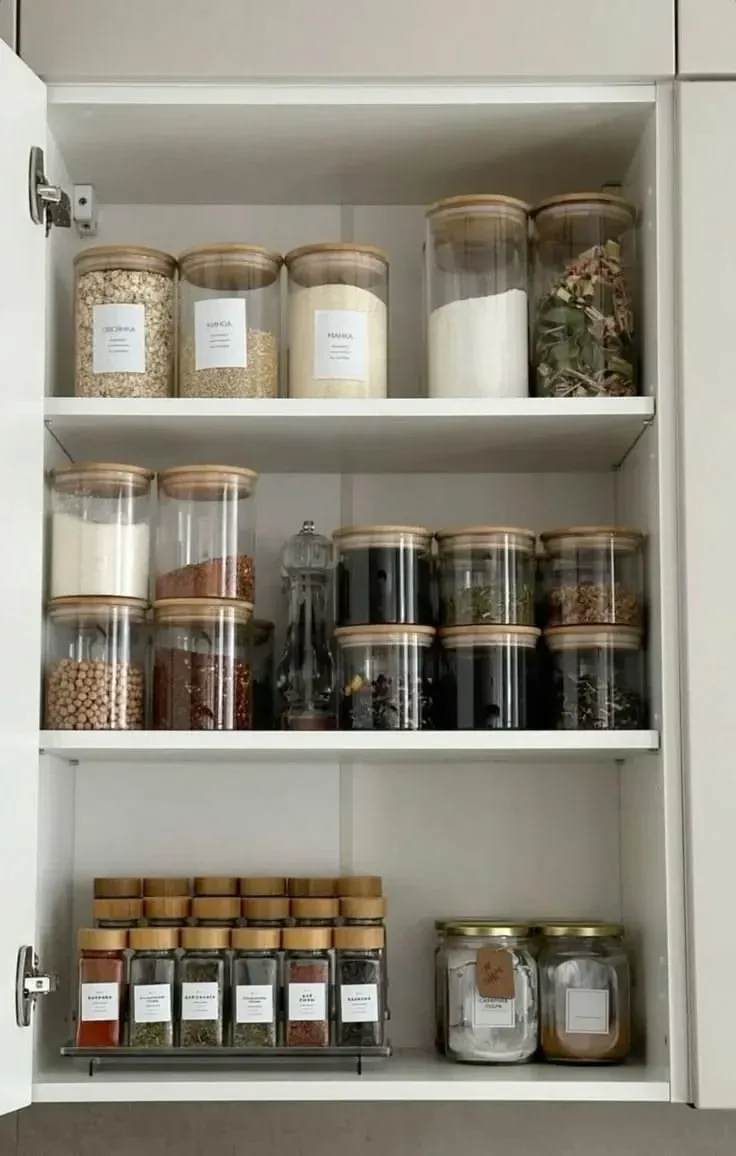
Clear jars store the dry goods inside a cabinet, making those goods easier to see. The jars keep the cabinet contents visible at a glance.
Large jars sit on the top shelf, while small spices and other pantry items are grouped below. This arrangement makes low supplies easier to check, which supports grocery planning.
For goods used often, the author recommends decanting them into storage containers. Decanting is recommended when the goods are used frequently, while infrequently used goods can increase cabinet maintenance.
Vertical Cutting-Board Storage
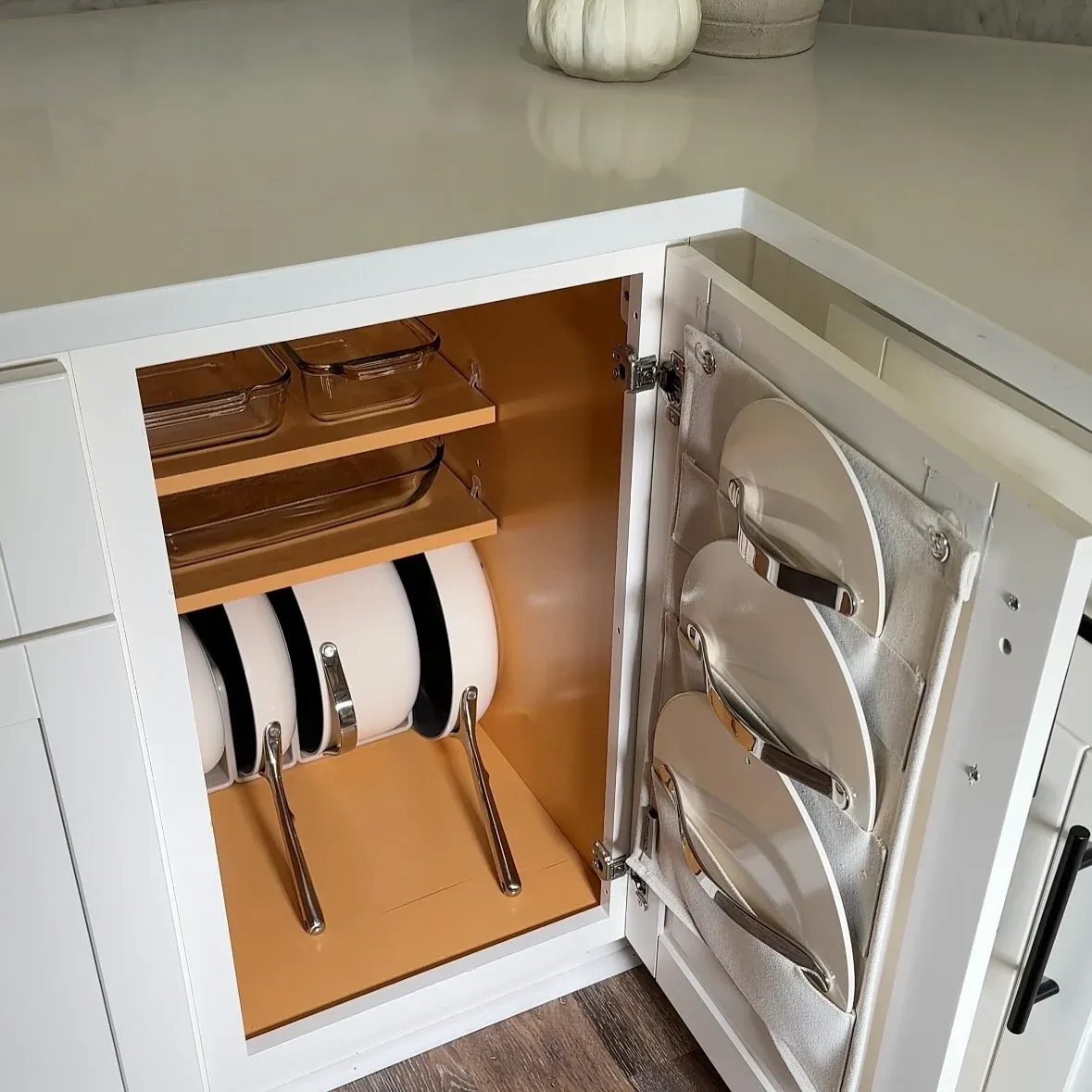
Pots and pans can be stored vertically instead of placed in a stack. Vertical storage addresses pot and pan storage by keeping each piece upright.
A narrow pull-out cabinet section stores lids upright rather than stacked flat. Keeping the lids upright improves access to them.
A tiny cabinet can use a simple divider instead of a custom insert. The divider provides vertical storage.
Cabinet Pantry Organization
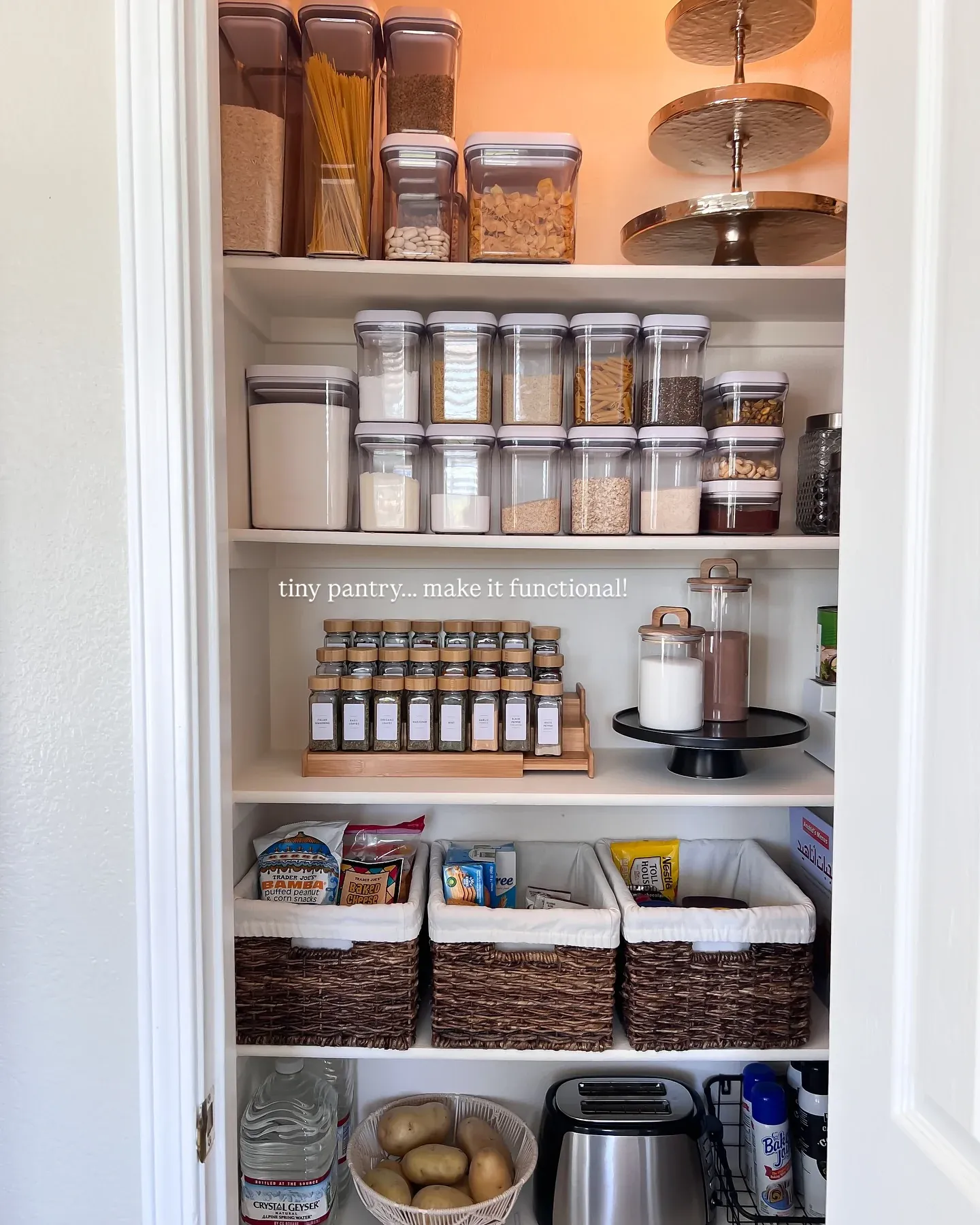
A cabinet pantry needs clear storage zones, and those zones matter more than specialty containers. Assigning a place for each type of item is the key part of the arrangement.
Lower storage can hold potatoes and other large items. Clear storage roles support tidiness, with jars for dry goods, baskets for packets, and a separate spice section.
Heavier food belongs low in the cabinet, while lighter baskets can go higher. Placing items by weight supports cabinet usability.
Upright Pan and Board Storage

Deep drawers can hold pans and boards upright, and this divided arrangement improves the usability of the deep drawers. Each item stays standing instead of lying in a stack.
Dividers keep the items from leaning into one another. They also let you retrieve individual pans and boards without moving the remaining items.
Upright divided storage is especially useful for baking trays and slim pans, as well as chopping boards and lids.
Pot and Lid Racks
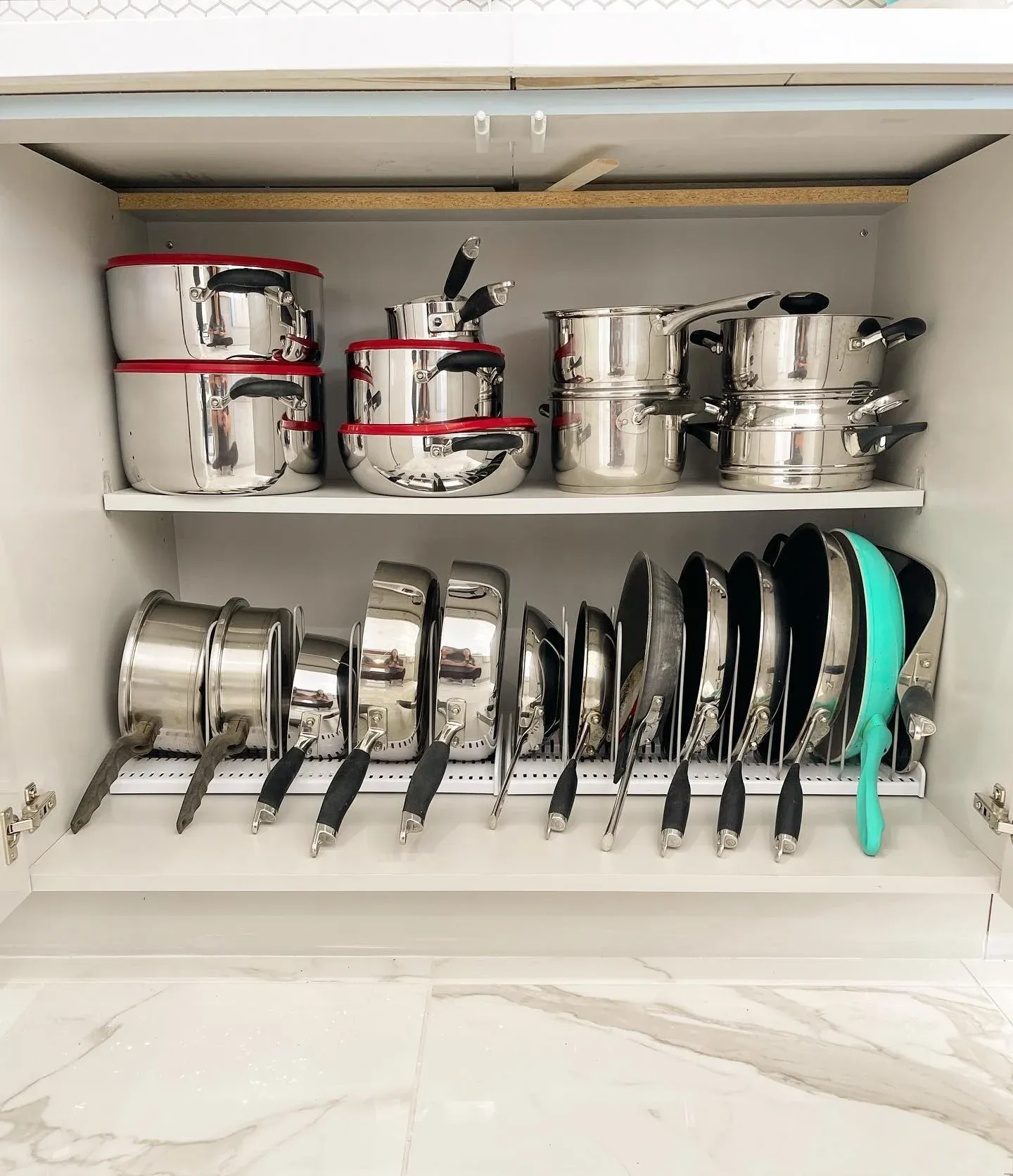
A cabinet can separate lids from pots so the lids are not mixed in with the pots. Keeping the two groups apart gives each one its own storage space.
In a rack, pans, lids, and metal pieces can be stored upright. This improves visibility of the shelf contents and reduces clattering.
Heavy pots should go on the easiest shelf to reach, especially the pots used most often. Accessibility matters more here than symmetry.
Sink Cabinet Organization

A small kitchen cabinet may provide overflow storage when kitchen storage is limited. It can take on extra storage needs without requiring a larger cabinet.
Bins in an under-sink cabinet can organize sink supplies such as paper towels and cleaning products, with labels applied to the bins. This storage system does not require a custom system.
The author recommends using clear bins for this storage. Their contents can be viewed without opening the containers.
Deep Drawer Dividers
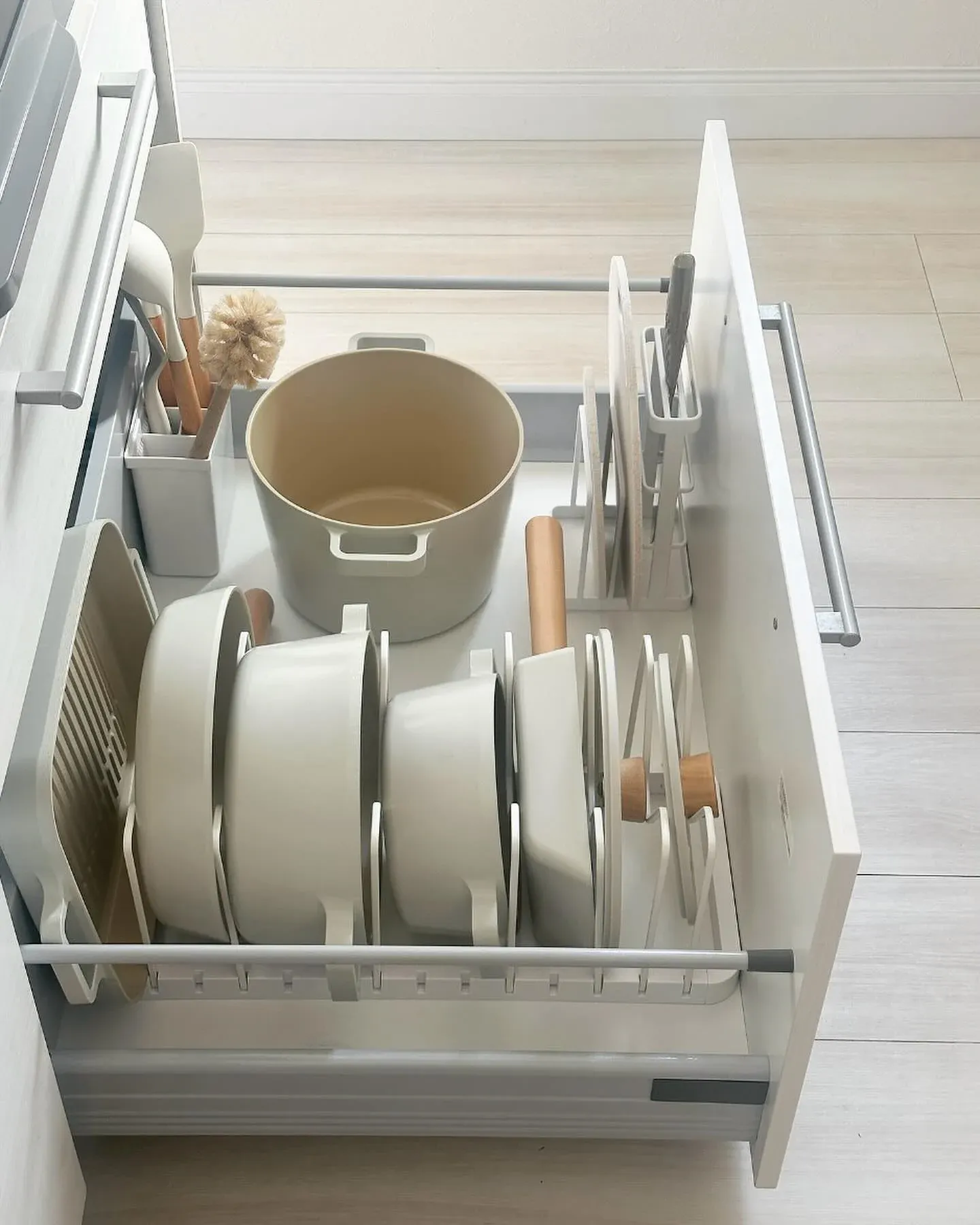
A deep drawer has plenty of capacity, but deep drawers need dividers to keep that space in order. Without them, the contents shift around.
Vertical dividers stand upright in the drawer and separate lids, bowls, plates, and other flat pieces.
Lower cabinet contents are easier to see from the top when vertical dividers are used. They are suitable for lower cabinets.
Corner Cabinet Lazy Susans
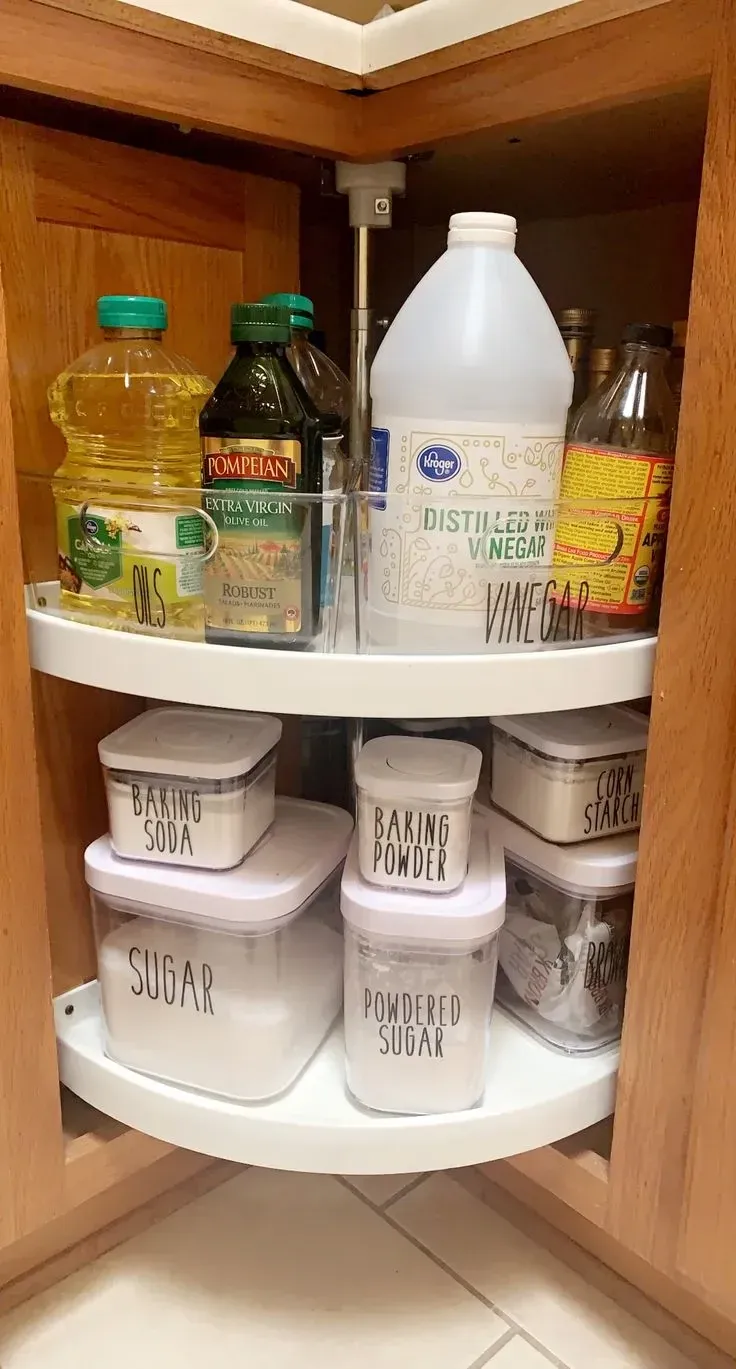
A corner cabinet can be difficult to access, especially when access to the back is limited.
Bottles, oils, and jars can sit on lazy Susans in the corner cabinet. The lazy Susans spin forward, making those items easier to reach than other items stored in the corner.
Lazy Susans work well for round bottles and jars, while square bins suit shelves and use every inch of the available space.
Vertical Dish Rack Storage
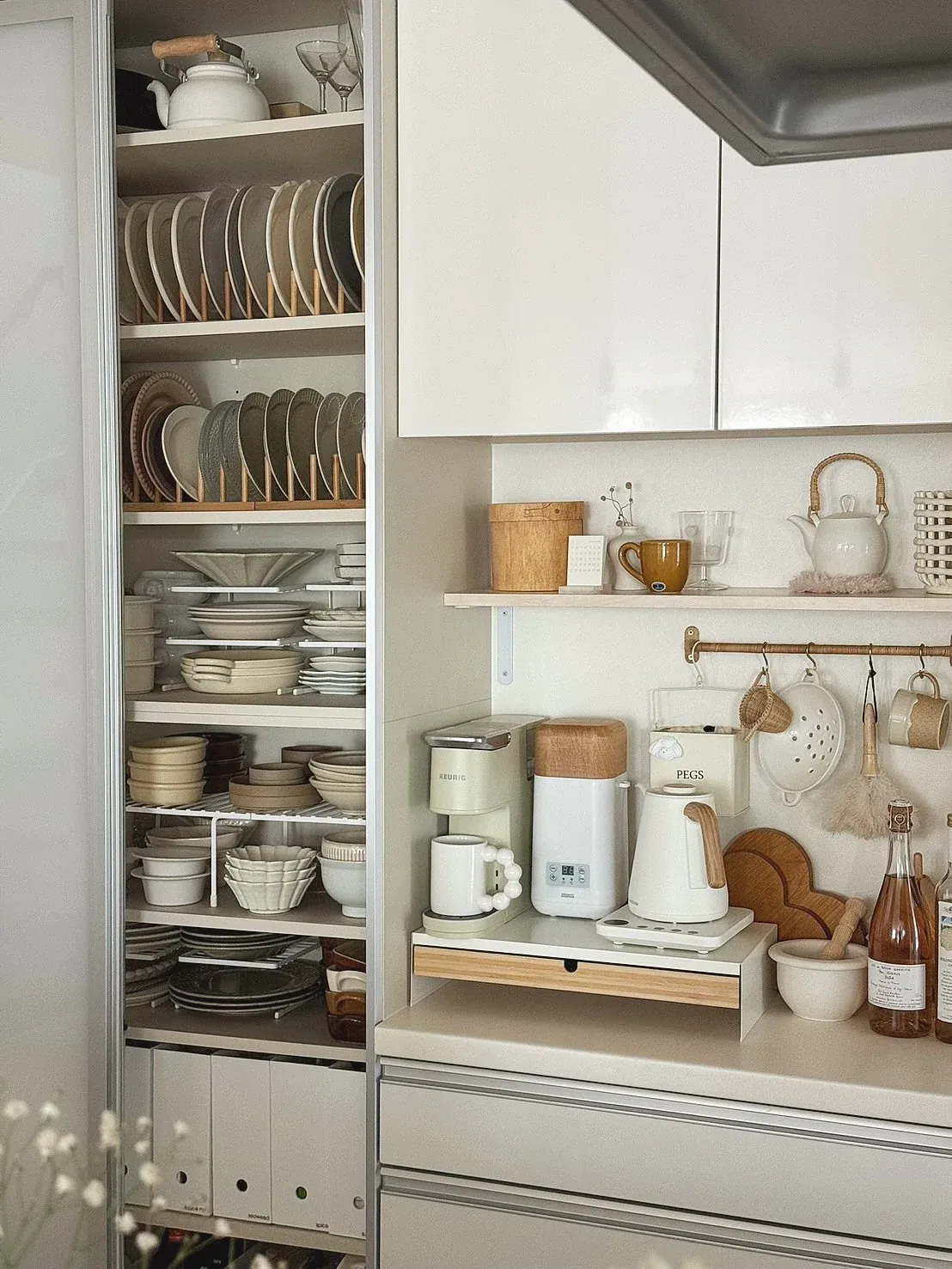
When shelf space is limited, vertical racks suit a collection with more plates than the shelves can hold. They let the plates stand upright instead of taking up room in a flat stack.
Inside the cabinet, plates, bowls, and serving pieces each have clear spots. A dish rack separates the dish types, which makes putting things away easier and means you do not have to lift a whole stack of dishes.
Flat stacking can leave shelves crowded. A vertical dish rack is suitable for a narrow cabinet, where it keeps the dishes upright rather than adding to the crowded shelves.
Separate Plate and Bowl Storage

Cabinet organization can stay simple, with the spacing based on how the cabinet is organized.
Bowls can have their own shelf while plates stay grouped together. Adjustable shelves need no extra products, and the everyday pieces remain easy to access.
A messy cabinet may only need different shelf heights. Change the shelf heights before buying new products.
Labeled Packet Bins
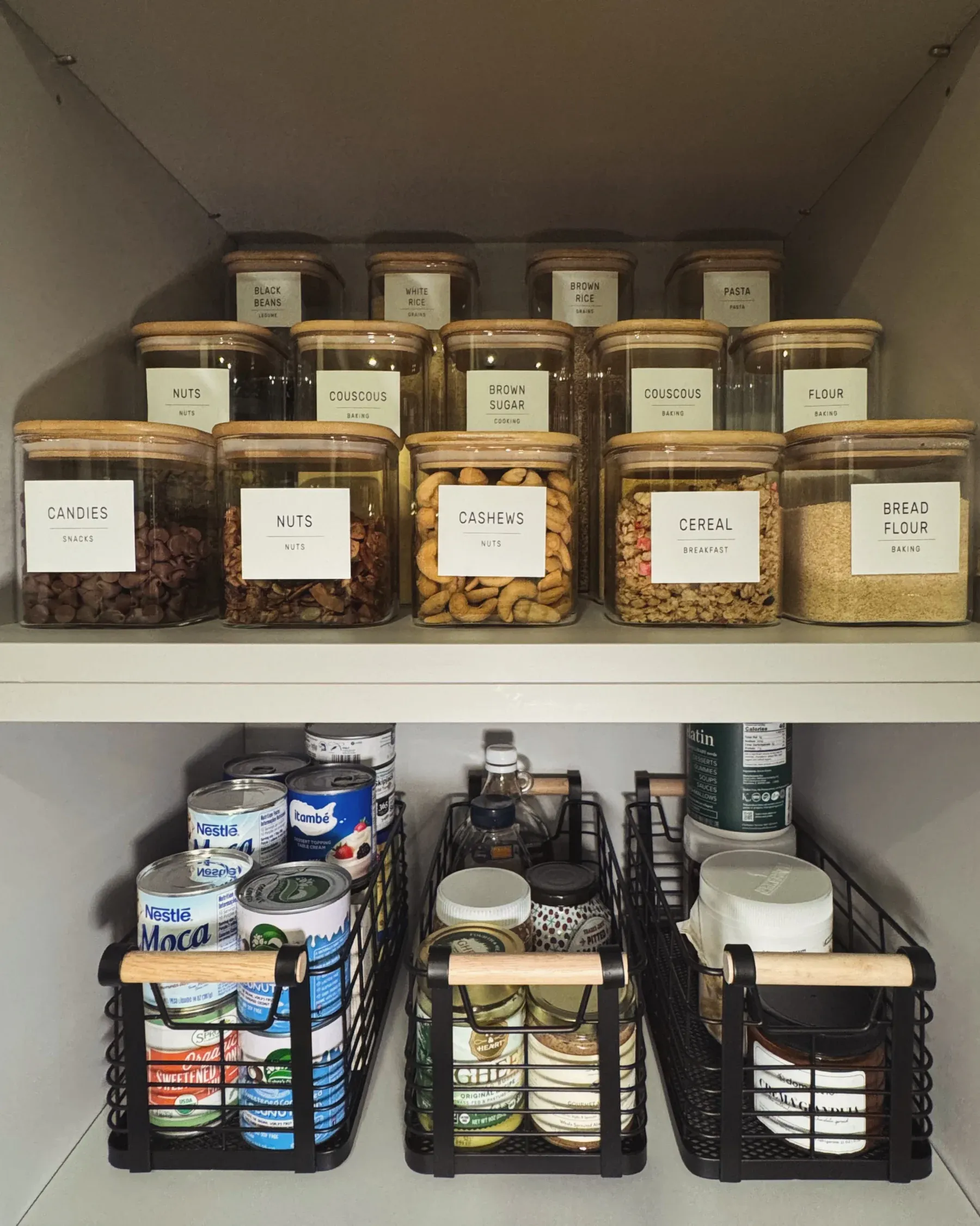
For small pantry items, bins give many small items a place to go. They are useful when there are lots of small items to store.
Deep labeled baskets keep items from spreading across the shelf. They can hold bottles, snacks, jars, and packets, while deep bins provide storage by category.
A cabinet pantry that gets messy after groceries can be easier to manage with labeled bins. The bins help with the post-shopping mess.
Pot Lids on a Cabinet Door

A small cabinet can make pot lids especially annoying to store. Moving them to the cabinet door gives them a separate place instead.
An upright door rack keeps the lids easy to see and stops them from being stacked or getting in the way of a sliding drawer. It also frees a cabinet shelf for pots and appliances.
Before installing the rack, check the shelf for enough door-closing clearance.
Organizing Spices
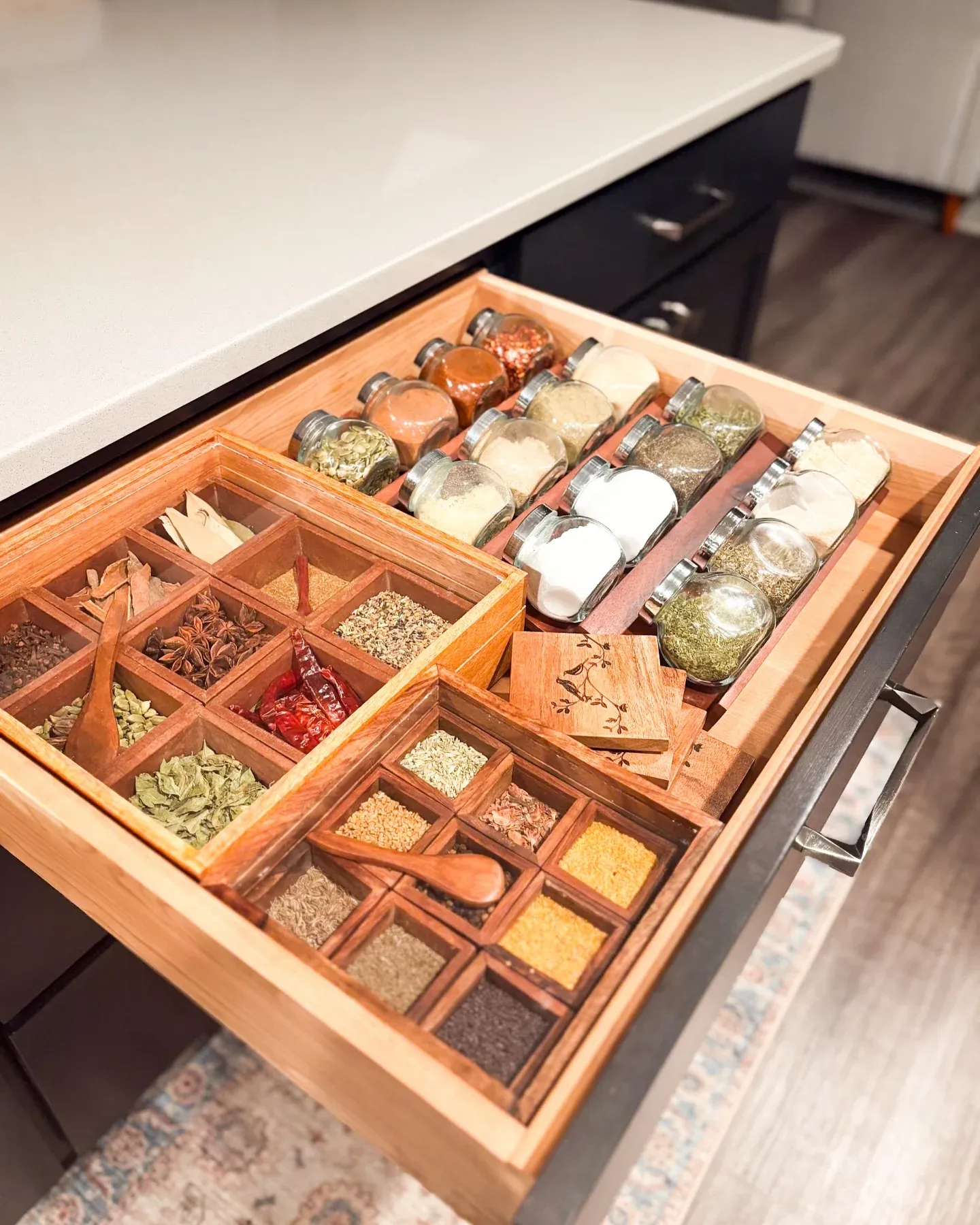
Small kitchen things that do not stay tidy on a shelf can go into a divided drawer. The compartments keep these items contained instead of leaving them spread across the shelf.
Clear sections separate packets, tea, spices, and small snacks in the drawer layout. That keeps everything from ending up in one pile.
The speaker recommends a divided drawer for small packets when they are purchased in that format and reached for often.